Table of Contents
- Why an Independent Car Inspection Is Worth It Before You Buy
- What a Pre-Purchase Inspection Covers (and What It Doesn’t)
- Used Car Inspection Checklist for Buyers: What Inspectors Check
- Pre-Purchase Inspection Cost and How Long Does a Car Inspection Take
- Questions to Ask a Seller Before Inspection Day
- Independent vs. Dealership Inspection: Which One Protects You?
- How to Use an Independent Car Inspection Report to Negotiate
- Frequently Asked Questions
Last Updated: September 21, 2026
Why an Independent Car Inspection Is Worth It Before You Buy
An independent car inspection is a professional mechanical evaluation of a used vehicle by a technician with no financial stake in the sale. This guide from Whyte Knyte Inspection covers what it catches and how to use the findings at the negotiating table.
Here’s the uncomfortable truth most buyers learn too late: the seller’s word is not evidence.
What a Pre-Purchase Inspection Covers (and What It Doesn’t)
A pre-purchase inspection is a comprehensive evaluation of a vehicle’s mechanical, structural, and cosmetic condition, documented in a written report. It is not a warranty or guarantee against future failure.
Mechanical and Safety Systems
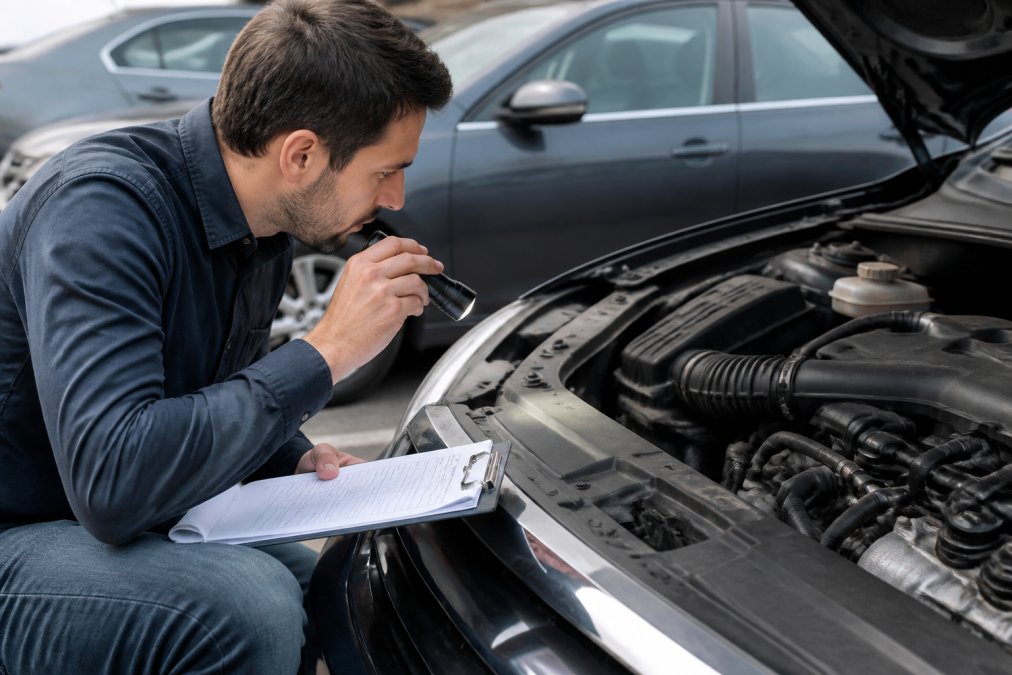
Inspectors run engine diagnostics, read stored trouble codes, and assess transmission health on a test drive. They measure brake pad thickness and tire tread depth, check suspension wear, trace fluid leaks, and verify the VIN against the title and door jamb sticker.
Body, Frame, and Flood Damage Detection
This is where a trained eye earns its fee. Frame damage, prior collision repair, and flood damage detection require examining panel gaps, paint thickness, undercarriage corrosion, and water lines inside the cabin. Cosmetic wear is rarely disqualifying; structural issues usually are.
Used Car Inspection Checklist for Buyers: What Inspectors Check
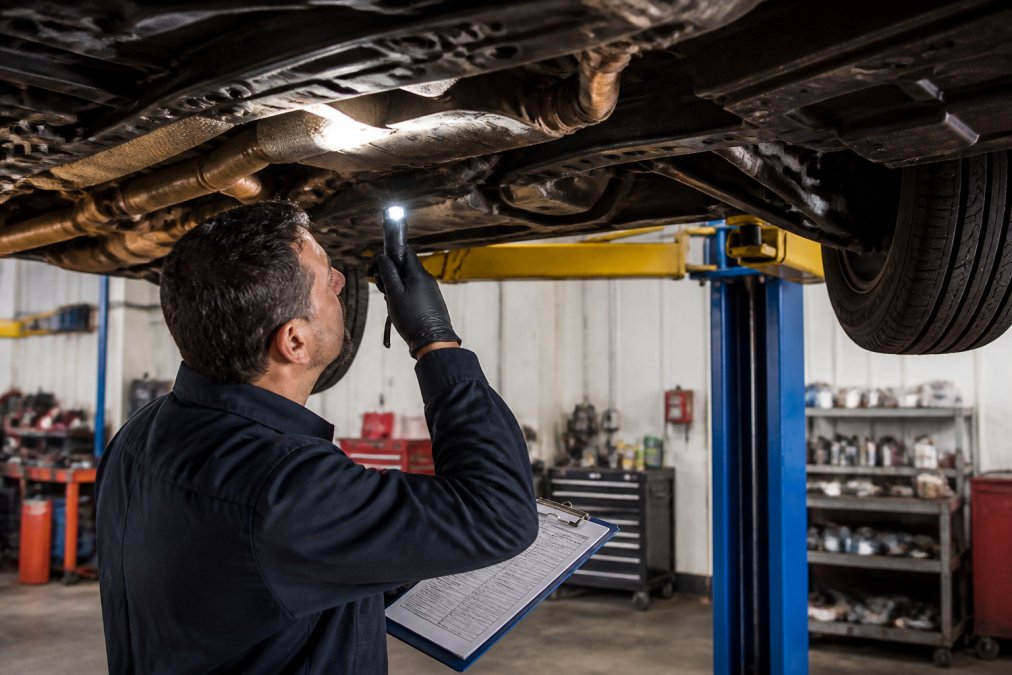
A used car inspection checklist for buyers should mirror what a qualified inspector examines, so you can follow along and ask informed questions. The list below covers the core categories of a mechanical evaluation, plus the electrified-vehicle checks most generic checklists omit.
Core Mechanical and Structural Checklist
- Odometer verification against title, service records, and wear patterns
- Engine diagnostics and stored diagnostic trouble codes
- Transmission health during a cold start and a full test drive
- Brake pad thickness and rotor condition at all four corners
- Tire tread depth and uneven wear indicating alignment problems
- Suspension components: shocks, struts, bushings, ball joints
- Fluid leaks: oil, coolant, transmission, differential
- Chassis inspection for rust, welds, and prior repair
- Frame damage assessment at measuring points
- Flood damage detection: water lines, mildew, electrical corrosion
- Safety assessment: lights, seatbelts, airbag indicators
- Cosmetic wear documented with photos
Electrified Vehicle Add-Ons: EVs, Hybrids, and Plug-In Hybrids
This is where most buyer checklists stop being useful. A gasoline-era checklist won’t tell you whether a hybrid’s battery pack is on its last legs or an EV has a degraded drive unit. If the vehicle has a high-voltage battery, add these items:
- High-voltage battery state of health (SOH). Ask the inspector to pull the battery management system data. Manufacturers publish SOH as a percentage of original capacity. A pack reading in the high 80s or above is generally healthy; a pack in the 70s or lower is a negotiating point or a walk-away.
- Charging system function. Test both AC (Level 2) and DC fast charging if the vehicle supports it. A failed onboard charger or a DC fast-charge port that won’t handshake is an expensive repair.
- Battery cooling and thermal management. EVs and hybrids use liquid or air cooling for the pack. Check for coolant leaks, fan operation, and any stored thermal fault codes.
- Hybrid-specific components. Inverter coolant level, hybrid battery cooling fan operation, and the health of the electric motor-generator units.
- Regenerative braking behavior. Confirm the regen system engages smoothly and that the friction brakes still function independently.
- 12-volt auxiliary battery. Ironically, the most common cause of a “dead EV” is a failed 12-volt battery, not the traction pack. Test it.
- Software and firmware status. Confirm the vehicle has received manufacturer over-the-air updates and that no recall-related software patches are outstanding.
- Battery warranty transferability. Most manufacturers offer an 8-year/100,000-mile (or longer in some states) battery warranty. Confirm it transfers to you and check the remaining term.
What to Ask Your Inspector Before Booking
Not every inspector can evaluate an electrified vehicle. Before you book, ask:
- Do you have high-voltage certification or training?
- Can you pull battery state-of-health data, or do you only read generic OBD-II codes?
- Will you test DC fast charging?
- Do you carry insulated gloves and a high-voltage disconnect tool?
Ask your inspector to photograph the odometer alongside the VIN sticker in the same frame. It’s a small detail that makes odometer verification far harder to dispute later. For EVs, also ask for a screenshot of the battery state-of-health readout with the VIN visible.
A gasoline checklist and an electrified checklist are not interchangeable. If the vehicle has a high-voltage battery, the battery state of health is the single most important number in the entire report, and it’s the one most generic inspections never capture.
Pre-Purchase Inspection Cost and How Long Does a Car Inspection Take
Pre-purchase inspection pricing depends on the vehicle type, the depth of the evaluation, and travel distance. Confirm current rates with the inspection company before booking.
What Affects the Price
- Standard passenger cars and light trucks. A basic mechanical evaluation with a written report.
- Larger vehicles and heavy-duty trucks. Longer inspection time, more components to check, and often a lift requirement.
- Classic, exotic, and specialty vehicles. These require marque-specific knowledge, sometimes a specialist inspector, and a much more thorough evaluation.
Beyond vehicle class, these factors move the number:
-
Travel distance. A mobile inspector driving two hours each way builds that time into the quote. Vehicles in remote or rural locations cost more to inspect than ones in a metro area.
-
Report depth. A full photo-documented report with a written repair estimate.
-
Volume and bundling. If you’re inspecting multiple vehicles during a single shopping cycle, ask whether the provider offers a multi-inspection rate. Whyte Knyte Inspection can handle high volume for fleet purchases.
Typical Turnaround Times
Whyte Knyte Inspection delivers comprehensive reports within 24-48 hours. The inspection itself usually takes one to three hours depending on vehicle size and condition; heavy-duty trucks, classics, and heavily modified vehicles can run longer.
Don’t schedule the inspection the same day you plan to make an offer. If the report surfaces issues, you need time to negotiate or walk away. Rushing the timeline is how buyers end up accepting problems they’d otherwise reject.
How to Compare Quotes
When you call around, ask each provider the same four questions so you’re comparing apples to apples:
-
What’s included in the base price, and what costs extra?
-
What’s your turnaround commitment, and is it in writing?
Questions to Ask a Seller Before Inspection Day
The right questions before inspection day separate a straightforward purchase from a negotiation full of surprises. Ask these before you commit to a visit, and pay attention to how the seller answers, not just what they say.
- Do you have the service records? Complete service history tells you whether preventative maintenance happened on schedule.
- Has the vehicle ever been in an accident? Ask for the repair invoice, not just a yes or no.
- Is the title clean and in your name? A rebuilt or salvage title changes the vehicle’s value substantially.
- Why are you selling it? Vague answers are worth noting.
- Can I bring my own inspector? A seller who resists an independent inspection is telling you something.
A seller who won’t allow an independent inspection is not necessarily hiding something, but they’re removing your best tool for verifying condition. Treat resistance as a reason to slow down.
Independent vs. Dealership Inspection: Which One Protects You?
An independent inspection protects the buyer because the inspector has no financial interest in the sale closing. A dealership multi-point inspection serves the dealership: it certifies the vehicle for sale rather than giving you an unbiased condition report.
How to Use an Independent Car Inspection Report to Negotiate
“Thanks for your time on this. My inspector found three items I need to address. The rear brake pads are below spec and the rotors need resurfacing, estimated at [$X]. There’s an active check engine code for [code], and the front struts are leaking. I’d like to proceed at [offer price], or you can handle these repairs before closing. Which works better for you?”
Get the repair estimate from your inspector, not from the seller’s mechanic. An estimate from an independent source carries more weight in negotiation because neither party controls it.
For remote purchases, the report also functions as a contingency document. Many purchase agreements let you walk away or renegotiate if an inspection reveals undisclosed issues. Read that clause before you sign, and make sure your inspection contingency is in writing.
Frequently Asked Questions
Is it normal to have a vehicle inspected before buying?
Yes. An independent car inspection before buying is standard practice for used vehicles, especially when purchasing from a private seller or out of state. It gives you a mechanical evaluation from a certified technician with no financial stake in the sale. The inspection covers engine diagnostics, transmission health, frame damage, flood damage detection, and more, so you can make an informed decision.
How do I find a qualified independent mechanic for a car inspection?
Look for inspectors with experience across multiple vehicle types and a sample report you can review. Ask whether they travel to the vehicle, how quickly they deliver results, and whether they have any financial interest in the sale. A qualified inspector should provide a photo-documented vehicle condition report covering diagnostics, suspension components, brake pad thickness, tire tread depth, and fluid leaks.
What are the red flags an inspector might find that I would miss?
Common hidden issues include odometer rollback, flood damage detection signs like rust under carpeting, frame damage from accidents, diagnostic trouble codes that were recently cleared, and mismatched paint indicating bodywork. An inspector also checks service history, chassis inspection points, and fluid leaks. These problems are difficult to spot during a short test drive but can cost thousands in repairs.
What happens if the inspection reveals issues?
You can use the findings in the report as negotiation leverage. Ask the seller to reduce the price, fix the issues before purchase, or walk away. If you have an inspection contingency in your purchase contract, you can exit the deal without penalty. A thorough vehicle condition report gives you the documentation needed to renegotiate or cancel with confidence.