Table of Contents
- What a Mobile Inspection for Classic Car Purchase Actually Covers
- Pre-Purchase Inspection Checklist for Classic Cars: What Inspectors Examine
- How Much Does a Classic Car Inspection Cost?
- Step-by-Step: How to Book a Mobile Pre-Purchase Inspection Online
- DIY vs. Professional Mobile Inspection: What You Can and Cannot Check Yourself
- Title, Lien, and Legal Verification for Vintage Cars
- Using the Report to Negotiate Price and Integrate Insurance or Appraisal
- Frequently Asked Questions
Last Updated: October 2, 2026
What a Mobile Inspection for Classic Car Purchase Actually Covers
A mobile inspection for classic car purchase is a hands-on evaluation performed at the seller’s location, where a trained inspector travels to the vehicle instead of you hauling it to a shop. That distinction matters: a car that cannot legally or safely be driven to a garage still needs a proper look before money changes hands.
Whyte Knyte Inspection has over 20 years of automotive experience. The inspector checks structure, mechanical health, and paperwork in one visit. You get photos, measurements, and a written verdict, usually within 24-48 hours.
That speed is the point. Classic car deals move fast, and a seller three states away won’t hold a car while you book a local shop.
Why Vintage Vehicles Need a Different Kind of Inspection
Modern used-car checks lean on diagnostic scans and factory service records. Neither helps much on a 1965 coupe with a carburetor and no OBD port.
Vintage vehicles hide their problems differently. Rust spreads under paint. Body filler masks collision repair. An engine can run smoothly for ten minutes and still have low compression on two cylinders. A mobile inspector who knows collector cars reads those signals on site, because there’s no second visit.
Pre-Purchase Inspection Checklist for Classic Cars: What Inspectors Examine
A pre-purchase inspection checklist for classic cars covers six core systems: structure, bodywork, drivetrain, electrical, interior, and documentation. Each one can sink a deal on its own.
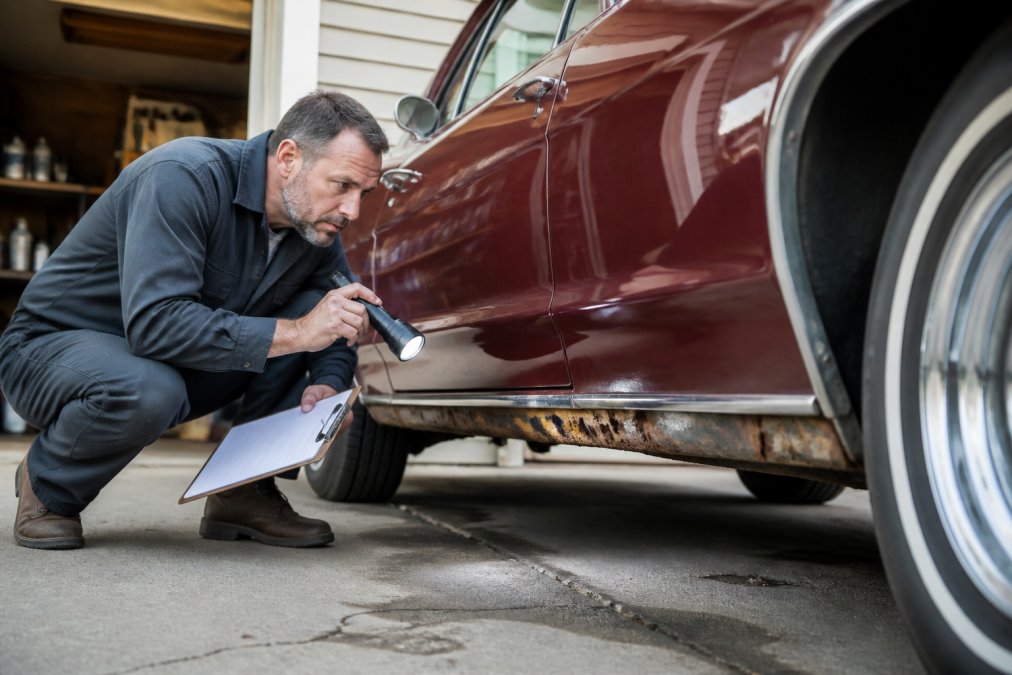
The inspection process moves front to back, low to high.
Rust, Bondo, and Frame Damage
Rust and rot are the number one deal-killer on vintage vehicles, and they rarely show on the surface. An inspector taps panels, checks paint thickness with a gauge, and probes known trouble spots: rocker panels, floor pans, trunk floors, and the base of the windshield.
Drivetrain, Compression, and Matching Numbers
A drivetrain assessment starts with a cold start, because a warm engine can mask worn rings and valve issues. The inspector listens for timing chain rattle, exhaust leaks, and misfires.
A non-matching drivetrain isn’t automatically a deal-breaker, but it changes the car’s value and its story. If a seller won’t let the inspector photograph engine stamps, treat that as a red flag.
How Much Does a Classic Car Inspection Cost?
Classic car inspection pricing depends on the vehicle, its location, and how deep the inspection goes. Pricing depends on the vehicle, its location, and how deep the inspection goes.
Several factors move the number within those tiers:
- Vehicle type and size: a compact sports car takes less time than a heavy-duty truck or a full-size classic.
- Location: rural areas and auction lots far from an inspector’s route add travel time.
- Depth of inspection: a basic condition check costs less than a full authentication with compression testing and fluid analysis.
- Turnaround: rush jobs may carry a premium.
- Access conditions: a car buried in a crowded garage or blocked by other vehicles adds labor time.
The Math That Actually Matters
The inspection fee is not the number to fixate on. The number to fixate on is what the fee protects against. A hidden frame repair, a full engine rebuild, or a rusted floor pan replacement can each run into four or five figures, and none of those are visible in a driveway walkaround. For a car worth five figures or more, the inspection fee is small next to the cost of a single hidden repair.
What You Are Actually Paying For
Part of the fee is travel and time. Part of it is the toolset: a paint thickness gauge, a compression tester, a borescope, and the experience to read what those tools report. A mobile inspector is selling a judgment call made on site, because there is no second visit.
Ask for the pricing tier in writing before you book, and ask what is explicitly excluded. A quote that does not name the tier is a quote you cannot compare against another provider.
Step-by-Step: How to Book a Mobile Pre-Purchase Inspection Online
Booking a mobile pre-purchase inspection online takes about five minutes if you have the vehicle details ready. But the booking itself is the easy part. The part most guides skip is the coordination with the seller, and that is where deals either get inspected properly or get inspected badly.
- Gather the basics. You will need the VIN, the vehicle’s address, and the seller’s contact information. If the seller will not provide the VIN before the visit, that is your first signal.
- Choose your inspection type. Match the depth to the car’s value and the seller’s asking price. A project car and a matching-numbers collector car do not need the same tier.
- Book a time window. Coordinate with the seller so the car is available and cold for the start. A cold start is non-negotiable for compression and valve assessment.
- Confirm access in writing. The inspector needs the keys, the hood open, the trunk open, and room to work underneath. Get the seller to confirm this in a message you can keep.
- Review the report. Photo-documented findings arrive within 24-48 hours, with clear notes on defects.
The Seller-Coordination Layer Most Buyers Miss
A mobile inspection only works if the seller cooperates. That cooperation is not guaranteed, and how the seller responds to the request tells you as much as the inspection itself.
What to Do If the Seller Refuses
A refusal is information. Sellers refuse inspections for a few common reasons: they do not want the car cold-started, they do not want stamps photographed, they have another buyer willing to skip the inspection, or they know what the inspection will find.
Book the inspection, but book the seller’s cooperation first. The inspection report is only as good as the access the seller grants.
DIY vs. Professional Mobile Inspection: What You Can and Cannot Check Yourself
A DIY inspection catches obvious problems. A professional one catches expensive ones. Knowing the difference keeps you from overpaying for the wrong car, or walking away from a good one.
Here’s what each side handles well:
| Check | DIY Feasible | Needs a Professional |
|---|---|---|
| Visible rust and paint bubbles | Yes | Deep rot under panels |
| Tire wear and brake feel | Yes | Suspension wear and frame straightness |
| Fluid levels and colors | Yes | Fluid analysis for internal wear |
| Engine sound at idle | Partly | Compression testing and drivetrain assessment |
| Matching numbers verification | No | Stamp and casting date checks |
| Title and lien status | Yes, via reports | Legal verification and title research |
| Paint thickness and bondo | No | Gauge-based panel mapping |
Title, Lien, and Legal Verification for Vintage Cars
Title problems on vintage cars are more common than buyers expect. Cars sit in barns for decades, change hands on handshake deals, and surface with paperwork that doesn’t match reality.
Using the Report to Negotiate Price and Integrate Insurance or Appraisal
An inspection report is a negotiation tool, not just a verdict. Every documented defect has a repair cost, and that cost is use.
Here’s how to use the findings:
- List the defects with repair estimates. A rusted floor pan, worn suspension, or weak cylinder each carries a real number.
- Separate safety items from cosmetic ones. Frame damage and brake issues justify a hard ask; faded paint usually doesn’t.
- Make one clear counteroffer. Present the report and a single revised price rather than a running argument.
- Know your walk-away number. If the seller won’t move on a car with frame damage, walk.
A mobile inspection pays for itself twice: once at the negotiating table, and again when you insure or resell the car with documented condition.
Frequently Asked Questions
Is a pre-purchase inspection worth it for a classic car?
Yes, especially on older vehicles where hidden rust, prior bodywork, or a non-original drivetrain can quietly erase thousands of dollars in value. A mobile inspection brings a certified technician to the car, so the seller does not have to release it first. You get a photo-documented report of mechanical health, chassis integrity, and paint thickness before you commit, which gives you real leverage in price talks and protects your investment.
What does a mobile classic car inspection cover?
A thorough mobile inspection covers rust and rot, bondo detection, paint thickness readings, chassis and frame integrity, engine compression, drivetrain assessment, suspension wear, the electrical system, interior condition, and a test drive. Inspectors also verify matching numbers where the model supports it and run a vehicle history report. The result is a detailed report with photos and notes on any hidden defects, delivered so you can decide before money changes hands.
How long does a classic car pre-purchase inspection take?
The on-site inspection itself usually runs one to two hours on a classic car, since older vehicles take longer to check for rust, prior bodywork, and mechanical wear. Report turnaround varies by provider. Some companies deliver a comprehensive report within 24 to 48 hours of the visit, which is fast enough for most private sales, auction lots, and out-of-state purchases if you schedule early in the buying process.
Can a mobile inspector check for rust and frame damage?
Yes. Rust and frame damage are two of the main reasons buyers order a mobile inspection for classic car purchase. Inspectors use flashlights, magnets, and paint thickness gauges to find bubbling under fresh paint, hidden filler, and repaired frame sections. They also check the undercarriage, rocker panels, floor pans, and trunk floor. Frame damage that a seller did not disclose often shows up in the report as a photo-documented finding you can use to renegotiate or walk away.
Buying a classic car sight unseen is a gamble, and the odds favor the seller. Whyte Knyte Inspection removes that gamble by sending an independent inspector to the vehicle, wherever it sits, with zero financial interest in whether you buy. Reports arrive within 24-48 hours, cover everything from frame damage to matching numbers, and serve in 48 states. Order an inspection with Whyte Knyte Inspection and make your next classic car purchase on evidence, not hope.