
Table of Contents
- What a Pre-Purchase Inspection Actually Reveals
- Used Car Inspection Checklist for Buyers
- Pre-Purchase Inspection Cost and Value
- How Long Does a Pre-Purchase Inspection Take
- What to Do After a Pre-Purchase Inspection Finds Problems
- Is a Pre-Purchase Inspection Worth It? The Real Answer
- Common Mistakes Buyers Make Without an Inspection
- Frequently Asked Questions
Last Updated: October 13, 2026
What a Pre-Purchase Inspection Actually Reveals
A pre-purchase inspection is a comprehensive examination of a vehicle’s mechanical, structural, and safety systems by a qualified independent mechanic before you buy, and understanding whether a pre-purchase inspection worth the cost is essential to smart buying. It reveals hidden problems a test drive won’t, like transmission wear, frame damage, flood history, or odometer rollbacks.
Most buyers assume they can spot problems themselves. They can’t. A car can drive fine on the lot with a transmission about to cost thousands, or look clean while hiding flood-damage electrical gremlins.
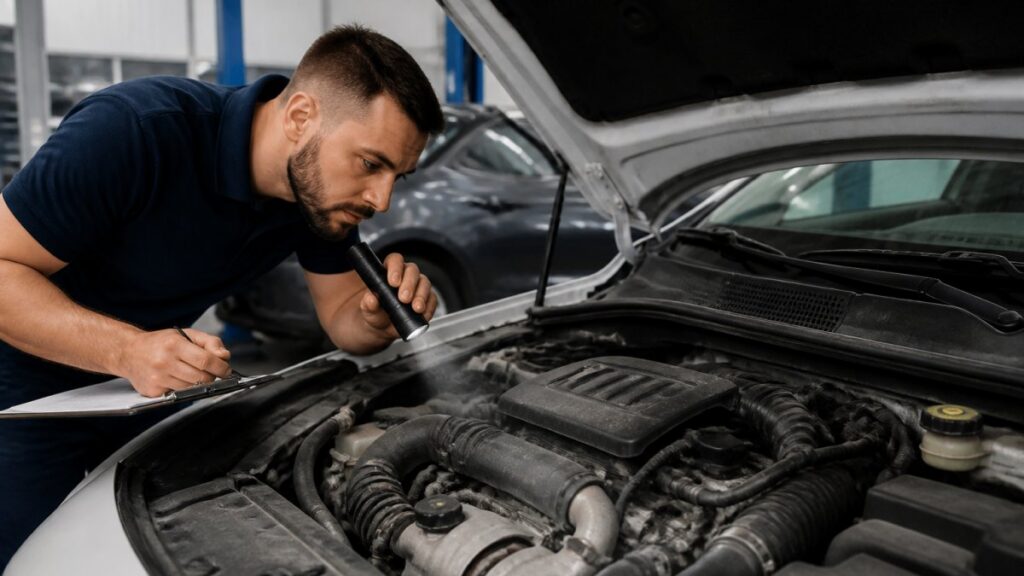
Here’s what a qualified mechanic typically checks:
- Engine and transmission: compression, fluid condition, leaks, performance codes
- Brakes: pad wear, rotor condition, brake fluid quality
- Suspension and steering: alignment, joint wear, shock absorber condition
- Electrical systems: battery health, alternator function, wiring integrity
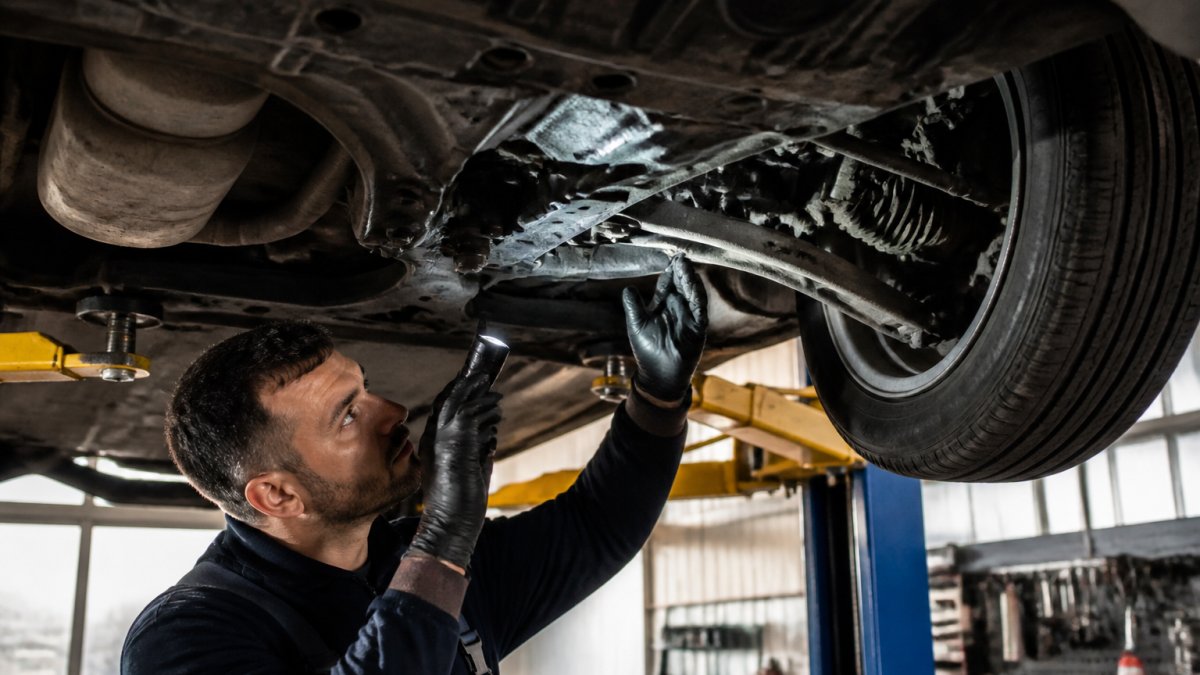
- Frame and undercarriage: rust, welding, structural damage, collision history
- Fluids and filters: oil, coolant, transmission fluid, brake fluid condition
- Tires: tread depth, wear patterns, age, sidewall damage
- Safety features: airbag systems, seat belt function, lighting
The report documents findings with photos and descriptions. At Whyte Knyte Inspection, we give you the facts so you can decide, without pressure. The real value isn’t just knowing what’s broken, it’s knowing what’s about to break and what shortcuts the previous owner took.
Used Car Inspection Checklist for Buyers
Before scheduling an inspection, prepare a basic checklist so you can ask the right questions.
Pre-inspection research:
- Pull the vehicle history report (check for title issues, flood damage, accident records)
- Note the mileage and compare it to service records
- Research common problems for that make, model, and year
- Check if any recalls are outstanding
During the inspection, the mechanic should verify:
- Service records match the vehicle’s condition and mileage
- No major repairs were hidden or done poorly
- Fluid leaks aren’t present or are minor
- Rust is surface-level, not structural
- The engine starts smoothly and idles without noise
- Transmission shifts cleanly without hesitation
- Brakes respond evenly and don’t pull to one side
- Suspension feels stable with no clunking sounds
- Electrical systems work correctly (lights, wipers, climate control)
- Tires have adequate tread and even wear patterns
Red flags that require attention:
- Mismatched paint suggesting repainting after damage
- Welding marks on the frame or undercarriage
- Transmission fluid that’s dark or smells burnt
- Brake pads worn down to metal
- Oil that hasn’t been changed in thousands of miles
- Rust that penetrates the metal, not just surface corrosion
The checklist isn’t about becoming a mechanic, it’s about knowing what to ask.
Pre-Purchase Inspection Cost and Value
A pre-purchase inspection is one of the few line items in a used-car purchase where the cost is fixed and the downside it protects against is not. Knowing the typical price range turns “is it worth it” into arithmetic.
Typical US price ranges (2026):
- Basic mobile inspection (sedans, compact SUVs): roughly $100-$200. Covers the major mechanical systems, a test drive, an OBD-II scan, and a photo report.
- Full bumper-to-bumper inspection (trucks, SUVs, performance cars): roughly $200-$400. Adds lift time, compression or leak-down testing, and a more detailed underbody and suspension review.
- Specialty or exotic vehicles (classic cars, heavy-duty trucks, exotics): $400-$800+. Often requires a marque specialist, a lift, and sometimes travel.
- Mobile surcharge: some inspectors charge a trip fee outside a set radius; others build travel into the flat rate.
These are market ranges, not quotes; your price depends on the vehicle, inspector, and travel distance.
The proportionality rule
The fee should be small relative to the money at risk.
What the inspection fee actually buys
Beyond the report, the fee buys three things:
- A negotiating lever. Documented defects are worth real dollars at the table, a $200 inspection surfacing $1,200 in repairs routinely pays for itself in one price adjustment.
- A walk-away trigger. The most valuable outcome is often not buying the car. The fee is the cost of avoiding a mistake.
- A condition baseline. The report is a dated, photographed record of the vehicle at purchase, valuable if a dispute arises later.
When the fee is hardest to justify, and still usually is
The math only gets tight on a very cheap vehicle with a very short ownership window. Even then, the question isn’t “can I afford $150?” but “can I afford the $2,000 repair I didn’t see coming?”
If the inspection fee is under 2% of the purchase price, the decision is easy. Above that, weigh the fee against the specific repair risk you are trying to avoid, and remember that the best outcome is often walking away.
How Long Does a Pre-Purchase Inspection Take
A typical pre-purchase inspection takes 1 to 2 hours depending on the vehicle’s age, condition, and complexity. Older vehicles, visible problems, heavy-duty trucks, and specialty vehicles may take longer.
The timeline works like this:
- Scheduling: Contact us for availability
- Inspection: The inspection takes time at the vehicle location
- Report delivery: Comprehensive reports are delivered within 24-48 hours with photos and detailed findings
Mobile inspection services come to you, no transporting the vehicle or arranging a ride. The mechanic meets you at the dealership, private seller’s location, or auction lot.
Buying out of state? Schedule the inspection before you travel, review the report, and decide with confidence. Schedule as soon as you find a vehicle you’re seriously considering.
What to Do After a Pre-Purchase Inspection Finds Problems
The report arrives, listing issues from minor (worn brake pads) to major (transmission problems). Now what?
Step 1: Prioritize the findings.
Not all problems carry equal weight. Categorize them:
- Critical: Safety issues or major mechanical failures (brakes, steering, frame damage)
- Important: Problems that affect reliability or will need repair soon (transmission wear, electrical issues)
- Minor: Cosmetic or wear items that don’t affect safety (worn wiper blades, interior trim)
Step 2: Get repair estimates.
For each critical or important finding, get a repair estimate from a trusted mechanic. This gives you a dollar amount to work with during negotiation.
Step 3: Decide your next move.
You have three options:
- Negotiate: Ask the seller to lower the price by the repair cost or fix the problems before sale
- Request repairs: Require the seller to complete specific repairs before you take ownership
- Walk away: If problems are too severe or the seller won’t negotiate, find another vehicle
Step 4: Verify repairs if the seller agrees.
Don’t take their word for it. Have the inspecting mechanic verify the work was done correctly, and get receipts and warranty information.
Step 5: Document everything.
Keep all inspection reports, repair estimates, and negotiation agreements, this protects you legally and records the vehicle’s condition at purchase. A seller can argue about condition, but not with a detailed mechanical report.
Is a Pre-Purchase Inspection Worth It? The Real Answer
For most buyers, yes, but the honest answer requires understanding what a PPI is and is not. An inspection is a point-in-time assessment by a human being using tools and experience, not a warranty, guarantee, or prediction.
What a PPI cannot catch
A competent inspector will say so up front: the report reflects the vehicle’s condition on the day and under the conditions it was inspected. It may miss:
- Intermittent faults. A transmission that slips only when hot, a rain-only electrical gremlin, a sensor that fails monthly, none may show up in a 90-minute inspection.
- Concealed damage. Frame straightening, panel replacement, and paint blending can hide prior collision damage without disassembly.
- Internal engine and transmission wear. Without a teardown, an inspector can measure compression, check fluids, and read codes, but can’t see a bearing 20,000 miles from failure.
- Future failures. A component fine today can fail tomorrow. The inspection reduces the odds of buying a car with an existing problem; it doesn’t eliminate future ones.
- Everything the seller hides. A rolled-back odometer, washed title, or cleaned-history flood car may not be visible on the vehicle itself, that’s what a vehicle history report is for, and even those are incomplete.
An inspection is not a substitute for a title search, a vehicle history report, or your own test drive. Use all three. A clean PPI on a car with a branded title is still a car with a branded title.
The residual risk you still carry
Even after a thorough inspection, you’re buying a used machine, and some risk remains. The point isn’t to eliminate risk but to move you from “I hope this is fine” to “I know what I’m buying.”
When a PPI is essential
- Buying from a private seller, no warranty, no recourse, full risk on you.
- An older or high-mileage vehicle, more wear, deferred maintenance, and hidden problems.
- Out-of-state or auction purchases, you can’t easily inspect in person, and auction vehicles are typically sold as-is.
- A high-value, specialty, or classic vehicle, the dollar exposure justifies a specialist.
- Any salvage, rebuilt, or branded title, the inspection tells you whether the repair meets a standard you can live with.
When a PPI is still valuable but less critical
- A reputable franchised dealer with a transferable warranty, some risk is transferred, but not all.
- A newer vehicle with full, verifiable service records, lower likelihood of hidden problems, not zero.
- A local purchase where you have genuine mechanical knowledge, you can do part of the assessment yourself, though a lift and scan tool still beat a driveway look.
The bottom line
A pre-purchase inspection is worth it when the cost is small relative to the mistake you’re avoiding, which, for most used-car purchases, it is. It’s worth it even more when you understand its limits, because a buyer who knows what the report covers makes better decisions. The inspection doesn’t guarantee a good car; it guarantees you’re not buying blind.
Treat the PPI as risk reduction, not risk elimination. The fee is small; the information is durable; the decision it informs is one of the largest you will make this year.
Common Mistakes Buyers Make Without an Inspection
Skipping the inspection leads to predictable, expensive mistakes.
Mistake 1: Trusting the test drive.
A test drive reveals how the vehicle drives today, not how long it will keep driving.
Mistake 2: Relying on the seller’s word.
Private sellers often don’t know the vehicle’s history, they might not realize the transmission is slipping or the frame was damaged.
Mistake 3: Assuming service records mean the vehicle is fine.
Service records show maintenance was done, not whether repairs were done correctly or whether hidden accident or flood damage exists.
Mistake 4: Buying based on price alone.
The cheapest vehicle isn’t always the best deal.
Mistake 5: Not planning time for the inspection.
Buyers in a hurry skip the inspection, buy a problem vehicle, and spend months on repairs. The extra day or two saves weeks of frustration.
Mistake 6: Buying without negotiating based on inspection findings.
Many buyers get the inspection, see problems, and buy anyway without asking for a price reduction.
An inspection isn’t a guarantee. It’s information. What you do with that information determines whether the inspection was worth it.
A pre-purchase inspection is one of the most important steps in buying a used vehicle.
Frequently Asked Questions
Should I always get a pre-purchase inspection?
A pre-purchase inspection is strongly recommended for any used car purchase, especially vehicles over 50,000 miles or from private sellers. If you’re buying from a dealership with a warranty or purchasing a low-mileage certified pre-owned vehicle, the risk is lower, but an independent inspection still provides unbiased verification. For fleet purchases or high-value vehicles, an inspection is essential. The cost is small relative to avoiding a bad investment.
Is a pre-purchase inspection worth it on a cheap used car?
Yes. A $3,000 used car with hidden transmission damage becomes a $5,000 repair bill after purchase. An independent mechanic can identify major mechanical issues, frame damage, or flood history before you commit. Even on budget purchases, an inspection protects you from catastrophic repairs that exceed the vehicle’s value.
Can a pre-purchase inspection help me negotiate the price?
Absolutely. An inspection report documenting worn brakes, fluid leaks, or needed repairs gives you concrete leverage to request a price reduction or ask the seller to fix issues before sale. Many buyers use inspection findings to negotiate a price adjustment, which can often cover the inspection cost and more.
What should I do if an inspection finds major problems?
You have three options: request the seller fix the issues before closing, negotiate a price reduction to cover repairs, or walk away. Prioritize safety-critical systems (brakes, steering) and structural damage (frame, flood history). For cosmetic wear or minor maintenance items, negotiate rather than walk. An independent inspection report gives you the data to make that decision confidently.