Table of Contents
- What a Used Car Inspection Report Sample Shows You
- Vehicle Inspection Report Template: Key Sections Explained
- How to Read a Car Inspection Report: Interpreting Findings
- Pre-Purchase Inspection Report Example: What Real Findings Look Like
- Pre-Purchase Inspection Cost and What to Expect
- How to Use Your Inspection Report When Buying a Used Car
- Independent Mechanic Review: Going Deeper After Your Report
- Frequently Asked Questions
Last Updated: October 18, 2026
What a Used Car Inspection Report Sample Shows You
A used car inspection report sample is a comprehensive document that records the condition of a vehicle across all major systems before purchase. It serves as your written record of what the vehicle actually looks like, mechanically and cosmetically, at a specific moment in time.
At Whyte Knyte Inspection, buyers who request a professional used car inspection report before committing to a purchase avoid costly surprises far more often than those who skip this step. The report becomes your baseline.
A solid used car inspection report sample captures exterior damage, mechanical function, fluid conditions, safety systems, and interior wear. It photographs problem areas, notes measurements and readings, and flags items that need immediate attention versus those that can wait.
Vehicle Inspection Report Template: Key Sections Explained
A complete vehicle inspection report template breaks down into five major component areas. Understanding what each section covers helps you know what to look for when you’re reviewing an actual inspection report or requesting one from a professional inspector.
Exterior and Body Condition
The exterior section documents the vehicle’s overall appearance, paint condition, and body integrity. This includes checking all body panels for dents, dings, rust, and repainting.
Inspectors examine the windshield and windows for cracks or damage that affects visibility or safety. This section also covers the vehicle’s overall cleanliness and whether rust spots appear on the undercarriage or wheel wells, a critical indicator of flood damage or corrosion severity in older vehicles.
The exterior inspection includes condition ratings for each area. A professional used car inspection report will note whether damage is cosmetic, functional, or structural. Cosmetic damage doesn’t affect how the vehicle runs. Functional damage means something works but isn’t perfect.
Engine, Fluids, and Under-Hood Components
This section covers what’s under the hood: the engine condition, battery, belts, hoses, and fluid levels. The inspection checks engine oil color and level, coolant condition, transmission fluid, brake fluid, and power steering fluid. Dirty or low fluids are red flags that the vehicle hasn’t been properly maintained.
The inspector examines the battery for corrosion, checks belt and hose condition for cracks or fraying, and looks for visible leaks around the engine block, transmission pan, or other fluid-containing components. Any sign of seepage or pooling fluid gets documented.
The engine compartment inspection also checks for evidence of previous repairs, aftermarket modifications, or missing components. Mismatched hoses, amateur welding, or replaced parts can indicate past damage or poor maintenance history.
Brakes, Suspension, and Steering
The brakes section documents pad thickness, rotor condition, brake line integrity, and brake fluid condition. Thin pads mean imminent replacement costs. Warped or scored rotors indicate poor maintenance or aggressive braking habits. The inspection checks for leaks in the brake system and tests brake responsiveness.
Suspension components, shocks, struts, springs, and control arms, are examined for wear, leaks, or damage. A worn suspension affects ride quality and handling safety. The inspection looks for clunking sounds, excessive bounce, or uneven tire wear that signals suspension problems.
Steering is tested for responsiveness, play in the steering wheel, and any grinding or clicking sounds. Power steering fluid is checked for leaks or discoloration. These findings directly impact how safely and comfortably you can drive the vehicle.
Tires, Wheels, and Lights
Tire condition is critical for safety. The inspection measures tread depth and checks for uneven wear patterns, which indicate alignment issues or suspension problems. Tires with less than 4/32 inch of tread are considered unsafe and will need replacement soon. The inspection documents whether tires are original equipment or replacements and whether they match across the vehicle.
Wheels are checked for damage, corrosion, or cracks. The inspection notes whether lug nuts are tight and whether there’s evidence of recent wheel work. Lighting systems, headlights, taillights, brake lights, turn signals, and interior lights, are tested to ensure they function properly. Burned-out bulbs are minor; corroded sockets or wiring issues are more serious.
Interior, Safety Systems, and Electrical
The interior inspection documents seat condition, carpet and upholstery wear, dashboard cracks, and functionality of controls. It checks whether all windows and doors operate smoothly, whether locks work, and whether the HVAC system produces heat and air conditioning.
Safety systems are tested: seat belts retract and lock properly, airbag warning lights function, and the parking brake holds. The electrical system is checked for battery voltage, alternator function, and any warning lights on the dashboard. An odometer reading is recorded to flag potential rollback fraud, and the vehicle identification number is verified against the title.
How to Read a Car Inspection Report: Interpreting Findings
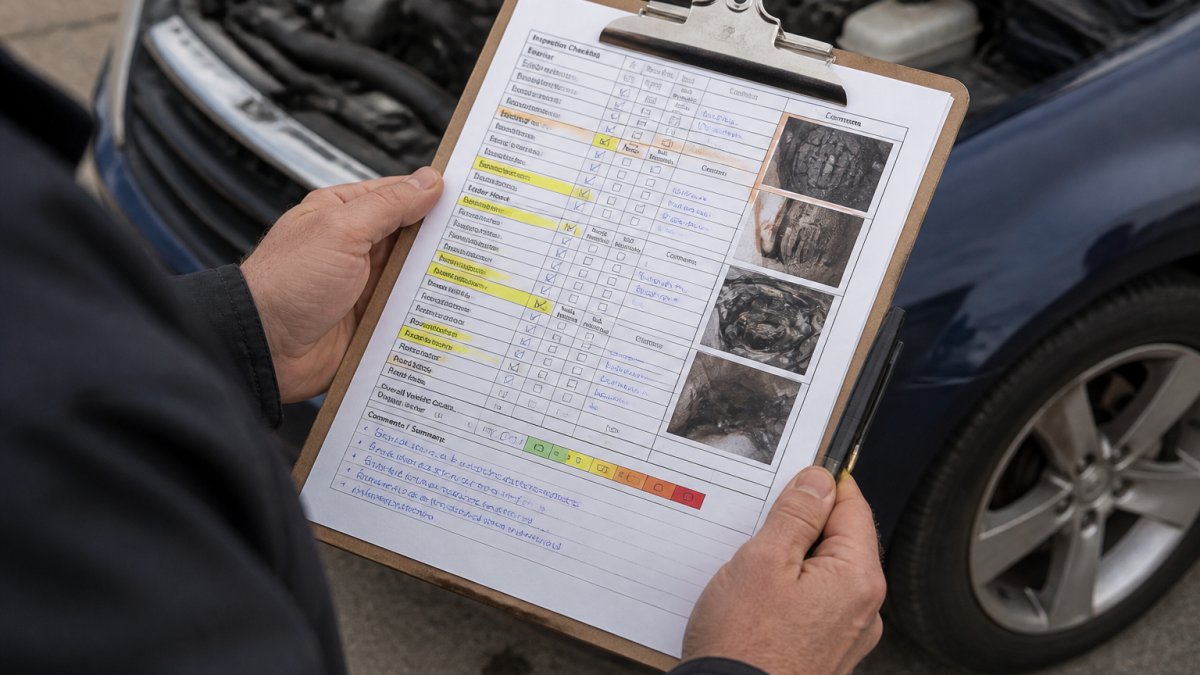
Reading a used car inspection report means understanding three layers: what was inspected, what condition each component is in, and what those findings mean for your purchase decision. A well-written report walks you through each finding with clarity and context.
Understanding Condition Ratings and Pass/Fail Markings
Most inspection reports use a rating system to classify each finding. Common scales include: Good (no issues), Fair (minor wear, functions properly), Poor (significant wear or damage, needs attention soon), or Fail (unsafe, needs immediate repair).
A “Good” rating on brakes means pads have adequate thickness and rotors are smooth. “Fair” might mean pads are at 50% thickness, not urgent, but plan for replacement within the next 6 months. “Poor” means pads are thin and rotors show scoring; replacement is needed within weeks.
The key is that a rating tells you severity and urgency. Not every “Fair” rating is a reason to walk away. A “Fair” interior with worn seats is cosmetic. A “Fair” transmission with delayed shifting is functional and potentially expensive.
Identifying Red Flags and Defects
Red flags in a used car inspection report sample are findings that either indicate hidden damage, deferred maintenance, or safety concerns. Common red flags include: evidence of flood damage (rust in unusual places, water stains inside the vehicle, corroded electrical connectors), odometer rollback (mileage that doesn’t match service records or vehicle age), frame damage (misaligned panels, welding marks, paint overspray), and major fluid leaks.
A single red flag doesn’t always mean reject the vehicle, it means negotiate. If the inspection finds flood damage but the vehicle runs and the price reflects the risk, you might still buy it. If the inspection finds frame damage, that’s typically a deal-breaker because structural repairs are expensive and compromise safety.
Minor defects, a burned-out bulb, a small dent, worn floor mats, are normal on used vehicles. The report helps you distinguish between “normal wear” and “this vehicle was neglected” or “this vehicle was in an accident.”
Pre-Purchase Inspection Report Example: What Real Findings Look Like
A concrete example shows how findings translate into real-world meaning. Imagine a used car inspection report for a 2018 sedan with 85,000 miles purchased from a private seller.
Under the hood, oil is clean and at proper level, coolant is clear, no visible leaks. Engine starts easily and idles smoothly. Brakes have 6mm of pad thickness remaining (good for another 15,000-20,000 miles), rotors are smooth.
Interior seats have moderate wear on the driver’s side (expected for 85,000 miles), dashboard is crack-free, all windows and doors operate smoothly, air conditioning blows cold, heating works.
The overall assessment: This vehicle is in good condition with normal wear for its age and mileage. The repainted quarter panel suggests a minor past accident, but the repair appears professional and there’s no frame damage.
That’s what a clean inspection report looks like.
Pre-Purchase Inspection Cost and What to Expect
The cost of a professional used car inspection varies based on vehicle type, location, and turnaround time. Whyte Knyte Inspection delivers comprehensive reports within 24-48 hours, with mobile inspectors traveling directly to the vehicle location, whether at a dealership, private seller’s home, or auction lot.
What’s included in a professional inspection is typically a thorough examination of all major vehicle systems, detailed photography of findings, written condition ratings, and a final summary with recommendations. Many services offer digital reports that you can access immediately or within a few hours of the inspection.
The investment in a professional used car inspection report is protection. If you’re buying a vehicle worth $10,000 or more, the inspection cost is a small percentage of your purchase price.
How to Use Your Inspection Report When Buying a Used Car
Once you have a used car inspection report in hand, you have use.
Before making an offer on a used vehicle, request the inspection. Don’t wait until after you’ve committed emotionally or financially. The inspection report becomes part of your due diligence. If the seller refuses to allow an inspection, that’s a warning sign.
Use the report to compare against the seller’s claims. If they say the vehicle has never been in an accident but the inspection shows evidence of frame repair, you now have documentation.
Share the report with your mechanic or trusted automotive advisor. A professional inspector might miss something a specialist in a particular brand would catch. The report gives your mechanic a baseline to work from and specific areas to examine more closely.
Independent Mechanic Review: Going Deeper After Your Report
After you receive a professional used car inspection report, the next step is often an independent mechanic review.
A mechanic who specializes in that vehicle type can perform a deeper diagnostic on specific systems. If the inspection noted transmission concerns, a transmission specialist can run a full diagnostic. If there’s potential frame damage, a body shop can assess repair costs and safety implications.
For fleet managers buying multiple vehicles, an independent mechanic review of the first few units helps establish baseline condition expectations. For high-value purchases, classic cars, luxury vehicles, or commercial trucks, the additional layer of expert review is standard practice.
A used car inspection report sample is your roadmap to a confident purchase. It documents what you’re actually buying, not what the seller claims you’re buying.
At Whyte Knyte Inspection, we’ve helped buyers across all vehicle types, from compact cars to semi trucks, make informed decisions with professional, independent inspection reports. Whether you’re buying locally or from out of state, a professional inspection removes doubt and puts the facts in your hands. ORDER INSPECTION and know what you’re buying before you commit.
Frequently Asked Questions
What should be included in a pre-purchase car inspection report?
A comprehensive used car inspection report covers exterior and body condition, paint and windshield integrity, tires and tread depth, brakes and suspension, engine and under-hood components, fluid levels and leaks, lights and electrical systems, interior condition, safety equipment, and odometer reading. The report should also document the vehicle identification number (VIN), maintenance history observations, and a detailed inspection checklist with condition ratings for each component. Photo documentation strengthens the report’s credibility.
How do you read a used car inspection report and identify red flags?
Look for pass/fail markings, defect notations, and severity ratings on each inspection checklist item. Red flags include fluid leaks, frame damage, odometer inconsistencies, worn brake pads, low tire tread, rust or corrosion, and electrical system failures. Pay attention to inspection notes that describe damage extent and repair implications. Cross-reference findings with the vehicle’s reported maintenance history. If major defects appear, request a second opinion from an independent mechanic before finalizing your purchase.
Is a pre-purchase inspection report worth the cost?
Yes, especially for used vehicles purchased from private sellers or out-of-state sources. A professional inspection report catches hidden issues like flood damage, frame damage, and odometer rollbacks that could cost thousands to repair. The inspection cost is typically far less than emergency repairs after purchase. For remote buyers, an independent third-party inspection provides confidence and documentation to support your offer or walk away decision. Fleet managers and classic car buyers rely on inspection reports to verify condition and authenticity.
What should you do if an inspection report finds serious problems?
Use the report to negotiate a lower purchase price, request the seller complete repairs before sale, or walk away from the deal. Document all defects and their repair-cost implications to support your negotiation. If you’ve already committed, share the report with an independent mechanic for a second opinion on severity and repair costs. Never ignore major findings like frame damage, transmission issues, or safety system failures. The inspection report is your leverage, use it to protect your investment or make an informed decision to pass on the vehicle.