Table of Contents
- What Odometer Rollback Means and Why It Matters
- Signs of Odometer Tampering: Physical and Digital Clues
- How to Check Truck Mileage History Before You Buy
- Truck Maintenance Records Mileage Verification
- Mileage vs. Wear: What the Truck’s Body Tells You
- Used Truck Pre-Purchase Inspection: What a Pro Checks
- Conclusion
- Frequently Asked Questions
Last Updated: October 20, 2026
What Odometer Rollback Means and Why It Matters
Odometer rollback is the illegal practice of reducing a vehicle’s displayed mileage to make it appear less worn than it is. On trucks, this fraud hides hard miles, skipped maintenance, and major wear. This guide from Whyte Knyte Inspection shows you the seven warning signs and how to verify a truck’s true history before you buy.
The stakes are real. A truck with rolled-back miles sells for far more than it should. You pay for a low-mileage truck and get one that has towed, hauled, or idled through years of heavy service. Then the repair bills start.
Trucks hide mileage better than cars. A well-detailed cab and fresh seat covers can mask years of abuse. That is why paperwork and physical clues must agree.
The most common mistake is trusting the dash over the documents. A clean-looking odometer means nothing if the title, service records, and inspection history tell a different story.
Signs of Odometer Tampering: Physical and Digital Clues
Signs of odometer tampering fall into two groups: physical clues around the dashboard and digital clues in the truck’s computers. A careful buyer checks both, because modern digital odometers can be altered with software, leaving no visible trace on the cluster.
Dashboard and Instrument Cluster Red Flags
Start with the cluster itself. Look for these physical signs:
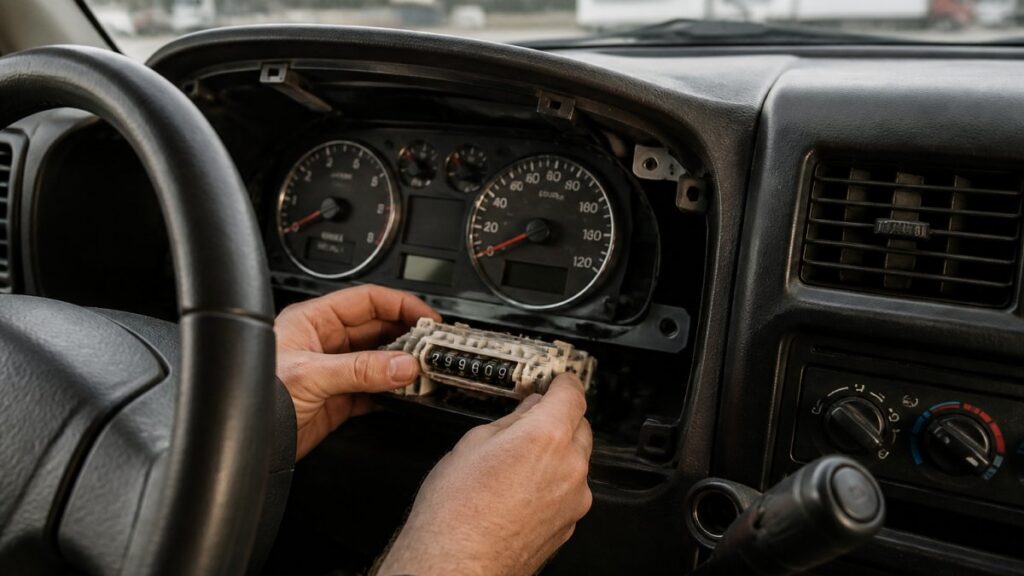
- Crooked or misaligned digits. Numbers that do not line up evenly on a mechanical odometer suggest the unit was opened or rolled back.
- Scratches around the dashboard screws. Tool marks near the cluster, trim, or screw heads mean someone has been inside.
- Disturbed or mismatched screws. Factory screws are uniform. A replaced or stripped screw is a red flag.
- A cluster that looks newer than the truck. A clean, low-mile cluster in a worn cab does not add up.
Electronic Odometer and Module Discrepancies
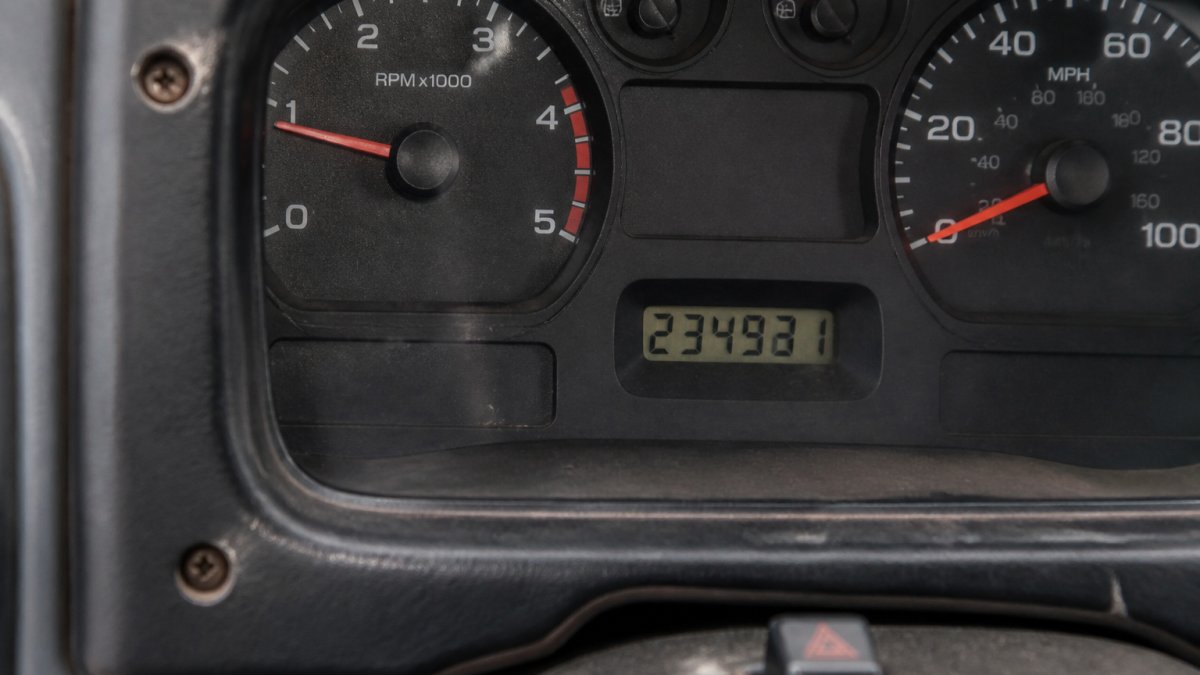
Digital odometers store mileage in the instrument cluster and other electronic control modules. A rollback often changes only the cluster, leaving mismatched readings elsewhere. A diagnostic scan can pull mileage from the engine and transmission modules and compare it to the dash. When those numbers disagree, you have your answer.
How to Check Truck Mileage History Before You Buy
Checking truck mileage history means stacking independent records until they either agree or contradict each other. One clean report proves nothing; three records that all climb at the same rate are hard to fake. Work through these sources in order, because each one narrows what the next should show.
- Title and transfer documents. Every title transfer records mileage at the time of sale. Line up the readings by date. Mileage should rise steadily; a drop between transfers, or a gap of years with no recorded reading, is the first thing to question.
- Vehicle history report. Pull a report from a provider that aggregates state title, salvage, and insurance records. Look for reported mileage at each sale, branded titles, and any rollback or odometer-discrepancy flag. Treat a report as a starting point, not proof, reported mileage depends on what each state and insurer submitted.
- Service and repair invoices. Ask for every invoice, not a summary. Each line should show mileage at the time of service. Compare the date and mileage on each one: a truck that shows 88,000 miles on a 2021 invoice and 74,000 on a 2023 invoice has a problem no detailing can explain.
- State inspection records. Many states record mileage at annual safety or emissions inspection. These are independent of the seller and often span years, which makes them one of the harder records to sanitize.
- Insurance and accident records. Claims, total-loss records, and policy documents frequently carry mileage. A total-loss history paired with a clean current title deserves a hard look.
- Diagnostic scan. Compare mileage stored in the instrument cluster against the engine and transmission control modules. Discrepancies between modules are a strong signal that only the dash was altered.
- Sanity-check annual mileage. Multiply the truck’s age by a realistic annual figure for its use, a personal truck, a work truck, and a fleet tractor each accumulate very different miles. A reading far below the expected range is a question to answer, not proof of fraud.
Ask for records in their original form, PDFs, photos of paper invoices, or portal exports, rather than a typed summary. Summaries are easy to rebuild; original documents with dates, mileage, and vendor names are much harder to fake consistently.
For commercial trucks, the paperwork trail is usually deeper than a private seller’s. Fleet maintenance logs, work orders, fuel-card statements, dispatch records, and DOT inspection reports all tend to carry mileage, and they are generated by different people at different times. A seller who rolled back the dash rarely sanitizes all of them. Ask specifically for fuel and dispatch records: they often show mileage the seller forgot to scrub, and they rarely match a rolled-back cluster.
NMVTIS vehicle history overview
One caution on history reports: they are only as complete as the data reported to them. A truck that was serviced at independent shops, moved between states, or spent years in a fleet that self-maintains may have long gaps. Gaps are not proof of rollback, but they mean the physical and diagnostic checks in the next sections carry more weight.
Truck Maintenance Records Mileage Verification
Truck maintenance records are the strongest proof of true mileage. A fleet or commercial truck usually has service logs, fuel records, and DOT inspection paperwork. Compare the mileage on every entry against the odometer. Steady, consistent numbers build confidence. A record that stops climbing, or jumps backward, is a serious red flag.
Ask for fuel and dispatch records too. On commercial trucks, these often carry mileage that a seller forgets to sanitize, and they rarely match a rolled-back dash.
Mileage vs. Wear: What the Truck’s Body Tells You
Mileage and wear should move together. When a truck claims low miles but shows heavy wear in the places trucks actually work, trust the wear. The table below is a starting point, but the truck-specific checklist underneath it is where most rollbacks get caught.
| Clue | Low-Mileage Truck | Rollback Suspect |
|---|---|---|
| Seat and steering wheel | Light wear, firm foam | Heavy bolster wear, sagging foam, shiny wheel |
| Pedals | Sharp, defined edges | Worn smooth, rubber pad replaced |
| Tires | Even, matching set, recent date codes | Mismatched brands, uneven wear, old date codes |
| Dashboard | Clean, consistent with cab | Newer than cab, scratched screws, misaligned trim |
| Entry step and door sill | Paint intact, light scuffing | Paint worn to metal, deep scuffs |
Truck-Specific Wear Clues
Trucks wear in places a passenger car never does. Check these areas against the claimed mileage:
- Driver’s seat and entry step. A truck that has been climbed into thousands of times shows it. Look for collapsed foam on the outboard bolster, worn seat fabric, and paint rubbed off the step and door sill. A low-mileage truck should still feel firm and look intact in these spots.
- Pedal pads and floor mat. Rubber pedal pads wear smooth and the driver’s heel area of the floor mat wears through. Replacement pedals on a low-mile truck are a question, not a comfort.
- Steering wheel and shift knob. Hands polish these smooth over time. A shiny, smoothed wheel paired with a low reading is a contradiction.
- Fifth-wheel plate and hitch. On a towing truck, the fifth-wheel plate, kingpin area, and hitch receiver show scarring, gouges, and grease buildup from years of coupling. A pristine hitch on a high-mile truck is possible; a beaten hitch on a low-mile truck is not.
- Bed and cargo area. Look for dents, scrapes, worn bed liner, and tie-down wear. A work truck’s bed tells you how hard it worked.
- Suspension and steering components. Worn ball joints, tie-rod ends, shocks, and leaf springs at a claimed low mileage point to accumulated use. Have a mechanic put the truck on a lift and check for play and leakage.
- Air system and brakes. On heavy-duty trucks, compressor hours, brake drum and shoe wear, and air dryer condition track with service life. Excessive wear at low mileage deserves an explanation.
- Hour meter and idle time. Many commercial trucks record engine hours alongside miles. High hours relative to miles means a lot of idling and stationary work, hard service that the odometer does not show.
Fresh seat covers, a new floor mat, and a detailed cab can hide years of wear in exactly the areas above. Look under the covers, at the step, and at the hitch before you trust the interior.
A low reading alone does not prove rollback, and heavy wear alone does not either. A truck used for short local deliveries may show more wear per mile than a long-haul tractor. The signal is a mismatch: low claimed miles paired with wear that belongs to a much higher-mileage truck. That is when you move from visual clues to records and a diagnostic scan.
Used Truck Pre-Purchase Inspection: What a Pro Checks
A used truck pre-purchase inspection is an independent, hands-on review of the vehicle’s condition and records before you buy. A professional inspector checks the cluster for tampering, runs a diagnostic scan across modules, reviews service and title records, and compares mileage to physical wear. This is exactly what our mobile inspectors do at Whyte Knyte Inspection: we travel to the truck, document everything with photos, and deliver a report within 24-48 hours, with zero financial interest in your purchase.
No single clue proves a rollback. The proof comes from stacking evidence: records, module readings, and physical wear that all point the same way.
Conclusion
Odometer fraud is hard to spot alone, especially on a truck three states away. If the records, modules, and wear do not agree, walk away. Whyte Knyte Inspection sends a mobile inspector to the truck, checks the cluster and modules, verifies the records, and delivers a photo-documented report in 24-48 hours. Order an inspection and buy with confidence.
Frequently Asked Questions
How can you tell if a truck’s odometer has been rolled back?
Look for physical clues like crooked or misaligned digits on mechanical odometers, scratches around the instrument cluster, or disturbed screws. On digital odometers, check for mismatches between the displayed mileage and the electronic control module data. Also compare the mileage to the truck’s age and wear: a 10-year-old truck with 40,000 miles but worn pedals and a shiny steering wheel is a red flag. A pre-purchase inspection and vehicle history report can confirm suspicions.
Can a truck’s electronic odometer be rolled back?
Yes. Digital odometers store mileage in electronic modules, and tampering tools can alter those readings. However, rollback often leaves traces: inconsistent mileage across modules, diagnostic trouble codes, or a mismatch between the odometer and the engine control unit. A diagnostic scan during a pre-purchase inspection can reveal these discrepancies. Always verify mileage through multiple sources, including service records and title history.
What records can help verify a used truck’s mileage?
Request maintenance records, service invoices, inspection reports, and title records. These documents often list mileage at each service visit. For commercial trucks, check fleet maintenance logs and DOT inspection records. A vehicle history report from a reputable provider can also show mileage readings over time. If records are missing or inconsistent, that’s a red flag. A professional inspection can help fill in the gaps.
What should you do if a truck’s mileage records do not match?
Do not proceed with the purchase until you resolve the discrepancy. Ask the seller for an explanation and supporting documents. If the seller cannot provide a clear answer, walk away. You can also report suspected odometer fraud to your state’s motor vehicle agency or the National Highway Traffic Safety Administration (NHTSA). A pre-purchase inspection by an independent inspector can provide an objective assessment of the truck’s true condition and mileage.
Buying a used truck should not feel like a gamble. Whyte Knyte Inspection gives you an independent, photo-documented inspection with zero financial interest in the sale. Our mobile inspectors cover all vehicle types, from pickups to heavy-duty semi trucks, and reports arrive within 24-48 hours. Get started with Whyte Knyte Inspection and verify the mileage before you sign.