
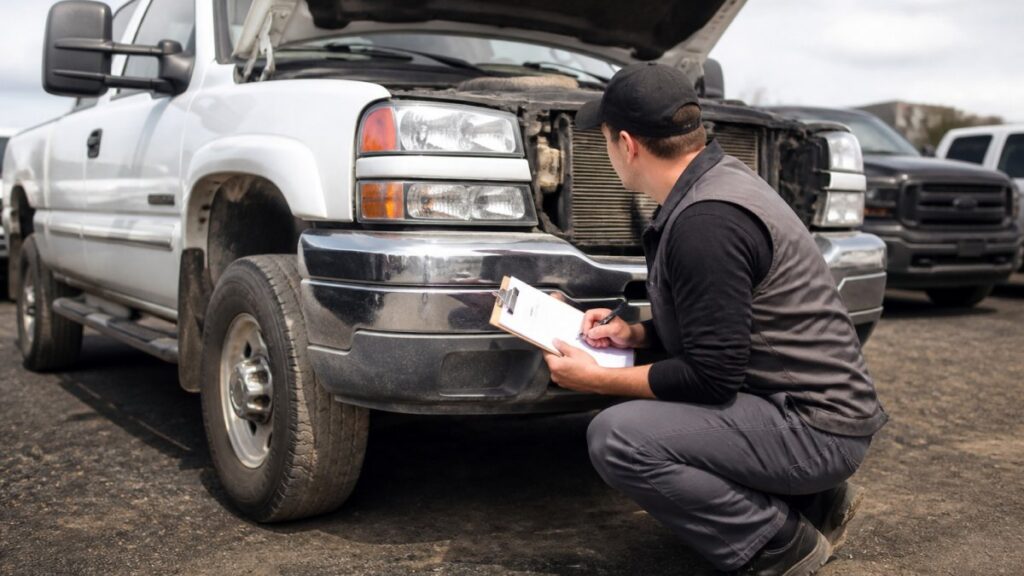
Last Updated: October 22, 2026
Quick Summary
A used truck buying checklist helps you inspect nine critical areas before purchase: exterior condition, engine performance, tires and brakes, interior systems, service history, title verification, and test drive performance. This systematic approach identifies hidden mechanical failures and frame damage that could cost thousands in repairs.
- Check tire tread depth with a penny; tread below 2/32 inch requires replacement
- Inspect engine oil for milky color or white buildup inside the oil cap, indicating coolant contamination
- Measure brake pad thickness through wheel spokes; pads should be at least 1/4 inch thick
- Verify the truck’s title is clean with no liens or salvage designations before purchase
- Use an OBD-II scanner to read diagnostic trouble codes and check NHTSA database for recalls
Table of Contents
- Used Truck Buying Checklist: What to Inspect Before Purchase
- Exterior Inspection and Body Condition
- Engine and Powertrain Performance
- Tires, Brakes, and Suspension Components
- Used Truck Inspection Checklist: Interior and Electrical Systems
- Questions to Ask When Buying a Used Truck
- Used Truck Test Drive Checklist
- Digital Diagnostics and Title Verification
- Frequently Asked Questions
Used Truck Buying Checklist: What to Inspect Before Purchase
Buying a used truck is one of the largest purchases most people make. A single hidden mechanical failure or undetected frame damage can cost thousands in repairs, or worse, compromise your safety on the road. This is where a thorough used truck buying checklist becomes your insurance policy.
At Whyte Knyte Inspection, we identify the critical inspection points that separate a solid purchase from a costly mistake. Most buyers skip the detailed checks because they’re either unfamiliar with what to look for or assume the dealer has already vetted the vehicle. Neither assumption holds up in practice.
The checklist below covers nine critical inspection categories that catch the issues most buyers miss. We’ve organized them to mirror a real inspection workflow, starting with what you can see and progressing to what requires hands-on testing. By the time you finish this checklist, you’ll know exactly what to evaluate, and more importantly, what questions to ask the seller when something doesn’t add up.
Exterior Inspection and Body Condition
The exterior tells a story about how the truck has been treated. Rust, misaligned panels, and frame damage are immediate red flags that suggest either poor maintenance, accident history, or both.
Start by walking around the truck in natural daylight.
Look closely at the undercarriage. Get down with a flashlight and inspect the frame rails, suspension components, and axle areas for rust and corrosion.
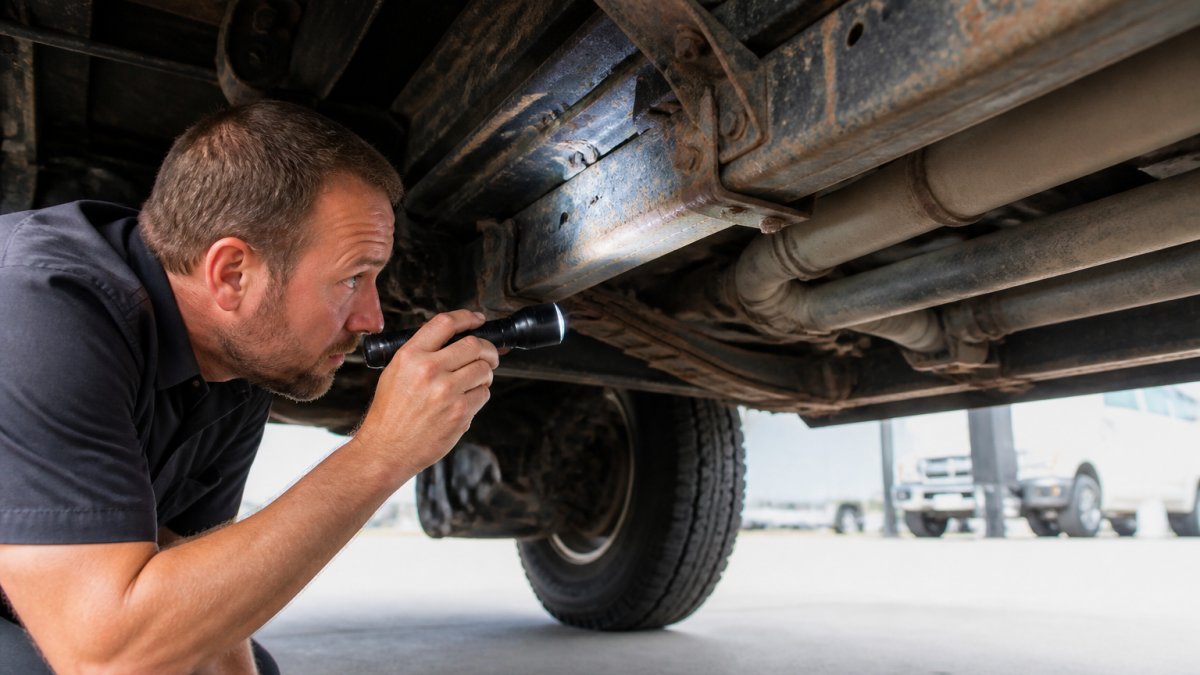
Check body panel gaps and alignment by standing back and looking at the truck’s profile. Doors, hood, and bed should align smoothly with the frame.
Inspect the rubber seals around doors and windows. Cracked or deteriorated seals allow water intrusion, which leads to rust and interior damage.
Engine and Powertrain Performance
The engine and powertrain represent the truck’s mechanical heart. Problems here are expensive to repair and directly impact reliability.
Start with a cold engine inspection before the truck is started. Check the engine oil condition by pulling the dipstick.
Inspect all visible fluid leaks. Look under the truck for drips or stains. Common leak points include the oil pan gasket, transmission pan, and coolant hoses.
Start the engine and listen for unusual sounds. A rough idle, knocking, or grinding noise suggests internal engine problems.
Test the transmission by shifting through all gears, Park, Reverse, Neutral, Drive, and Low (if applicable). Shifts should be smooth and immediate.
Tires, Brakes, and Suspension Components
Tires and brakes are safety-critical systems that show wear patterns revealing how the truck has been driven and maintained.
Measure tire tread depth using a penny. Insert the penny into the tread with Lincoln’s head upside down.
Inspect the tire sidewalls for cracks, bulges, or damage. Look at the date code on the sidewall (a four-digit number showing the week and year of manufacture).
Look at the brake pads through the wheel spokes. Pad thickness should be at least 1/4 inch. If pads are thin or unevenly worn, brakes need service soon.
Inspect suspension components by looking at the shocks and struts. They should be dry; oil leaks indicate worn seals and reduced damping.
Used Truck Inspection Checklist: Interior and Electrical Systems
The interior reveals how the truck has been used and maintained over time. Excessive wear or damage here often correlates with mechanical neglect.
Sit in the driver’s seat and assess overall upholstery condition. Tears, stains, and excessive wear are cosmetic but affect resale value and comfort. Check the dashboard for cracks or fading, common on older trucks exposed to sun.
Turn on the headlights, brake lights, and turn signals. Check them from outside the truck to confirm they work. Test high beams and fog lights if equipped.
Inspect the coolant level in the overflow reservoir. It should be between the minimum and maximum marks. Low coolant suggests a leak or evaporation.
Questions to Ask When Buying a Used Truck
Asking the right questions fills gaps that a visual inspection alone cannot reveal. The seller’s answers, and their willingness to provide documentation, tell you a lot.
Ask for complete service history and maintenance records. A truck with documented oil changes, fluid flushes, and component replacements has been cared for.
Ask about towing capacity and actual towing history. Trucks used for heavy towing experience greater wear on the engine, transmission, and suspension. Ask whether the truck has towed trailers, how often, and what weight.
Ask if the truck has ever been in an accident or required frame repairs. Many sellers will disclose this; those who won’t are hiding something. Ask about previous owners and ownership duration.
Used Truck Test Drive Checklist
The test drive is where the truck reveals how it actually performs under load and in real driving conditions. This is your final opportunity to identify problems before committing to the purchase.
Drive in a straight line and assess steering feel. The steering should be responsive without excessive play. Listen for creaking or clicking from the steering column.
Accelerate gently and listen for engine knock or hesitation. The truck should accelerate smoothly across the RPM range. Listen for transmission shift points; shifts should be smooth and nearly imperceptible.
Test 4WD engagement if equipped. Shift into 4WD at low speed and feel for smooth engagement. The front axle should lock without grinding or clunking.
Digital Diagnostics and Title Verification
Modern trucks contain onboard diagnostic systems that reveal hidden mechanical problems invisible to the human eye.
Use an OBD-II scanner to read the truck’s diagnostic trouble codes. Connect the scanner to the OBD-II port (usually located under the dashboard on the driver’s side).
Run a VIN check through the National Highway Traffic Safety Administration (NHTSA) database at NHTSA Vehicle History Search.
Verify the title status by reviewing the actual title document. Confirm that the seller’s name matches the title and that there are no liens or salvage designations.
At Whyte Knyte Inspection, we combine this checklist approach with professional-grade diagnostic equipment and hands-on expertise. Our mobile inspectors travel to your truck’s location and deliver a comprehensive, photo-documented report within 24-48 hours.
Buying a used truck without a thorough inspection is gambling with your money.
| Inspection Area | What to Check | Red Flags | Why It Matters |
|---|---|---|---|
| Exterior & Body | Rust, panel gaps, frame damage | Misaligned doors, deep pitting, frame cracks | Structural integrity and safety |
| Engine & Powertrain | Oil condition, fluid leaks, transmission shifts | Milky oil, active drips, rough shifts | Mechanical reliability and repair costs |
| Tires & Brakes | Tread depth, pad thickness, brake feel | Tread below 2/32″, thin pads, spongy pedal | Safety and replacement expense |
| Interior & Electrical | Dashboard function, lights, gauges | Non-responsive controls, dim lights, warning lights | Comfort, safety, and electrical system health |
| Service History | Maintenance records, major repairs | Missing records, infrequent service | Owner care level and remaining component life |
| Title & History | Clean title, accident history, recalls | Salvage title, multiple owners, active recalls | Legal ownership and hidden damage |
Frequently Asked Questions
What should I check when buying a used truck?
Start with the exterior for rust and frame damage, then inspect the engine, powertrain, and fluid levels. Check tread wear on tires, brake pad thickness, and suspension components. Review the service history and maintenance records to verify regular upkeep. Run a VIN check to confirm title status and accident history. Finally, take a thorough test drive to assess how the transmission shifts and whether the 4WD engages smoothly. A used truck pre-purchase inspection covers all these areas systematically.
How do I inspect a used truck before buying it?
Use a structured used truck inspection checklist to stay organized. Begin outside, looking for rust, corrosion, and frame damage. Move to the engine bay to assess oil condition and check for fluid leaks. Inspect tires for adequate tread wear and examine brake pads. Inside, test the electrical systems and verify coolant levels. Then drive the truck to listen for differential noise and confirm 4WD engagement works. Digital diagnostics with an OBD-II scanner will reveal any hidden mechanical failure codes that aren’t obvious during a visual inspection.
What questions should I ask when buying a used truck?
Ask for complete service history and maintenance records to verify regular upkeep. Request the mileage verification and whether the odometer has been checked. Inquire about towing capacity and whether the truck has been used for towing or off-road work, which can indicate heavier wear. Ask about any accident history, frame repairs, or previous flood damage. Request the VIN so you can run your own background check. Finally, ask why the seller is parting with the truck, sometimes the answer reveals issues like recurring mechanical problems.
Should I get a pre-purchase inspection before buying a used truck?
Yes, especially for trucks purchased from out of state or from private sellers. A professional used truck pre-purchase inspection catches hidden issues like frame damage, flood history, and mechanical failures that casual inspection misses. The inspection protects your investment by providing documented evidence of the truck’s actual condition before you commit financially. For fleet managers buying multiple trucks, professional inspections reduce the risk of purchasing vehicles that will require costly repairs shortly after acquisition.
What are the red flags when buying a used truck?
Watch for fluid leaks under the engine, rust or corrosion on the frame and chassis, and uneven tread wear suggesting suspension problems. Be wary of mismatched body panel gaps, which indicate previous accidents or poor repairs. Listen for differential noise or grinding during the test drive. Check that the title status is clean, salvage, branded, or lien titles signal serious past damage. Verify mileage against service records; discrepancies suggest odometer rollback. Finally, be cautious if the seller cannot provide maintenance records or avoids questions about accident history or towing usage.
How can I check a used truck’s history?
Start with a VIN check using services that access accident history, title status, and previous ownership records. Request the vehicle’s service history and maintenance records from the seller. Run an OBD-II scanner to detect any stored or pending diagnostic trouble codes that indicate mechanical issues. Ask the seller directly about past accidents, frame repairs, flood damage, and towing usage. Cross-reference the mileage shown on the odometer against service records to confirm mileage verification. A comprehensive background check catches issues like salvage titles or undisclosed accidents before you make an offer.
How do I test-drive a used truck before buying it?
Use a used truck test drive checklist to evaluate performance systematically. Start by listening to the engine at idle and under acceleration for unusual noises. Test the transmission shifting through all gears smoothly without hesitation or grinding. If equipped, engage the 4WD to confirm it activates properly. Listen for differential noise, which sounds like grinding or clunking from the rear axle. Test the brakes at various speeds to ensure they’re responsive. Drive on different road surfaces to assess suspension comfort and handling. Pay attention to steering feel and check that all electrical systems respond correctly.
What mileage is too high for a used truck?
There’s no absolute cutoff, a well-maintained truck with 200,000 miles and complete service history may be safer than a neglected truck with 80,000 miles. Focus on mileage verification and maintenance records rather than the odometer reading alone. Trucks designed for heavy-duty work often run 300,000+ miles reliably if serviced regularly. Consider the truck’s age relative to mileage; a 10-year-old truck with 120,000 miles is reasonable, but one with 200,000 miles suggests heavy use. Always have a professional inspection to assess the actual condition of the powertrain and chassis regardless of mileage.
