Last Updated: October 24, 2026
Quick Summary
A classic car pre-purchase inspection systematically evaluates mechanical systems, body condition, interior details, and documentation to reveal hidden rust, mechanical problems, and authenticity issues before purchase. This comprehensive assessment protects buyers from costly surprises by checking everything from engine performance and structural integrity to flood damage and odometer discrepancies.
- Inspectors perform cold starts, test fluid condition, and road tests to identify engine, transmission, and brake problems.
- Lift inspections catch structural rust, frame damage, and flood water stains invisible from above the vehicle.
- Paint overspray, misaligned panels, and measuring tools detect accident history and collision repairs.
- Odometer rollback is flagged when mileage doesn’t match interior wear patterns like brake pedal condition.
- Reports should arrive within 24-48 hours with detailed photos documenting each finding for negotiation leverage.
Table of Contents
- Why a Classic Car Pre-Purchase Inspection Matters
- Creating Your Classic Car Inspection Checklist
- Understanding Classic Car Pre-Purchase Inspection Costs
- What a Comprehensive Classic Car Inspection Report Reveals
- Critical Questions to Ask When Buying a Classic Car
- Red Flags: What Inspectors Look For That You Might Miss
- Interpreting Your Inspection Report and Negotiating
- Scheduling Your Classic Car Inspection
- Frequently Asked Questions
Why a Classic Car Pre-Purchase Inspection Matters
Buying a classic car without a professional inspection is like signing a blank check. A classic car pre-purchase inspection protects you from hidden rust and mechanical problems that won’t surface until after you’ve paid.
The stakes are high because classic cars aren’t like typical used vehicles. According to Butter Classics’ Classic Car Investment Due Diligence guide, a comprehensive classic car pre-purchase inspection typically costs between a modest investment and a higher amount depending on the vehicle’s value and complexity, but that expense is trivial compared to discovering frame damage or a rolled-back odometer after you own the car.
At Whyte Knyte Inspection, our inspectors have found structural issues, flood damage, or concealed mechanical problems that led buyers to walk away from deals that looked perfect. Learn why professional classic car inspections are essential before making your purchase decision. That’s the value of an independent inspection: an unbiased advocate with zero financial interest in the transaction.
Creating Your Classic Car Inspection Checklist
A proper classic car inspection checklist is a systematic walkthrough of every component affecting safety, performance, authenticity, and value, mechanical systems, body condition, interior details, and documentation, captured in photos for later review. Browse our classic cars category to explore available vehicles for purchase.
Mechanical Components and Performance
The engine and drivetrain are where most hidden problems live. Your inspector should perform a cold start to check for rough idling, excessive smoke, or unusual noises, and listen for knocking, pinging, or valve train noise that suggests internal damage.
A qualified mechanic will check for smooth shifts, delayed engagement, or slipping, and inspect fluid levels and condition across the engine, transmission, differential, and brakes, dark, burnt-smelling fluid is a red flag.
A road test reveals how the vehicle behaves under load, accelerating, braking, turning, and climbing hills. Electrical systems need testing too: lights, charging voltage, and gauge response separate a well-maintained classic from a neglected one.
Body, Paint, and Structural Integrity
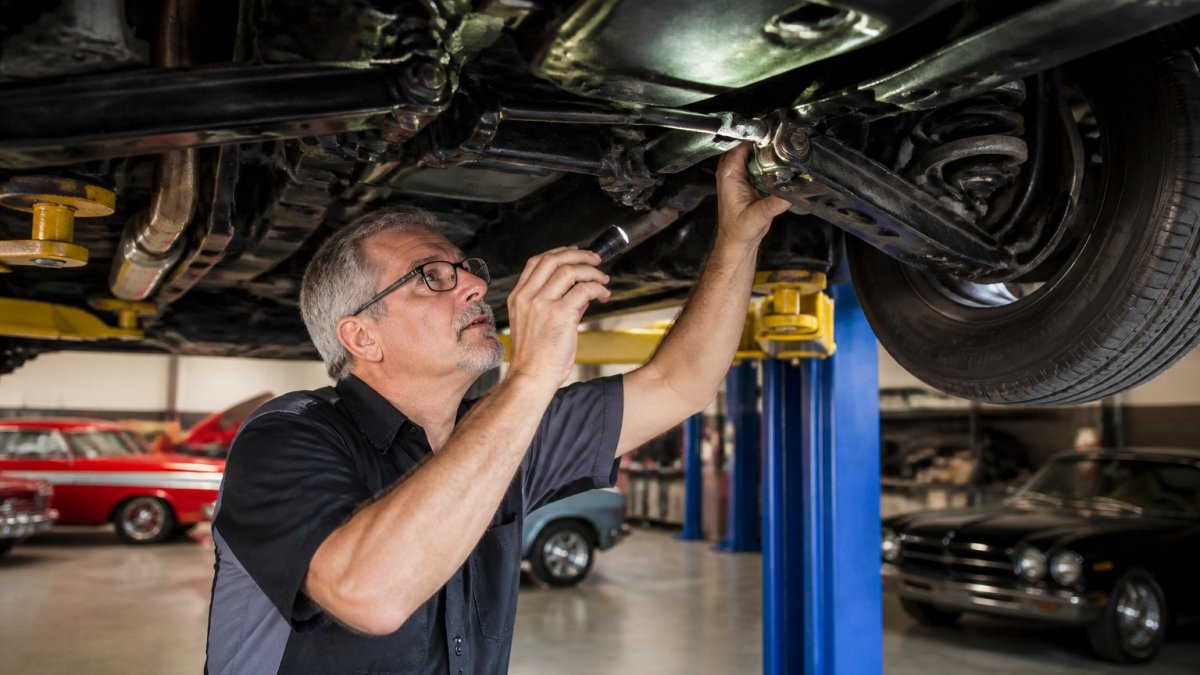
Rust is the silent killer of classic cars. A lift inspection of the frame, floor pans, wheel wells, and undercarriage catches corrosion invisible from above. Surface rust is cosmetic; structural rust or compromised welds is a deal-breaker.
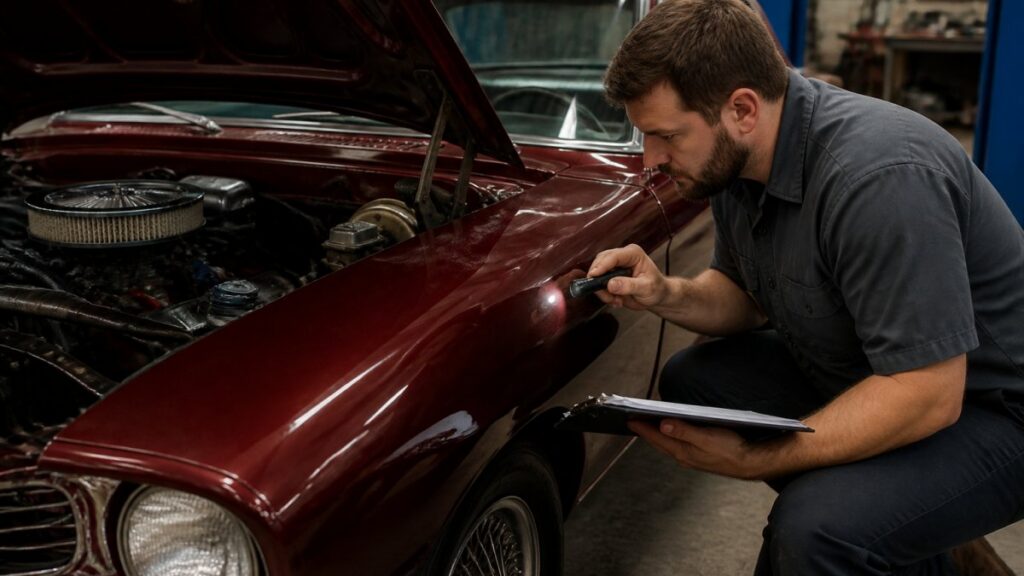
Body panels should be checked for alignment, gaps, and collision repair, misaligned doors, uneven gaps, or overspray indicate accident history, and measuring tools detect replaced or straightened panels. Glass should be original where possible, since replacement glass affects value and authenticity.
Structural integrity is non-negotiable: the frame must be straight, welds solid, and there should be no evidence of flood damage. A submerged vehicle will have electrical gremlins, accelerated rust, and mold.
Interior Condition and Authenticity
The interior reveals how the car was used and cared for. Seat condition, dashboard cracks, carpet wear, and headliner sagging indicate age and use, and original upholstery and trim add significant value.
Electrical components like windows, locks, wipers, and climate control should all function; non-working systems indicate neglect or upcoming repair costs. The odometer should match apparent condition, a car with 25,000 miles shouldn’t have worn brake pedals or a faded steering wheel.
If the car has been restored, you want to know whether the interior was done correctly for the year and model. Incorrect materials, colors, or components reduce value and indicate substandard restoration work.
Understanding Classic Car Pre-Purchase Inspection Costs
Inspection pricing depends on the vehicle’s age, complexity, condition, and modifications.
A thorough inspection is insurance against far larger expenses: a few hundred dollars can save you thousands by revealing problems before you buy. Learn more about professional pre-purchase inspection pricing to understand the cost structure and what factors into the fee.
Whyte Knyte Inspection delivers comprehensive reports within 24-48 hours, so you get answers while negotiations are still active. Our mobile inspectors travel to the vehicle’s location, dealership, private seller, or auction lot, and you receive detailed photo documentation of every finding.
What a Comprehensive Classic Car Inspection Report Reveals
Your inspection report should be thorough, photo-documented, and easy to understand, a complete picture of the vehicle’s condition, not just a list of problems.
A quality report covers mechanical systems, body and paint, interior, electrical function, and an overall assessment, with photos documenting each finding and a clear distinction between minor cosmetic issues and serious mechanical or structural problems. You can review a used car inspection report sample to see what a comprehensive inspection looks like and what information it contains.
The report should separate items needing immediate attention from deferred maintenance, new brake pads is different from a transmission rebuild, so you understand the cost implications.
Authenticity details matter too. The report should note whether components are original, correct replacements, or incorrect substitutions. Matching numbers (engine, transmission, and body numbers corresponding to original specifications) add significant value, so your inspector should verify them and flag discrepancies.
| Finding Type | What It Means | Action Required |
|---|---|---|
| Structural rust | Metal corrosion compromising frame or floor pans | Serious concern; negotiate or walk away |
| Surface rust | Cosmetic corrosion on non-structural surfaces | Minor; budget for cosmetic repair |
| Fluid leaks | Oil, coolant, or transmission fluid escaping | Indicates worn seals or gaskets; plan repairs |
| Electrical issues | Non-functioning lights, gauges, or climate control | May indicate wiring problems or failed components |
| Odometer discrepancy | Mileage doesn’t match wear patterns | Red flag for rollback; verify history |
| Paint overspray | Evidence of repainting or collision repair | Indicates accident history or poor restoration |
| Misaligned panels | Doors or hood don’t fit properly | Suggests frame damage or poor repair work |
Critical Questions to Ask When Buying a Classic Car
Before you commit, your inspection report should answer these questions clearly. If your inspector can’t verify something, dig deeper or reconsider the deal.
Is the vehicle original or restored? Original cars are worth more, but a poor restoration can tank value.
Does the title match the vehicle? A clean title is essential, salvage, flood, or branded titles indicate serious problems.
Has the vehicle been in an accident? Your inspector will look for collision repair, but official history comes from services like Carfax or AutoCheck.
Are all the numbers matching?
What’s the maintenance history? A well-documented service record shows the car was cared for.
Red Flags: What Inspectors Look For That You Might Miss
Experienced inspectors catch details casual buyers overlook. These warning signs should make you pause before signing paperwork.
Flood damage is nearly invisible but devastating.
Odometer rollback is still common with older vehicles. A 1975 classic showing 35,000 miles but with a worn brake pedal, faded steering wheel, and tired interior is suspect.
Frame damage is catastrophic but sometimes hidden. A poorly repaired vehicle may look fine cosmetically but have structural problems affecting handling and safety.
Mismatched or incorrect components suggest poor restoration or modification, an engine that doesn’t match the year, a non-original transmission, or ill-fitting interior trim. This affects value and reliability.
Deferred maintenance is expensive.
Interpreting Your Inspection Report and Negotiating
Once you have your inspection report, you’re in control. Use the findings to negotiate the price down or ask the seller to address major issues before you take ownership.
Major structural or mechanical problems are legitimate reasons to renegotiate.
Minor cosmetic issues or deferred maintenance are less compelling but still matter.
Some findings are deal-breakers entirely. Flood damage, odometer rollback, or severe structural rust are reasons to walk away, no negotiation can fix these problems completely.
Use your inspector’s report as leverage, not ammunition for aggressive haggling.
If the seller refuses to negotiate or becomes defensive about findings, reconsider the entire deal. A seller who won’t acknowledge obvious problems isn’t someone you want to do business with.
Scheduling Your Classic Car Inspection
Getting an inspection scheduled should be straightforward. You need a professional who can reach the vehicle quickly, deliver thorough results, and communicate clearly.
When you contact an inspection service, provide the vehicle’s year, make, model, mileage, and condition so the inspector can prepare and estimate timing.
Availability matters when buying out of state or from an auction lot.
Ask about photo documentation and report delivery.
Be present for the inspection if possible, you’ll learn more watching the inspector work and can ask questions in real time.
Elite Restomods’ guide to pre-purchase inspections for modified classic cars emphasizes the importance of having a specialist inspect modifications to verify they were done safely and correctly.
Scheduling a mobile inspection through a service like Whyte Knyte Inspection eliminates arranging transportation or traveling to a shop. Our inspectors come to you, locally or across the country, and deliver comprehensive results so you can decide with confidence. Book a mobile inspection for classic car purchase to get started.
Understanding inspection costs helps you budget appropriately.
Buying a classic car is a significant investment.
Frequently Asked Questions
What is included in a pre-purchase car inspection for a classic car?
A comprehensive pre-purchase inspection for a classic car covers mechanical systems (engine, transmission, brakes, steering, suspension), body condition (rust, paint, panel alignment), interior components, tires and wheels, electrical systems, fluid leaks, and vehicle history verification. Inspectors also perform a cold start and road test to evaluate overall performance. The inspection report includes detailed findings, photos, and repair estimates for identified issues.
How much does a classic car pre-purchase inspection cost?
Pricing depends on the vehicle’s value, age, complexity, scope of work, location accessibility, and inspector expertise. Contact Whyte Knyte Inspection for a personalized quote based on your specific vehicle and needs.
Should you get a classic car inspected before buying it?
Yes. A professional pre-purchase inspection is essential when buying a classic car, especially for high-value acquisitions or remote purchases. Inspections reveal hidden damage, frame issues, rust, mechanical problems, and authenticity concerns that affect value and safety. An independent inspector with no financial interest in the transaction acts as your advocate, helping you avoid costly mistakes and negotiate fairly based on documented condition.
What are the biggest red flags when buying a classic car?
Major red flags include active rust or corrosion on the frame, fluid leaks from the engine or transmission, mismatched paint indicating previous accidents, odometer rollback signs, missing or altered VIN plates, inconsistent ownership records, and a cold start that reveals engine problems. Structural damage, extensive welding, or frame bending also signal serious issues. A qualified inspector identifies these problems before you commit to the purchase.
How do you inspect a classic car before buying it?
Start by reviewing the vehicle history and ownership records for authenticity. Schedule a professional pre-purchase inspection that includes a visual examination on a lift, a cold start test, a road test, and a detailed mechanical assessment. Ask the seller specific questions about maintenance history, restoration work, and any known issues. Request a written inspection report with photos. Use these findings to negotiate price or walk away if major problems exist.
Can a mechanic inspect a classic car at a dealership or private seller?
Yes. A qualified independent mechanic or automotive specialist can inspect a classic car at a dealership, private seller’s location, or auction lot. Mobile inspectors travel directly to the vehicle, which is especially valuable for remote purchases or out-of-state acquisitions. An independent inspector has no financial interest in the sale, ensuring an objective assessment. Many inspectors deliver comprehensive photo-documented reports within 24-48 hours, allowing you to make an informed decision quickly.
What should you do if a classic car inspection finds problems?
Review the inspection report carefully and prioritize issues by severity and cost. Use the findings to negotiate a lower purchase price or request that the seller complete repairs before sale. For major structural, engine, or transmission problems, consider walking away if the cost of repairs exceeds your budget or the vehicle’s fair market value. An inspection report gives you the documentation needed to negotiate confidently.
