Table of Contents
- What Is a Remote Car Inspection and Why It Matters
- How the Remote Inspection Process Works
- What to Look for in a Used Car Inspection Report
- Book Mobile Pre-Purchase Inspection Online
- Mobile Mechanic Pre-Purchase Inspection Cost and What Affects It
- How to Negotiate Price After a Bad Car Inspection
- Common Vehicle Issues Identified in Remote Inspections
- Frequently Asked Questions
Last Updated: September 25, 2026
What Is a Remote Car Inspection and Why It Matters
A remote car inspection is a professional vehicle assessment conducted by a certified mechanic who travels to the car’s location to evaluate its condition and provide a detailed report within 24-48 hours, eliminating travel hassle.
When buying out of state or from a private party, hidden issues like frame damage, flood history, odometer rollbacks, and mechanical problems aren’t visible to the untrained eye. At Whyte Knyte Inspection, we act as your independent advocate with zero financial interest in the outcome, ensuring objectivity that a seller-paid mechanic cannot provide.
Remote inspections serve fleet managers, classic car collectors, and individual buyers. The process standardizes what gets checked, documents everything with photos, and gives you facts to negotiate with rather than relying on gut feeling.
The best time to order an inspection is before you make an offer, not after. This changes your negotiating position entirely. You’re making an offer contingent on inspection results, not trying to back out of a deal you’ve already agreed to.
How the Remote Inspection Process Works
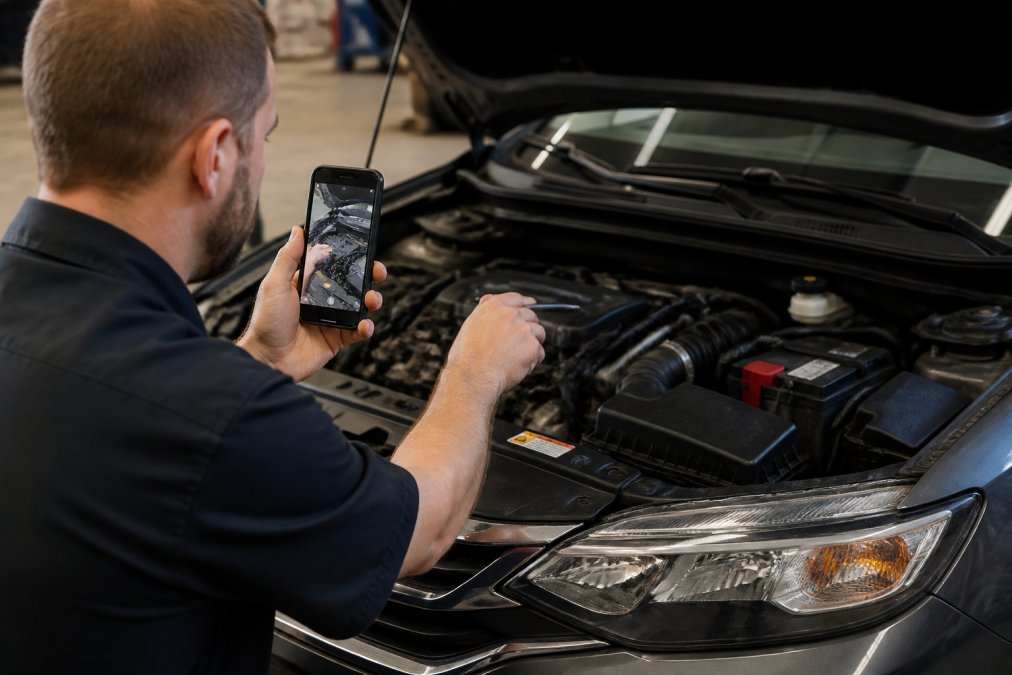
You schedule the inspection at the vehicle’s location, dealership, private residence, or auction lot. The inspector arrives with tools to conduct a comprehensive assessment without moving the car.
The inspector examines the engine, transmission, suspension, brakes, undercarriage, and electronic systems. They verify odometer readings against history, assess rust and frame damage, check for flood indicators, and test fluid condition for signs of previous accidents or repairs.
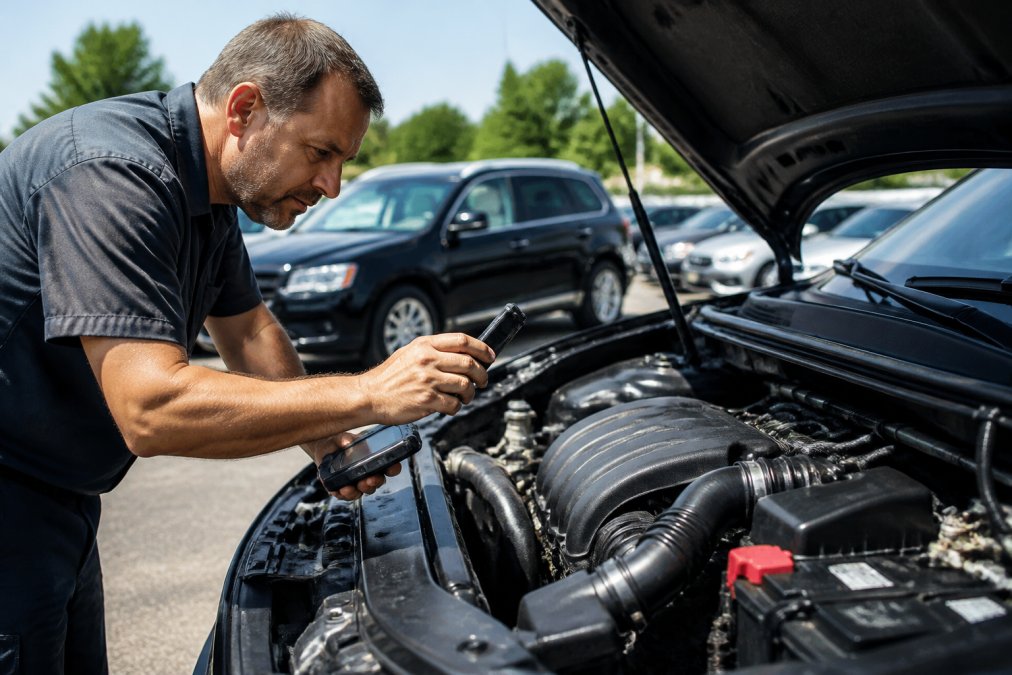
The inspector documents everything with photos and notes. Within 24-48 hours, you receive a comprehensive report organized by system with photos and a summary of issues. This report becomes your negotiating tool for price reductions, repair demands, or walking away.
A professional remote inspection report gives you documentation to support price negotiations. Sellers take written findings more seriously than verbal concerns.
What to Look for in a Used Car Inspection Report
An effective inspection report should be organized by vehicle system with visual evidence. Check for clarity, vague language or missing sections suggest a rushed inspection.
Look for coverage of major systems: engine, transmission, cooling, electrical, brakes, suspension, undercarriage, paint, body, and interior. The report should note age, mileage, and condition rating.
Focus on findings flagged as “concerns.” Safety-critical issues (brakes, steering, suspension) should drive your decision immediately. Mechanical issues (transmission slipping, engine noise, leaks) determine negotiation leverage. Cosmetic issues matter less unless they affect value.
Red flags include flood damage (rust in unexpected places, moisture in connectors, discoloration under carpets), frame damage (misaligned panels, welding marks), or odometer inconsistencies. These problems don’t improve and often cost thousands to repair.
Book Mobile Pre-Purchase Inspection Online
Booking an inspection online takes minutes, but coordinating access with private sellers or distant dealerships requires strategy.
Scheduling is straightforward: provide location, date, and vehicle details. Most services confirm within hours, removing friction from getting professional assessment.
The harder part is gaining seller cooperation. Private sellers may worry about liability, theft, or damage, or view inspection as distrust.
Frame inspection as standard practice: “I’d like a professional inspection before we finalize, this is standard for out-of-state purchases.” Schedule during their preferred time and provide inspector credentials upfront. Emphasize the inspection is non-invasive and the vehicle stays on their property. Include the inspection contingency in your initial offer, not as an afterthought. Schedule quickly after they accept your offer, this signals momentum and increases cooperation. Dealerships rarely resist inspections and often provide service bay access.
Specify your timeline when booking. Many services handle rush turnarounds for time-sensitive decisions. Fleet managers can arrange volume inspections with coordinated scheduling.
Pay for the inspection upfront, not contingent on findings. This ensures no financial incentive to bias the assessment. Never agree to inspections where the seller pays or the inspector offers discounts based on purchase decisions.
Schedule the inspection within 48 hours of the seller accepting your offer. This timing keeps momentum on your side and signals to the seller that you’re serious and moving forward, which increases their willingness to cooperate.
Mobile Mechanic Pre-Purchase Inspection Cost and What Affects It
Inspection cost depends on vehicle type, location accessibility, and turnaround time. Compact cars cost less than trucks; dealership locations cost less than remote residences.
For current pricing and quotes, visit Whyte Knyte Inspection’s website or contact them directly for a customized estimate.
Value comes from report quality and inspector expertise. Thorough inspections catch issues cheaper ones miss, flood damage, frame repairs, transmission problems, that require trained eyes.
Consider inspection cost against potential repair costs. Hidden transmission issues cost $3,000-5,000 to repair. An inspection costing less is an investment.
Individual buyers purchasing vehicles over $5,000 from private sellers or out-of-state dealerships. The inspection cost is minimal compared to the protection against hidden damage.
How to Negotiate Price After a Bad Car Inspection
An inspection report documenting problems strengthens your negotiating position. How you use that documentation determines whether you get a fair deal or walk away.
Before negotiating, spend 30 minutes organizing findings and setting your walk-away threshold. This prevents emotional negotiation and keeps you anchored to facts.
Categorize findings into three tiers: (1) Safety-critical (brakes, steering, suspension, frame, flood, electrical), demand repair, price reduction, or walk away; (2) Mechanical (transmission leaks, engine noise, cooling, suspension wear), your primary negotiating points; (3) Cosmetic (rust, interior wear, paint), secondary negotiating points only.
For each Tier 2 issue, research realistic repair costs. Don’t guess, sellers will challenge vague numbers.
Add repair costs for Tiers 1 and 2, then add 25-30% contingency buffer. Subtract from asking price for your walk-away threshold. This discipline prevents overpaying.
Contact the seller in writing (email or text). Lead with: “I’ve had a professional inspection completed. The report identified items needing attention. I’d like to work with you to reach a fair price.” This removes accusation and keeps negotiation cooperative.
Present findings in severity order, starting with Tier 1. For each, include the specific finding, photo if available, repair cost, and requested resolution. Example: “The inspection notes ‘Brake fluid appears dark and contaminated.’ Professional service costs $400-600. Please either complete this service or reduce the asking price by $600.” This specificity prevents dismissal.
Move to Tier 2 only after Tier 1 is resolved. Don’t overwhelm the seller. Address safety first, then mechanical. Concede on Tier 3 items in exchange for Tier 2 movement.
Use language like “The inspection shows…” rather than “You didn’t disclose…” Assume good faith to keep negotiation collaborative. Collaborative negotiations close deals.
If they claim inaccuracy, offer their own mechanic inspection at their cost, most won’t take it. If they claim problems are minor, tie complaints to repair costs: “Brake fluid contamination costs $400-600 to fix. Let’s split the difference at $300 off.” If they refuse to negotiate, walk away, a seller unwilling to address documented problems signals other issues.
Formalize negotiated terms in writing before closing.
This is the critical step most buyers skip, and it costs them thousands. Once you and the seller agree on a price reduction or repair requirement, get it in the purchase agreement in writing. Verbal promises evaporate. Written terms protect you.
If you’ve negotiated a price reduction, the purchase agreement should state: “Purchase price is $[amount], reflecting a $[reduction amount] adjustment for inspection findings documented in [inspection company] report dated [date].”
If you’ve negotiated repairs before closing, the agreement should specify: “Seller agrees to complete [specific repair] to manufacturer specifications before vehicle delivery. Buyer reserves the right to have repairs inspected by a third party before accepting the vehicle.”
If you’ve negotiated a post-closing repair allowance, specify: “Seller will provide $[amount] at closing to cover [specific repair]. Buyer will provide receipts for completed work within [timeframe].”
Don’t rely on handshake deals. Don’t assume the seller will remember what you discussed. Get it in writing, have both parties sign, and keep a copy. This protects you if the seller tries to back out or if disputes arise after closing.
Document all communication. Keep every email, text, and written offer.
Never close on a vehicle without written confirmation of negotiated repairs or price adjustments. Sellers often claim they “forgot” verbal agreements or “misunderstood” what was promised. Written terms in the purchase agreement are the only protection you have.
The inspection report is your leverage. Use it strategically: organize findings by severity, calculate repair costs, set a walk-away threshold, and formalize all agreements in writing before closing. This approach turns inspection findings into negotiating power rather than just information.
Common Vehicle Issues Identified in Remote Inspections
Professional remote inspections consistently identify several categories of problems that buyers miss on their own. Understanding these helps you know what to watch for when reviewing your inspection report.
Frequently Asked Questions
Is a pre-purchase inspection worth it?
Yes. A professional pre-purchase inspection identifies hidden damage, mechanical issues, and fraud before you commit financially. For vehicles purchased out of state or from private sellers, a remote car inspection protects you from costly surprises after purchase. The cost of an inspection is minimal compared to repair bills or the loss from buying a flood-damaged or frame-damaged vehicle. Independent inspectors have zero financial interest in the transaction, so their findings are unbiased.
Can a mobile inspector check for flood damage or odometer fraud?
Mobile inspectors conduct thorough vehicle diagnostic checks for flood damage by examining undercarriage areas, checking for water stains, and assessing rust patterns. They verify odometer accuracy against vehicle history reports and look for signs of tampering. However, detecting sophisticated odometer rollbacks may require a vehicle history report cross-reference. Always request a comprehensive report that includes both mechanical diagnostics and documentation verification to catch these red flags.
How do I arrange a mobile inspection for a car I’m buying out of state?
Contact an inspection service that operates in the vehicle’s location and request a mobile pre-purchase inspection appointment. Provide the vehicle’s address, details, and your preferred inspection date. Most services deliver comprehensive, photo-documented reports within 24-48 hours. You can book online through the inspector’s website, providing vehicle information and preferred timing. Confirm the inspector has access to the vehicle location and can perform the evaluation while you’re not physically present.
What does a professional pre-purchase inspection report cover?
A comprehensive report includes engine diagnostics, brake system evaluation, suspension components assessment, tire tread depth measurement, fluid analysis, paint thickness measurement, undercarriage inspection, electronic systems check via OBD-II scanner, and chassis damage evaluation. The report documents rust assessment, frame damage indicators, and safety concerns. Photos and detailed notes accompany each section. Quality reports also cross-reference findings with vehicle history records to flag potential odometer issues or flood damage.