
Table of Contents
- What Is Frame Damage and Why It Matters
- Common Signs of Hidden Frame Damage
- Visual Inspection for Structural Deformities
- DIY vs. Professional Inspection Tools
- Pre-Purchase Vehicle Inspection Checklist
- How Frame Damage Affects Insurance and Resale Value
- Identifying Signs of Poor Body Shop Repair
- Using a Used Car Accident History Report
- Frequently Asked Questions
Last Updated: September 27, 2026
What Is Frame Damage and Why It Matters
Frame damage is structural harm to a vehicle’s underlying support system, the metal framework that holds the body, engine, and suspension together. Unlike cosmetic dents, frame damage compromises the vehicle’s structural integrity and directly affects safety, performance, and resale value.
The frame is your car’s skeleton. It absorbs impact energy during a collision and protects occupants inside. When it bends, cracks, or warps, the entire vehicle becomes unstable. A vehicle with hidden frame damage might drive fine on day one but develop serious problems weeks later.
The difference between catching frame damage before you buy and discovering it after is thousands of dollars.
Frame damage falls into two categories: visible and hidden. Visible damage shows up as obvious dents or buckles. Hidden frame damage is trickier. It hides beneath panels, inside the frame rails, or in areas you can’t easily see. This is where most buyers get blindsided.
Common Signs of Hidden Frame Damage
Hidden frame damage reveals itself through specific symptoms. These signs rarely appear in isolation. When you spot one, dig deeper, there’s usually more.
Uneven Tire Wear and Alignment Issues
Uneven tire wear is one of the earliest warning signs of frame damage. When the frame bends, it throws the suspension geometry out of alignment. The wheels no longer sit at the correct angle, and the tires wear unevenly across their surface.
Look for these tire patterns:
- One edge of the tire worn significantly more than the other
- Cupping (scalloped dips around the tire edge)
- Bald spots on one side of multiple tires
- Wear that started recently, not gradually over years
If the vehicle pulls hard to one side when you’re driving straight, that’s another red flag. A vehicle with frame damage won’t track properly. The steering wheel may feel off-center even when driving straight. Many buyers mistake this for a simple alignment issue. It often isn’t.
Take the vehicle for a test drive on a flat, empty road. Let go of the wheel briefly (safely, in a controlled area). Does it pull left or right? Does it feel stable? A bent frame often causes the vehicle to wander or pull despite recent alignment work.
Body Panel Gaps and Misalignment
The gaps between body panels should be uniform. Doors, fenders, hood, and trunk should align perfectly. When frame damage occurs, these panels shift. The gaps become uneven.
Walk around the vehicle slowly. Look at the space between:
- Door and fender
- Hood and fender
- Trunk and rear quarter panel
- Door and door
Gaps should be roughly the same width all the way around. If one side is noticeably wider or narrower, the frame may be twisted or bent. Open the doors and trunk. Do they close smoothly? Do they require force? Misalignment causes doors to bind or close unevenly.
Check the trunk seal. Run your hand around where the trunk meets the body. Does the rubber seal sit flush? If it’s compressed in some spots and loose in others, the frame is likely warped.
Door and Trunk Latching Problems
Doors that don’t latch smoothly or require adjustment are common indicators of frame distortion. When the frame shifts, the door openings change shape. The latch mechanism no longer aligns properly.
Listen when you close the door. Does it close with a solid “thunk”? Or does it feel spongy or require extra force? A vehicle with frame damage often has doors that feel loose or require slamming to close properly.
Check the trunk too. Does it open and close smoothly? Does the latch engage firmly? A trunk that’s hard to open or doesn’t stay open on its own suggests frame misalignment.
Handling and Steering Irregularities
A bent frame changes how a vehicle handles. The suspension geometry shifts, affecting steering response and ride quality.
During a test drive, pay attention to:
- How the vehicle responds to steering input
- Whether the steering wheel is centered
- How the vehicle feels over bumps
- Any vibration in the steering wheel
- Whether the vehicle drifts or wanders
A vehicle with frame damage often feels “loose” or imprecise. The steering may feel numb or overly responsive. The ride might be rougher than normal. Bumps feel more jarring. The vehicle might bounce excessively after hitting a pothole.
These symptoms can overlap with suspension issues, but frame damage usually produces a combination of them. A bent frame affects everything, steering, suspension, alignment, and ride quality.
Visual Inspection for Structural Deformities
Visible structural damage tells the story of what happened to the frame. Look for these specific signs of impact or stress.
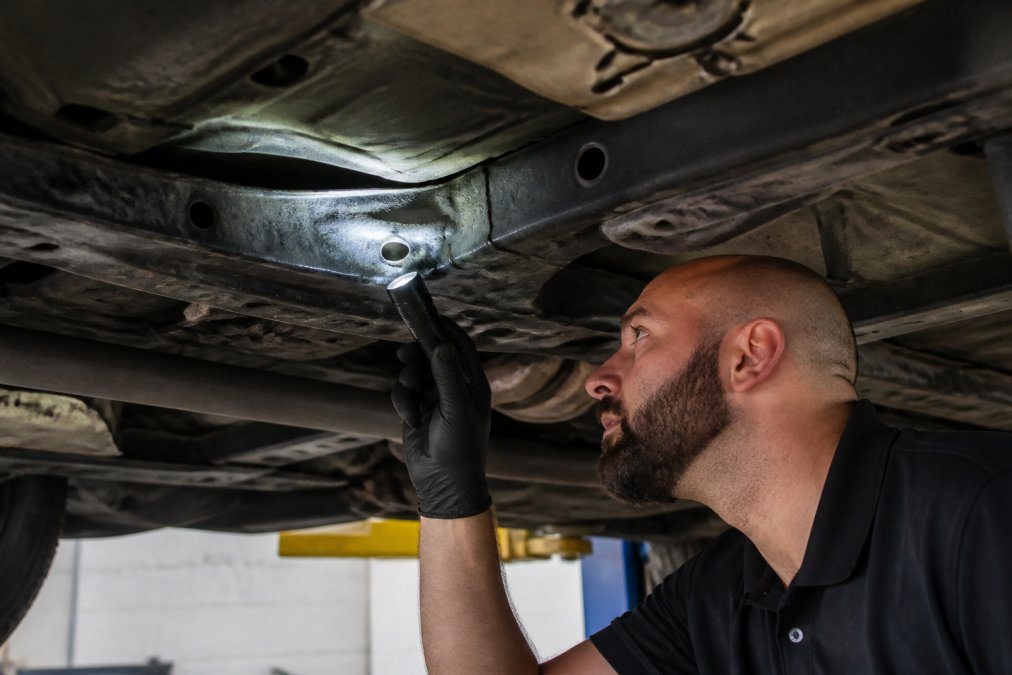
Crumple zones are designed to absorb impact energy.
- Bends or kinks in the metal
- Welds that look new or poorly done
- Paint that doesn’t match the rest of the frame
- Metal that’s been hammered or straightened
DIY vs. Professional Inspection Tools
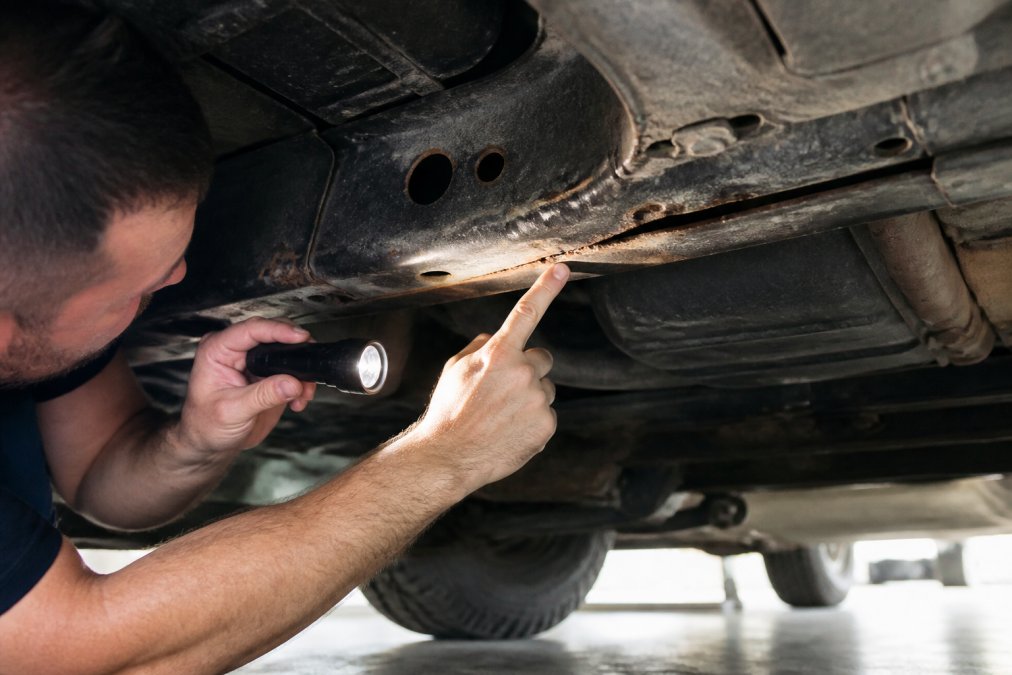
You can perform a basic visual inspection yourself. A flashlight, jack, and jack stands let you examine the undercarriage. But professional inspection tools reveal damage you can’t see with your eyes.
What you can do yourself:
- Visual inspection of frame rails and crumple zones
- Check for panel gaps and misalignment
- Test door and trunk operation
- Drive the vehicle and note handling issues
- Look for fresh paint or welds
What professionals use:
Pre-Purchase Vehicle Inspection Checklist
Before you buy, use this checklist to systematically evaluate a vehicle for hidden frame damage.
| Inspection Point | What to Check | Red Flag |
|---|---|---|
| Tire wear | Uneven wear on one edge or side | Wear is recent and one-sided |
| Panel gaps | Consistent spacing between doors, fenders, hood | Gaps vary significantly |
| Door operation | Smooth opening and closing | Doors bind, require force, or feel loose |
| Trunk seal | Rubber seal sits flush all around | Seal is compressed unevenly |
| Steering feel | Responsive, centered, smooth | Pulls to one side or feels numb |
| Ride quality | Smooth over bumps | Bouncy, harsh, or unstable |
| Frame rails | Straight, no visible bends | Kinked, bent, or welded |
| Crumple zones | Minimal deformation | Obvious buckling or crumpling |
| Paint | Consistent color and texture | Fresh paint over damaged areas |
| Welds | Smooth, consistent, factory appearance | Rough, lumpy, or visible repairs |
Step-by-step inspection process:
- Inspect the vehicle in daylight on a level surface
- Walk around slowly, checking panel gaps and alignment
- Open all doors, hood, and trunk, test operation
- Get underneath with a flashlight, look at frame rails
- Take a test drive, note steering, handling, and ride quality
- Photograph any concerns for later review
- If you spot multiple red flags, stop and get a professional inspection
How Frame Damage Affects Insurance and Resale Value
Frame damage creates two major financial problems: insurance complications and resale difficulty.
Insurance Implications and Salvage Title Risk
Insurance companies track frame damage. If a vehicle has been declared a total loss due to collision, the insurer may issue a salvage title. A salvage title means the vehicle was damaged so severely that repair costs exceeded 70-80% of its value.
Resale Value Impact
A vehicle with frame damage is worth significantly less. Even if repairs are done well, the damage history follows the vehicle. Future buyers will see it in the accident history report.
Identifying Signs of Poor Body Shop Repair
Not all frame repairs are equal. Poor repair work creates new problems down the road.
Signs of amateur repair:
- Visible welds on frame rails (should be factory-smooth or invisible)
- Paint overspray on frame, suspension, or engine components
- Mismatched paint color on body panels
- Panels that don’t align properly after repair
- Bolts that are over-tightened or stripped
- New parts that don’t match the vehicle’s age or condition
Using a Used Car Accident History Report
An accident history report is your first line of defense. Services like Carfax and AutoCheck compile insurance claims, police reports, and service records. They show whether the vehicle has been in accidents.
What the report tells you:
- Number of accidents reported
- Severity (minor, moderate, severe)
- Whether the vehicle was totaled
- Insurance claims history
- Service records from body shops
Limitations of accident reports:
Frequently Asked Questions
How can I tell if a car has hidden frame damage?
Look for uneven tire wear, body panel gaps that don’t align, doors or trunks that don’t close smoothly, and visible dents or creasing on frame rails. The vehicle may also pull to one side when driving or feel unstable during turns. A professional inspection using laser measurement and frame machines can detect structural distortion invisible to the naked eye. Request a used car accident history report to check for past collisions, and have a body shop inspect areas where welding integrity may be compromised.
What’s the difference between DIY inspection and professional frame damage assessment?
DIY inspection covers visual checks: panel alignment, tire wear patterns, and latch mechanisms. Professional inspectors use specialized tools like frame machines, laser measurement systems, and detailed photo documentation to detect chassis distortion, suspension geometry changes, and metal fatigue. Professionals can identify damage hidden beneath paint or within structural components. For high-value purchases or out-of-state acquisitions, professional assessment provides the confidence and documentation you need to make an informed decision.
Does frame damage always mean the car is totaled?
Not necessarily. Minor frame damage repaired by a qualified body shop may not result in a total loss. However, severe damage affecting crumple zones, frame horns, or unibody construction often does result in a salvage title. Even repaired frame damage reduces resale value significantly and may affect insurance rates. A professional inspection report helps you understand the severity and whether the vehicle is worth purchasing at the offered price.
How does frame damage affect insurance coverage and resale value?
Vehicles with a history of frame damage typically receive a salvage or rebuilt title, which impacts insurance premiums and coverage options. Many insurers charge higher rates or may decline coverage entirely. Resale value drops 20-40% depending on repair quality and damage severity. Buyers are often hesitant to purchase vehicles with known frame history. A pre-purchase inspection and accident history report reveal this damage before you buy, protecting both your investment and future resale prospects.