Table of Contents
- Why Professional Vehicle Inspections Matter for Buyers
- What Does a Pre-Purchase Inspection Include
- Early Detection Prevents Costly Repairs Down the Road
- Used Car Inspection Cost and What Affects the Price
- Used Car Inspection Checklist for Buyers
- How to Negotiate After a Car Inspection
- Professional Inspection vs. DIY Checks: Why Independence Matters
- Conclusion
- Frequently Asked Questions
Last Updated: October 9, 2026
Why Professional Vehicle Inspections Matter for Buyers
A professional vehicle inspection is a comprehensive evaluation of a vehicle’s mechanical, safety, and structural condition by a qualified independent inspector before you finalize a purchase.
Hidden damage, frame rust, flood history, odometer rollbacks, and transmission problems can cost thousands to repair after you’ve signed. A professional inspection catches these issues first.
Most buyers skip professional inspections, assuming the seller’s disclosure, the vehicle’s appearance, or a quick mechanic visit is enough. It’s not.
What Does a Pre-Purchase Inspection Include
A comprehensive pre-purchase inspection covers every major system affecting safety, performance, and longevity. What does a pre-purchase inspection include? A detailed assessment of the engine, transmission, brakes, suspension, tires, steering, electrical systems, frame integrity, and interior, documented with photos and a written report.
Engine and Mechanical Systems
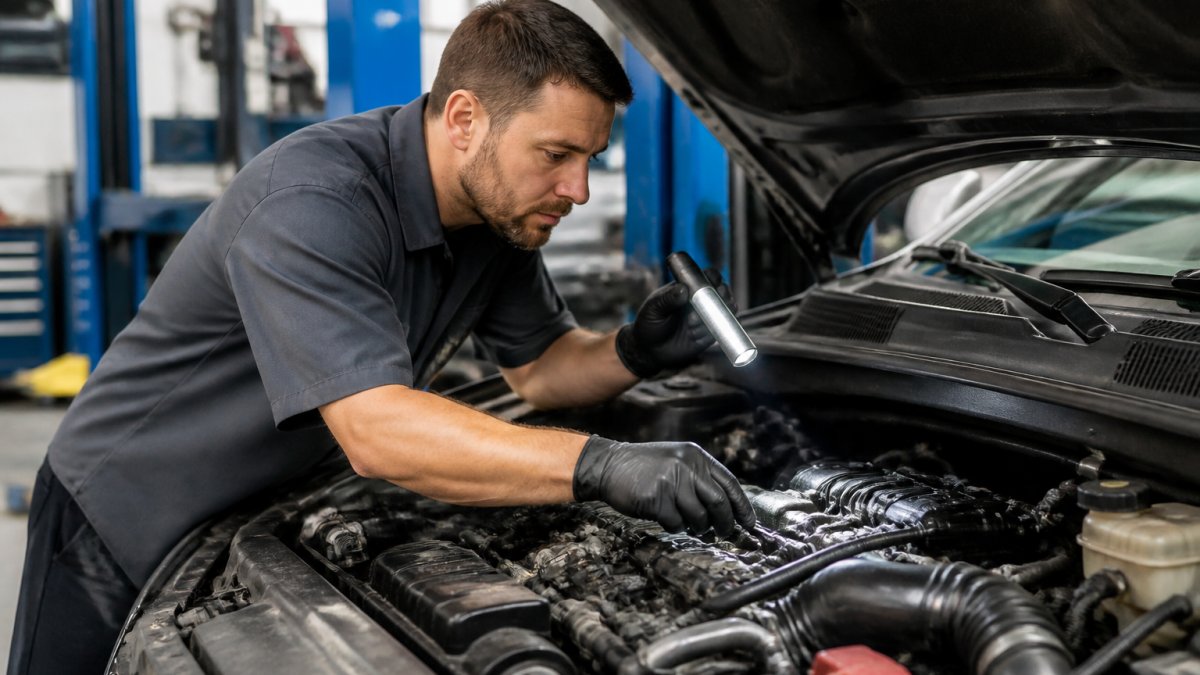
The engine and transmission are the vehicle’s heart. A professional inspection checks for leaks, corrosion, fluid levels, and belt wear, listens for noises signaling internal damage, and runs compression or diagnostic scans to identify stored fault codes.
Transmission condition is assessed through fluid inspection, shift responsiveness during a test drive, and signs of slipping or hesitation. Cooling, exhaust, fuel, and battery systems are also verified, revealing whether major repairs loom.
Brake System and Suspension
Brake performance directly affects safety. The inspector measures pad thickness, examines rotors, checks fluid quality, and evaluates responsiveness during the test drive, documenting any fade, pulsation, or soft pedal.
Suspension components, shocks, struts, springs, bushings, and control arms, are inspected for wear, leaks, or damage. Worn suspension feels loose, handles poorly, and causes alignment issues that damage tires prematurely, so the inspector checks steering precision and geometry.
Tires, Steering, and Safety Components
Tire condition is critical. The inspector measures tread depth, looks for uneven wear signaling alignment or suspension problems, and checks for bulges, cracks, or repairs. Tires under 4/32-inch tread depth are considered unsafe in many conditions.
Steering responsiveness is tested during the drive, the wheel should respond smoothly without excessive play or resistance. Lights, wipers, horn, seatbelts, airbag systems, glass, weatherstripping, and locks are verified.
Early Detection Prevents Costly Repairs Down the Road
The financial case for professional inspection is straightforward: catching problems before purchase costs far less than discovering them after.
A professional inspection identifies which repairs are urgent and which can wait, changing your negotiating position.
Early detection also prevents safety failures: worn brakes addressed before failure, suspension damage caught before accidents, electrical faults identified before fires or stranding.
Used Car Inspection Cost and What Affects the Price
Used car inspection cost is the question buyers ask most often, and the honest answer is that it varies. Mobile inspectors often price higher because travel time and fuel are built in. Specialty inspections (exotic, heavy-duty, commercial, or classic) and those including a full diagnostic scan, compression test, or borescope work may sit above the standard range.
What Actually Drives the Price
- Vehicle type and complexity. A compact sedan with an inline-four is faster to inspect than a diesel pickup, a hybrid with a high-voltage battery, or a European luxury car with air suspension and multiple control modules. More systems means more time.
- Inspection scope. A basic safety and drivability check is cheaper than a comprehensive pre-purchase inspection including a scan tool pull of all modules, battery and charging-system test, brake fluid moisture check, coolant condition check, and frame/structural assessment.
- Travel distance and location. Mobile inspectors quote by round-trip distance. A vehicle at a rural auction lot or a private seller’s home an hour outside the metro costs more to reach than one at a dealership on the inspector’s regular route.
How Long an Inspection Takes
A thorough pre-purchase inspection generally takes 1 to 2 hours on-site for a standard passenger vehicle. Complex vehicles or inspections requiring a cold-start check plus a full warm-up drive can run longer. The written report is usually delivered within 24-48 hours, though many inspectors send a verbal summary the same day.
The Cost Math Buyers Should Run
Compare the inspection fee against the realistic downside. A pre-purchase inspection costing a few hundred dollars is cheap insurance against:
- A transmission that needs rebuilding (commonly thousands of dollars)
- A head gasket or timing chain job (commonly $1,500-$3,000 or more)
- Frame or unibody damage that makes the vehicle unsafe or uninsurable
- Flood or salvage history that destroys resale value
A single avoided major repair typically pays for many inspections. The math is even better with negotiating leverage: a report documenting needed work is a documented reason to ask for a price reduction, which frequently exceeds the inspection fee itself.
Ask any inspector for a written quote before booking. A reputable shop will itemize the base inspection, travel, and any add-ons so there are no surprises. If a quote seems unusually low, confirm what is and is not included, a cheap “inspection” that skips the scan tool, the test drive, or the undercarriage is not the same service.
What You Should Receive for the Fee
Regardless of price, a professional inspection should deliver:
- A written, photo-documented report organized by system
- Findings categorized by severity (safety-critical, needs attention soon, monitor)
- A scan-tool report of stored and pending diagnostic trouble codes
- A test-drive summary covering braking, steering, transmission behavior, and any noises or vibrations
If a provider cannot describe the report before you pay, keep shopping.
Consumer vehicle inspection guidance
For a quote tailored to your vehicle type, location, and inspection scope, contact Whyte Knyte Inspection directly, pricing depends on the specific vehicle and travel involved, and a written quote is the only reliable number.
Used Car Inspection Checklist for Buyers
Understanding the inspection process helps you know what to expect and what to ask afterward.
Before the Inspection Arrives
Gather all available vehicle documentation: maintenance records, service history, previous inspection reports, accident history, and the title. These provide context for what the inspector finds.
Confirm the vehicle’s location and access details with the inspector.
Know what questions matter most to you. If you’re concerned about flood damage because the vehicle was in a flood-prone region, tell the inspector.
During the Inspection Process
The inspection typically takes 1-2 hours depending on vehicle complexity.
The test drive evaluates braking, acceleration, steering response, transmission shift quality, and drivability, with suspension and handling assessed over varied road surfaces. Any unusual noises, vibrations, or warning lights are documented.
Interior inspection covers upholstery, electrical functions, climate control, and safety equipment. The inspector checks the odometer against service records to flag potential rollback, and all findings are photographed and noted in detail.
After You Receive the Report
Whyte Knyte Inspection delivers comprehensive, photo-documented reports within 24-48 hours, categorizing findings by severity: safety concerns, items needing attention soon, and cosmetic or minor items.
Review the report and compare findings to the seller’s disclosures. If it reveals undisclosed problems, you have use to renegotiate. If it’s clean, proceed with confidence. If findings are significant, decide whether to walk away, request repairs, or negotiate a lower price.
How to Negotiate After a Car Inspection
The inspection report is your negotiating tool. If major issues appear, transmission problems, brake wear, suspension damage, or frame damage, you have three options: request repairs before closing, ask for a price reduction to cover repair costs, or walk away.
For minor issues like worn tires or brake pads nearing replacement, a modest price adjustment is reasonable. For major repairs like engine work or transmission rebuilding, request full repair completion or a substantial price reduction.
Use the inspection to anchor your negotiation in facts rather than emotion. The report is objective evidence.
Professional Inspection vs. DIY Checks: Why Independence Matters
Most buyers can and should do a basic walk-around before paying for an inspection. Knowing where the DIY line sits helps you get more value from a professional inspection and avoid wasting money on a vehicle you can rule out in five minutes.
What You Can Reasonably Check Yourself
These checks require no special tools and can be done in a parking lot:
- Tires. Tread depth (a penny or gauge), uneven wear patterns, sidewall bulges, cracks, and mismatched brands or sizes. Uneven wear often points to alignment or suspension problems.
- Fluids. Engine oil color and level on the dipstick, coolant level in the reservoir, brake fluid level, and washer fluid. Dark, gritty, or milky fluid is a red flag.
- Lights and signals. Headlights (high and low), brake lights, turn signals, reverse lights, and hazard flashers.
- Body and paint. Panel gaps, overspray on trim or rubber, mismatched paint under different light, rust bubbles around wheel arches and rocker panels.
What Requires Tools, a Lift, or Training
These are the areas where DIY inspection stops and professional inspection earns its fee:
- Scan-tool diagnostics. Reading stored, pending, and permanent trouble codes across all modules, not just the check-engine light, requires a scan tool. Many problems (misfires, transmission faults, ABS and airbag codes) never trigger a dash light until advanced.
- Undercarriage and structural integrity. Frame rails, unibody pinch welds, subframe mounts, and floor pans can only be assessed on a lift. Frame damage, prior collision repair, and rust-through are frequently invisible from ground level.
- Brake system measurement. Pad thickness, rotor thickness and runout, caliper function, and brake fluid moisture content require measurement tools and wheel removal.
- Suspension and steering components. Ball joints, tie rod ends, control arm bushings, strut mounts, and wheel bearings are checked by prying, shaking, and measuring, not by looking.
Why Independence Matters More Than Skill
Even a skilled DIY buyer faces a conflict of interest the professional inspector does not. An independent inspector has none of these pressures, their only product is an accurate report, and their reputation depends on it.
That independence makes the report useful at the negotiating table: a documented finding from a neutral third party is harder for a seller to dismiss than the same observation from the buyer.
Do the free checks first. If the vehicle passes your walk-around, a cold start, and a documentation review, a professional inspection is the next step, not a replacement for it. The two together give you the best coverage for the least money.
A used car inspection checklist is only as good as the person running it. DIY checks catch the obvious; a professional inspection catches what the obvious is hiding.
Conclusion
A professional vehicle inspection transforms the buying process from a gamble into an informed decision. You avoid vehicles with hidden damage, negotiate from a position of strength, and drive away confident.
At Whyte Knyte Inspection, our mobile inspectors travel directly to your vehicle, dealership, private seller, or auction lot, and deliver comprehensive, photo-documented reports within 24-48 hours.
ORDER INSPECTION and get the clarity you need to buy with confidence.
Frequently Asked Questions
What are the main advantages of a professional vehicle inspection?
Professional vehicle inspections identify hidden mechanical problems, brake condition issues, tire wear, and structural damage before you buy. They provide peace of mind, help you avoid purchasing vehicles with deferred maintenance, and give you concrete data to negotiate repairs or price reductions. An independent inspector has no financial interest in the sale, ensuring honest assessment of the vehicle’s true condition and safety.
Can a professional inspection really uncover hidden damage like frame damage or odometer rollback?
Comprehensive inspections detect frame damage, previous repairs, collision history, and structural issues through visual and mechanical assessment. However, detecting odometer rollback requires checking service records, title history, and mileage documentation, not just the vehicle itself. A professional inspector will flag inconsistencies in records and service history that suggest tampering, giving you the data you need to walk away or renegotiate.
Is a pre-purchase inspection worth the cost?
Yes. The inspection cost is typically a fraction of what a single major repair costs. Identifying problems like transmission failure, brake system issues, or suspension damage before purchase can save thousands in unexpected repair costs. For remote purchases or high-value vehicles, the investment protects you from buying a vehicle with major mechanical problems that would drain your budget after the sale.
How can I use an inspection report to negotiate the vehicle price?
Use the inspection report to document specific repair needs and costs. Present findings for major issues (brake work, suspension repairs, engine problems) to the seller and request a price reduction equal to the repair estimate, or ask the seller to complete repairs before closing. Minor wear items strengthen your negotiating position for moderate discounts. A detailed, professional report carries more weight than verbal complaints.