
Table of Contents
- Why Fleet Managers Need More Than LemonSquad
- What a Pre-Purchase Inspection Report Should Include
- Vehicle Inspection Turnaround Time: Speed vs. Accuracy
- Used Car History Report vs Physical Inspection
- Mobile Inspection Services for Fleet Procurement
- Nationwide Coverage and Service Area Availability
- Fleet-Scale Operations and Volume Workflows
- Frequently Asked Questions
Last Updated: October 7, 2026
Why Fleet Managers Need More Than LemonSquad
When you acquire vehicles at scale, a single inspection service won’t cover your needs. Fleet managers handling 10, 20, or 50 purchases annually need more than a one-off pre-purchase inspection platform. You need a LemonSquad alternative fleet solution that integrates with your procurement workflows, handles volume efficiently, and gives you accountability on six-figure decisions.
At Whyte Knyte Inspection, we know fleet procurement isn’t about checking one truck. It’s about a repeatable process that protects capital expenditure, reduces downtime from mechanical surprises, and creates a documented trail for compliance and resale. Most managers get stuck in the gap between consumer-focused services and true fleet-scale operations, cobbling together vendors or hoping a consumer service scales.
The right partner delivers comprehensive assessments, meets your timeline, covers your service areas, and fits how your team buys. Here’s what separates a fleet-capable alternative from a service that just processes individual transactions.
What a Pre-Purchase Inspection Report Should Include
A pre-purchase inspection report is your evidence document, what you reference when negotiating price, deciding to walk away, or defending your decision to leadership months later. It should be comprehensive enough to catch major issues and specific enough that you don’t guess what the inspector found.
The core elements of a solid pre-purchase inspection report include:
- Mechanical assessment: Engine condition, transmission function, brake system integrity, suspension and steering responsiveness, fluid levels and leaks, battery health
- Body and structural evaluation: Frame damage or prior repairs, rust or corrosion indicators, panel alignment, paint thickness variations that signal repainting
- Interior condition: Wear patterns on seats and controls, odometer accuracy checks, climate control function, electronics and infotainment systems
- Safety systems: Airbag deployment history, ABS function, lighting systems, tire condition and tread depth
- Documentation review: Title status, odometer discrepancies, service records, accident history cross-reference
- Photo documentation: Clear images of overall condition, any problem areas, mileage display, VIN plate, and key mechanical components
A report lacking detail in any of these areas leaves you guessing. Vague language like “condition appears acceptable” or missing sections means the inspector didn’t check or document thoroughly. For fleet purchases comparing multiple vehicles, detailed, comparable reports are essential.
Fleet Vehicle Inspection Checklist Essentials
Fleet-specific inspections add layers beyond standard pre-purchase reviews, since your vehicles see commercial use, higher mileage, and tighter maintenance schedules.
Key additions for fleet vehicle inspections:
- Commercial readiness: Payload capacity verification, towing capability (if applicable), cargo management systems, regulatory compliance for your industry
- Maintenance history depth: Service interval compliance, parts replacement records, warranty status on critical components
- Operator wear indicators: Clutch engagement point (manual transmissions), brake fade patterns, transmission shift smoothness under load
- Emissions and compliance: DEF system condition (diesel vehicles), emissions equipment integrity, regulatory certification status
- Total cost of ownership factors: Estimated remaining service life on major components (transmission, engine, suspension), upcoming maintenance costs, resale value trajectory
A fleet checklist without these points is just a consumer inspection. Your vehicles must perform under commercial conditions, and the inspection should verify that. The gap between a truck that passes a standard inspection and one that’s fleet-ready can mean tens of thousands in unexpected repairs by year two.
Vehicle Inspection Turnaround Time: Speed vs. Accuracy
Turnaround matters because you’re deciding on a timeline: you find a truck that meets specs and need to know it’s sound before the seller moves on, within days, not weeks. But speed without accuracy is worthless, a rushed inspection that misses frame damage or a rolled-back odometer costs far more than the time saved.
A thorough pre-purchase inspection realistically takes 24 to 48 hours from on-site assessment to full report with photos and documentation, assuming inspector availability and no peak-season rush. Same-day turnaround is possible for straightforward vehicles in high-demand markets, but usually at a premium and with lower documentation quality.
Many fleet managers stumble by expecting inspection results to match procurement urgency, five trucks this week, answers by Friday. That’s workable with a service that has regional presence and capacity, impossible with a single-inspector operation or one that batches regionally. When evaluating a LemonSquad alternative fleet service, verify actual capacity for your volume and timeline, not just the advertised turnaround window.
Accuracy requires qualified inspectors. An ASE-level technician with commercial vehicle experience spots issues a general mechanic misses: fleet-specific wear patterns, signs of prior collision repair, and maintenance shortcuts indicating poor ownership. That expertise takes time. If a service promises same-day results on complex commercial vehicles, they’re probably not doing comprehensive inspections.
Used Car History Report vs Physical Inspection
A used car history report (like Carfax or AutoCheck) and a physical pre-purchase inspection serve different purposes. Confusing them is one of the most expensive mistakes fleet managers make.
A history report pulls insurance claims, title records, odometer readings, and reported service records. It tells you about total-loss declarations, title status, and recorded mileage progression. But it cannot detect frame damage never reported in a claim, identify a rolled-back odometer with no service records, or assess current mechanical condition.
A physical inspection is the opposite: a qualified inspector examines the vehicle directly, checks frame alignment with precision tools, tests every system, reviews the odometer against wear patterns, and documents findings with photos. They catch issues that never hit a history report because they didn’t trigger a claim or service record.
The scenario where this matters most: a truck priced too good to be true, a clean history report, no accidents or title issues, reasonable mileage, then a physical inspection reveals frame damage repaired without insurance involvement or an odometer rolled back 80,000 miles.
For fleet purchases, relying on history reports alone means accepting blind spots. Use both: the history report screens for red flags and title issues, while the physical inspection verifies the vehicle is what the report claims and mechanically sound for your use.
Mobile Inspection Services for Fleet Procurement
The inspector comes to the vehicle, the operational advantage that changes fleet procurement at scale. Instead of delivering vehicles to a fixed location, you schedule inspectors to meet trucks at the dealer lot, auction facility, private seller’s location, or your own lot for incoming inventory.
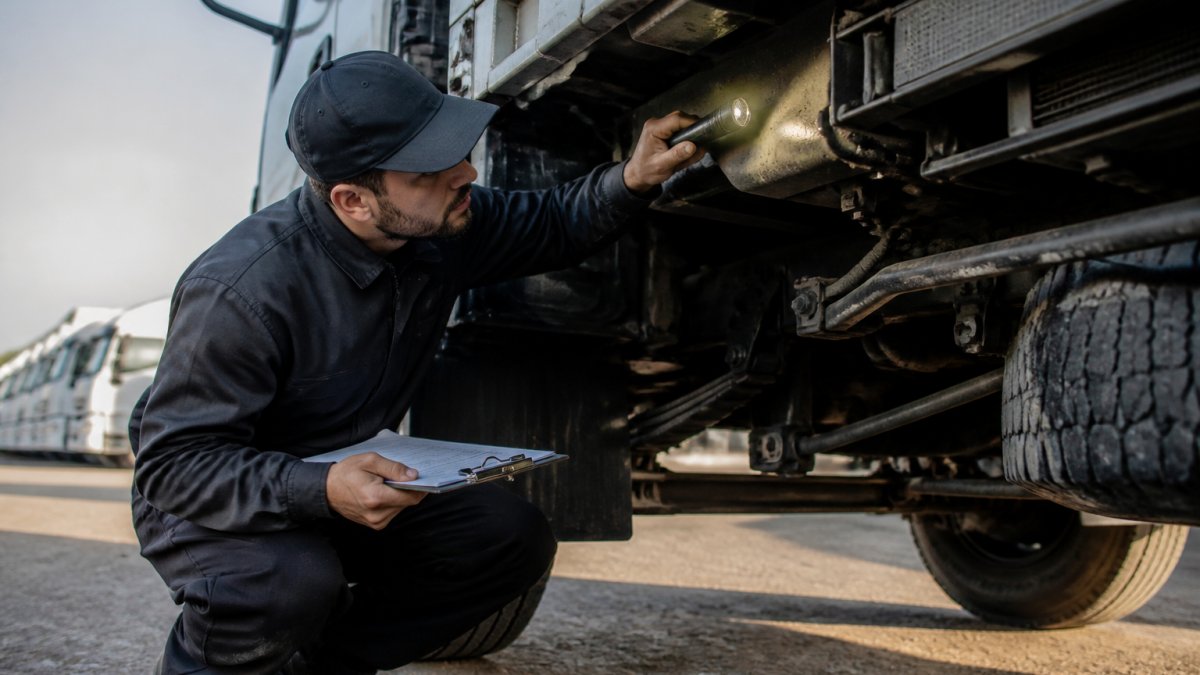
For fleet managers, this means inspecting multiple vehicles in a single day across locations, without facility hours or service-bay slots. Logistics simplify, timelines tighten, and buying friction drops. At 15 trucks a month, that efficiency compounds.
Mobile inspections also work for remote purchases. Buying a truck three states away, a local inspector can assess it while you’re on a video call, show condition in real time, and deliver a comprehensive report within 24 hours, essential for fleet managers accessing regional or national inventory.
The trade-off: mobile inspectors need density in your service areas. Buying across 12 states with coverage in only 4 kills the mobile advantage. When evaluating a LemonSquad alternative for fleet managers, confirm the geographic footprint matches your procurement areas, 48-state coverage is fundamentally different from 15.
Nationwide Coverage and Service Area Availability
Your fleet procurement isn’t confined to one region, auctions in Texas, dealers in California, private sellers in the Midwest. Your inspection service must follow that footprint, or you’re back to multiple vendors or uninspected vehicles in some areas.
Nationwide coverage means inspectors in all states where you actually buy. That’s a logistical commitment: inspector networks, consistent training across regions, and scheduling across time zones and local market conditions. Many services are regional players or serve only major metros.
Ask directly: where are inspectors available, and what’s the actual turnaround for my locations? Don’t accept vague “nationwide service” answers. If you source mainly from Texas, California, and Florida, confirm current capacity in those states, not theoretical coverage.
The secondary consideration is consistency. Inspectors in all 50 states with wildly different quality standards or reporting formats creates a new problem. You need consistent criteria and documentation to compare vehicles fairly, a truck inspected in Georgia should be evaluated by the same standards as one in Oregon. That consistency is harder across large networks but critical for fleet decisions.
Fleet-Scale Operations and Volume Workflows
Buying one truck is a transaction; buying 15 is an operation. The difference is the systems, accountability, and documentation required at scale.
A consumer-focused service handles one vehicle, delivers one report, and moves on. Fleet managers need:
- Batch scheduling: The ability to schedule multiple inspections across different locations in a single workflow, not individual appointments
- Consistent reporting format: Every report uses the same template, same assessment criteria, and same photo documentation so you can compare vehicles
- Digital integration: Reports delivered through a portal where you can track status, access all documents, and export data for your procurement records
- Volume pricing: Transparent pricing structure that reflects the volume you’re committing, not per-vehicle rates that penalize scale
- Account management: A dedicated contact who understands your procurement cycle and can prioritize your inspections during peak buying seasons
- Compliance documentation: Reports formatted to meet any regulatory requirements for your industry (if applicable)
Many services handle this poorly, processing each vehicle like a one-off consumer inspection: inconsistent reporting, no batch workflow, no volume advantage. You spend more time coordinating than you save on inspection cost.
The right fleet-scale alternative makes your life easier. Whyte Knyte Inspection handles fleet volumes with consistent processes, photo documentation standards, 24-48 hour reports, and coverage across all 48 states where we operate.
The decision comes down to fit: a partner who understands fleet procurement, handles your volume, covers your geography, and delivers accountability when you’re spending capital. A LemonSquad alternative for fleet managers should give you all of that without coordinating multiple vendors or settling for a consumer service that doesn’t scale.
Whyte Knyte Inspection brings over 20 years of automotive expertise to fleet operations: comprehensive, photo-documented reports within 24-48 hours, mobile inspectors covering 48 states, and dedicated processes built for procurement at scale. You get the independent assessment, speed, and consistency your fleet requires. ORDER INSPECTION and protect your fleet investment with oversight from inspectors who have zero financial interest in whether you buy.
| Inspection Service Comparison | Coverage | Turnaround | Fleet Workflow | Mobile Service |
|---|---|---|---|---|
| Whyte Knyte Inspection | 48 states | 24-48 hours | Batch-ready, consistent reporting | Yes, nationwide |
| Fleetio | Fleet management software | Varies | Integrated maintenance tracking | Limited |
| RTA Fleet360 | Quote-based platform | Custom | Enterprise workflows | Not primary focus |
| FleetRabbit | Fleet management focus | Custom | Month-to-month flexibility | Not primary focus |
The comparison table above reflects how inspection-first services differ from fleet management platforms. If you’re looking for a dedicated pre-purchase inspection partner that scales with your procurement, Whyte Knyte Inspection is built for that.
For fleet managers making acquisition decisions, the pre-purchase inspection is the foundation. Get that right, and the rest of your fleet operations improve. Get it wrong, and you’re managing problem vehicles for years.
NHTSA vehicle safety standards and inspection guidance
ASE certification standards for automotive technicians
Fleet maintenance and procurement best practices
Frequently Asked Questions
What makes a LemonSquad alternative better for fleet managers?
Fleet managers need inspection providers that handle volume workflows, offer faster turnaround across multiple vehicles, and provide fleet-specific pricing. While general inspection services work for one-off purchases, fleet-scale alternatives deliver dedicated support, standardized reporting across your entire procurement process, and the ability to schedule multiple inspections simultaneously.
How important is vehicle inspection turnaround time for fleet purchasing?
Turnaround time directly impacts procurement efficiency. Fleet managers often need inspections completed within 24-48 hours to meet purchase deadlines and deployment schedules. Slower services force you to either delay decisions or buy without complete information. Fast turnaround also reduces the risk of losing inventory to competing buyers. The best alternatives balance speed with thoroughness, ensuring inspections are completed quickly without sacrificing the mechanical assessment quality your fleet depends on.
Should fleet managers rely on used car history reports instead of physical inspections?
History reports and physical inspections serve different purposes and both matter. History reports reveal title issues, accident records, and odometer rollbacks, but they cannot detect hidden damage like frame damage, flood damage, or mechanical wear that only a qualified technician can identify on-site. For fleet purchases, a physical pre-purchase inspection report combined with history data provides the complete picture you need. Skipping the physical inspection leaves you vulnerable to expensive repairs and downtime after purchase.
Can mobile inspection services handle commercial trucks and heavy-duty vehicles?
Yes, the best mobile inspection alternatives specialize in all vehicle types, including heavy-duty trucks, commercial vehicles, and specialty equipment. Fleet managers should confirm that their chosen provider has ASE-level technicians trained in commercial vehicle systems, transmission diagnostics, and frame integrity assessment specific to heavy-duty applications. Verify their experience with your fleet’s specific vehicle types before scheduling, and ask about their inspection checklist for commercial vehicles to ensure they cover the systems critical to your operation.