
Table of Contents
- Why Buying Used Cars Out of State Requires Extra Caution
- Getting a Pre-Purchase Vehicle Inspection Checklist Before You Commit
- Understanding Sales Tax and Paying Sales Tax on Out of State Car Purchase
- Title Transfer, Lien Checks, and Documentation You’ll Need
- How to Get a Temporary Transit Permit for Cross-State Transport
- Avoiding Odometer Fraud and Hidden Title Brands
- Insurance and Logistics: Getting Your Vehicle Home Safely
- Frequently Asked Questions
Last Updated: September 18, 2026
Why Buying Used Cars Out of State Requires Extra Caution
Buying used cars out of state introduces complexity: you can’t easily return the vehicle if problems emerge, and you’re navigating unfamiliar state regulations, tax rules, and title requirements.
The core issue is visibility. Out-of-state purchases compress your timeline, you’re often deciding based on photos, video calls, or a single visit. Hidden damage, frame issues, flood history, and odometer rollbacks won’t show up in casual inspection.
This is where a professional pre-purchase vehicle inspection becomes essential. According to the National Highway Traffic Safety Administration, hidden defects in used vehicles cost buyers thousands in unexpected repairs. At Whyte Knyte Inspection, we’ve helped buyers avoid purchasing vehicles with serious undisclosed issues by providing independent, mobile inspections before the sale closes.
Getting a Pre-Purchase Vehicle Inspection Checklist Before You Commit
A pre-purchase vehicle inspection is your first line of defense when buying used cars out of state, a comprehensive examination of mechanical condition, structural integrity, and history, not a quick visual walkthrough.
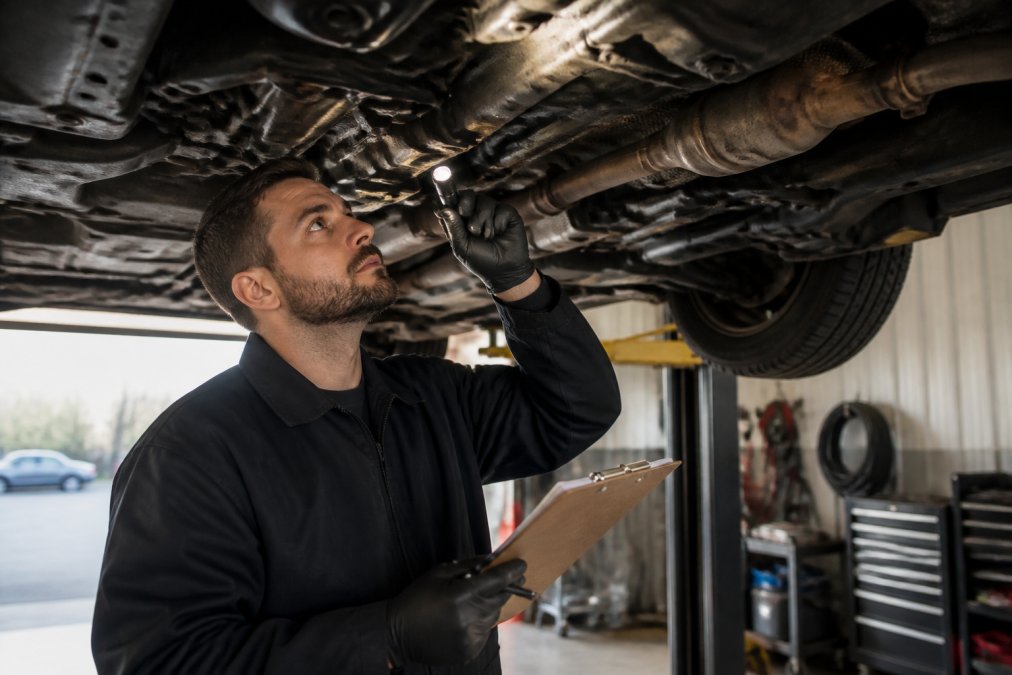
The inspection covers the engine, transmission, suspension, brakes, electrical systems, and body condition, plus signs of flood damage, fire damage, and frame repairs indicating serious accidents.
Mobile inspection services eliminate the need to travel twice. An inspector visits the vehicle’s location and delivers a detailed report within 24-48 hours, letting you make an informed decision before committing.
Key areas to verify in your inspection checklist:
- Engine compression and fluid condition
- Transmission responsiveness and fluid quality
- Brake pad thickness and rotor condition
- Suspension alignment and component wear
- Rust, corrosion, and paint consistency across panels
- Glass condition and weatherstripping integrity
- Tire tread depth and age
- Air conditioning and heating function
Request photos and video documentation from the inspector. You need visual proof of the vehicle’s condition, not just a written summary. This protects you if disputes arise later.
Understanding Sales Tax and Paying Sales Tax on Out of State Car Purchase
Sales tax on out-of-state car purchases is often misunderstood. Most states require you to pay sales tax when you register the vehicle in your home state, even if you bought it elsewhere.
The tax obligation follows the vehicle to your state. When you register and obtain a title, your state’s DMV calculates and collects sales tax based on your state’s rate and the vehicle’s purchase price.
How Sales Tax Reciprocity Works
Some states offer reciprocity agreements that reduce or eliminate double taxation if you already paid sales tax in the purchase state. The mechanics vary:
- Full credit states (e.g., many Northeastern states) allow you to credit the sales tax paid in the purchase state dollar-for-dollar against your home state’s tax. If you paid 5% tax out of state and your home state rate is 7%, you owe only 2% more.
- Partial credit states allow a percentage credit, typically 50-75% of what you paid out of state.
- No credit states require you to pay your home state’s full sales tax rate regardless of what you paid elsewhere.
You’ll need to research your state’s specific rules and the purchase state’s rules to understand your obligation. The Federation of Tax Administrators maintains state-by-state tax information, though your state’s DMV website is the authoritative source for reciprocity rules.
Calculating Your Actual Tax Obligation
Here’s a concrete example:
- Vehicle purchase price: $15,000
- Purchase state sales tax rate: 5% (you pay $750)
- Home state sales tax rate: 7%
- Home state reciprocity: Full credit
- Your obligation at registration: 7% of $15,000 = $1,050, minus the $750 credit = $300 additional tax due
If your home state offers no reciprocity, you pay the full 7% ($1,050) regardless of the 5% you paid out of state.
Special Cases and Exemptions
Some states exempt certain vehicle types or buyer categories from sales tax, including trade-in credits, commercial use, and military personnel. Confirm whether any exemptions apply before finalizing your purchase offer.
Do not assume you can avoid sales tax by having the seller title the vehicle in their state or by delaying registration. Your home state will assess the tax when you register, and penalties for late payment can be substantial. Late payment penalties typically range from 5-10% of the unpaid tax, plus interest accruing monthly.
Budget Planning
Add your home state’s sales tax (or the difference after reciprocity credit) to the purchase price. If your state’s rate is 7% and the vehicle costs $15,000, budget for approximately $1,050 in sales tax at registration, or less if reciprocity applies.
Title Transfer, Lien Checks, and Documentation You’ll Need
Title transfer is the legal handoff of vehicle ownership. When buying used cars out of state, ensure the seller has a clear title with no outstanding liens or claims.
A lien is a legal claim against the vehicle held by a lender. Buying a vehicle with an outstanding lien means you could lose the car if the seller defaults.
Before committing to purchase, request a lien search from a title company or DMV office.
Never accept a verbal promise that liens will be cleared later. Require written proof that all liens have been satisfied before you hand over payment.
How to Get a Temporary Transit Permit for Cross-State Transport
A temporary transit permit allows you to legally drive a vehicle across state lines after purchase but before completing registration in your home state.
Avoiding Odometer Fraud and Hidden Title Brands
Odometer fraud, rolling back the odometer to show fewer miles, is a federal crime. When buying used cars out of state, you can’t physically inspect the odometer history, making you more vulnerable.
A vehicle with a salvage or flood title may be difficult or impossible to insure in your state. Verify your insurance company’s policy before purchasing a vehicle with any title brand.
Insurance and Logistics: Getting Your Vehicle Home Safely
Transporting the vehicle home requires securing proper insurance coverage for an unregistered vehicle and physically moving it across state lines safely.
Closing the Insurance Gap During Transit
Coordinating a Remote Pre-Purchase Inspection
Arranging Vehicle Transport
Hiring an auto transport company:
- Get quotes from at least three carriers. Costs typically range from $800-$2,500 depending on distance and vehicle type.
- Confirm the carrier is licensed and insured. Check the Federal Motor Carrier Safety Administration database to verify licensing.
- Ask whether the quote includes door-to-door delivery or terminal-to-terminal pickup.
- Request a timeline and confirm the vehicle will be delivered within your temporary permit window (typically 10-30 days).
- Inspect the vehicle upon delivery and document any damage with photos before signing off.
Registering the Vehicle Upon Arrival
Frequently Asked Questions
Is buying a car out of state a good idea?
Buying a used car out of state can offer access to a wider selection and potentially better pricing, but it carries real risks. You lose the ability to inspect the vehicle in person before purchase, and you’re responsible for transport costs and title transfer complexity. The key is using a professional pre-purchase vehicle inspection checklist to verify condition before committing. Many buyers find the expanded options worth the extra steps when they follow a structured process and work with an independent inspector.
How much do I pay in sales tax when buying a car out of state?
Sales tax depends on your home state’s rules, not the seller’s state. Most states require you to pay sales tax based on your state’s rate when you register the vehicle, even if you bought it elsewhere. Some states offer trade-in credits or other deductions. A few states have reciprocity agreements that affect how tax is calculated. Check your state DMV website for the exact rate and any exemptions that apply to your purchase. This is why paying sales tax on out of state car purchase planning is essential before finalizing a deal.
What documents do I need to register an out-of-state car?
You’ll need the title or bill of sale from the seller, a lien release if the vehicle has a loan against it, proof of a pre-purchase inspection or safety inspection (depending on your state), odometer disclosure, and your proof of ownership or purchase agreement. Most states also require proof of insurance and completed registration application forms. Some states ask for emissions testing results. Contact your state DMV directly before purchase to confirm the exact list, as requirements vary significantly by state and vehicle age.
What is a temporary transit permit, and how do I get one?
A temporary transit permit allows you to legally drive a vehicle home after purchase without permanent registration plates. You obtain one from your state DMV or an authorized agent, usually by providing the bill of sale, proof of insurance, and a completed application. Most permits are valid for 30 days and cost $10-50 depending on your state. You must apply before leaving the seller’s location or shortly after. Knowing how to get a temporary transit permit is critical when buying used cars out of state, since you cannot legally drive an unregistered vehicle across state lines without one.
How can I check for odometer fraud on an out-of-state vehicle?
Request a vehicle history report from the seller and cross-check the mileage listed at each service record or inspection. Odometer rollback typically shows inconsistencies in service records or sudden drops in recorded miles. Look for physical wear that doesn’t match the stated mileage: cracked steering wheel, worn pedals, or interior fading should align with age and miles. Have an independent inspector verify the odometer reading in person and compare it to the title and service records. Avoiding odometer fraud is why working with a professional inspector before purchase is essential when buying from out of state.
Do I need to pay use tax on an out-of-state car purchase?
Some states charge a use tax if you buy a vehicle in a state with a lower sales tax rate than your home state. Use tax is the difference between what you paid in the seller’s state and what you owe in your state. For example, if you buy in a 5% tax state but live in an 8% tax state, you may owe the additional 3% to your home state. Not all states have use tax. Check your state tax authority website to determine if this applies to you before finalizing your purchase.