Table of Contents
- Why a Mobile Pre Purchase Inspection Beats a Post-Purchase Surprise
- What Is Included in a Pre-Purchase Car Inspection
- How to Book a Mobile Pre Purchase Inspection Online Step by Step
- How Long Does a Pre-Purchase Inspection Take
- Questions to Ask a Mobile Mechanic Before Inspection
- Red Flags to Catch Before You Book an Inspector
- Turning the Inspection Report Into Negotiation Use
- Frequently Asked Questions
Last Updated: September 16, 2026
Why a Mobile Pre Purchase Inspection Beats a Post-Purchase Surprise
A mobile pre purchase inspection brings a qualified inspector to the vehicle, wherever it sits, so you get an independent evaluation before money changes hands, for remote buyers, the difference between confidence and an expensive gamble.
What Is Included in a Pre-Purchase Car Inspection
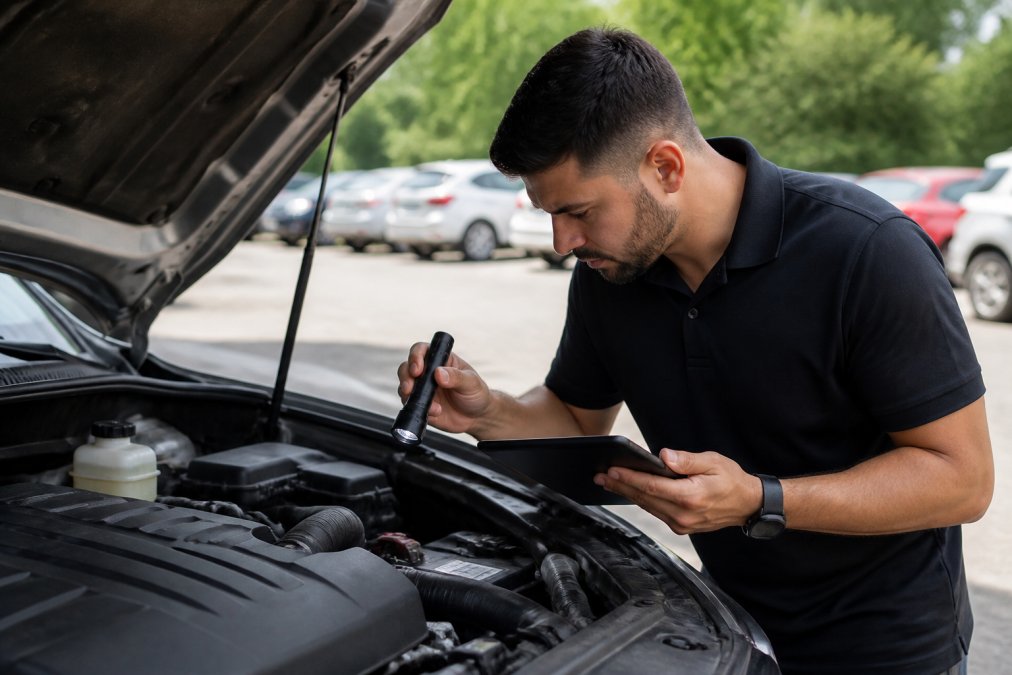
A pre-purchase car inspection is an independent evaluation of a vehicle’s mechanical, structural, and cosmetic condition before you buy, combining hands-on assessment with diagnostic tools and a road test.
Mechanical and Diagnostic Checks
The mechanical portion is where hidden money pits live. Inspectors typically examine:
- Engine diagnostics, including fault codes pulled from the onboard computer
- Transmission health, checking for slipping, delayed engagement, or fluid contamination
- Suspension check, looking at shocks, struts, bushings, and steering components
- Brake system analysis, measuring pad and rotor wear
- Fluid levels and condition, from oil to coolant to differential fluid
- Electronic system scan, covering sensors, modules, and warning lights
- Tire tread depth and even wear patterns
Body, Frame, and Interior Verification
Structural damage is the most expensive problem to inherit and the hardest to spot in photos. A thorough assessment includes a chassis inspection for rust, prior collision repair, or frame straightening; paint and body checks for mismatched panels, overspray, or filler; and verification of interior components, electronics, and odometer consistency against the vehicle history report.
Flood damage and odometer rollbacks are two of the most common hidden issues, and both can be disguised cosmetically. A photo-documented report with timestamped images is your best defense against a seller who has something to hide.
How to Book a Mobile Pre Purchase Inspection Online Step by Step
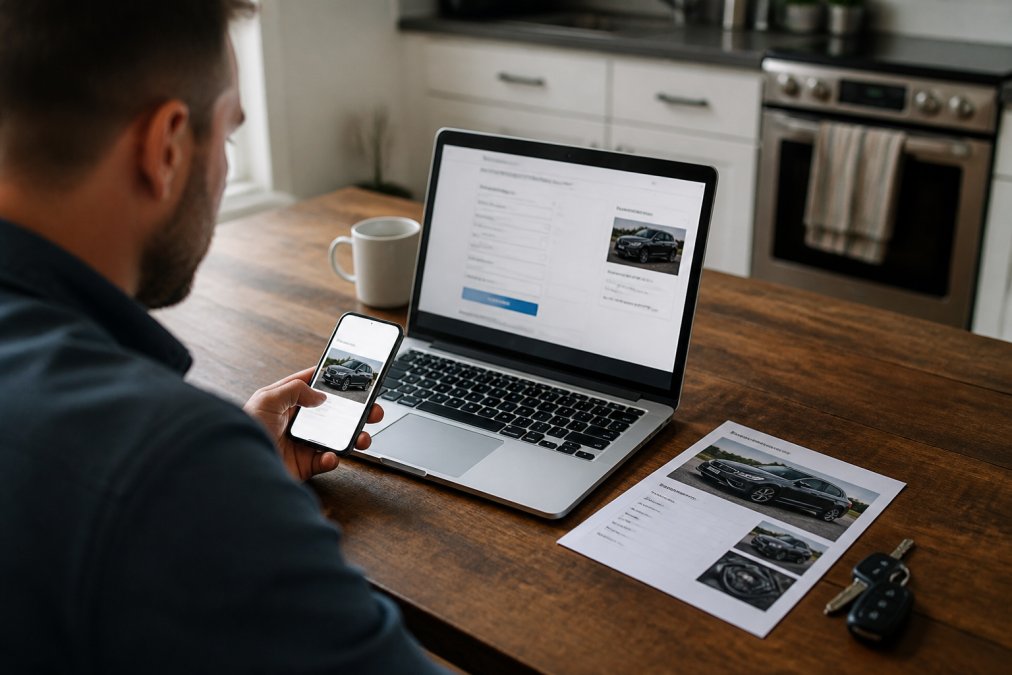
Booking a mobile inspection takes under 10 minutes online: provide the vehicle location, choose a package, and schedule a time. What separates a smooth booking from a wasted trip is the information you gather beforehand.
What to Have Ready Before You Start
Most booking forms ask for the same core inputs. Gather them first to avoid a half-finished booking.
- VIN (17 characters). Drives the history report, recall lookup, and trim-level checklist. Listing photos are often illegible; ask the seller to read it off the door jamb or dashboard plate.
- Year, make, model, and trim. A base model and a performance trim share a body but not a drivetrain, suspension, or diagnostic profile.
- Odometer reading. Note whether it comes from the listing or a photo of the cluster; the inspector verifies consistency.
- Seller’s asking price. Some providers use this to recommend a package tier; a $4,000 commuter and a $60,000 truck do not warrant the same depth of inspection.
- Exact vehicle location and access notes. A dealership bay, private driveway, gated lot, and auction yard each need different coordination. Note gate codes, business hours, and who will be present.
- Seller contact name and phone number. The inspector needs an on-site contact, especially if you are buying remotely.
The Online Booking Flow, Step by Step
- Enter the vehicle details. Type the VIN and confirm the decoded year, make, model, and trim match the listing. If the decoder returns a different trim, ask why before booking.
- Confirm the vehicle’s location. Enter the full street address, not just the city. Inspectors route by address, and a vague location can delay your appointment or trigger a travel surcharge.
- Select your service package. Options range from a basic mechanical and diagnostic check to a full bumper-to-bumper evaluation adding compression testing, undercarriage photography, and a detailed road test. Match the package to the vehicle’s value and your risk tolerance.
- Choose a date and time. Coordinate with the seller first so the vehicle is available, unlocked, and not booked for another buyer’s test drive. Weekend slots fill fastest; midweek mornings offer the shortest lead time.
- Add any special instructions. Note aftermarket modifications, a salvage or rebuilt title, a known check-engine light, or a vehicle sitting unused, each changes what the inspector prioritizes.
- Complete payment and receive confirmation. Most providers take a card online and send a confirmation with the inspector’s name, certification number where applicable, and arrival window.
- Share access instructions with the seller. Pass along the inspector’s contact info and arrival window. If you are remote, ask the inspector to call during the road test so you hear findings in real time.
Booking as a Remote Buyer
The process is designed for buyers who cannot see the vehicle in person, no need to be present or fly out first. Two habits make remote booking work better:
- Ask for the inspector’s direct line, not just dispatch. A five-minute call during the inspection surfaces context a written report compresses.
- Confirm who holds the keys during the appointment. If the seller must be present to unlock the vehicle, the inspector’s window depends on the seller’s schedule. Build in a buffer.
Book your inspection before you make an offer, not after. Sellers are far more willing to accommodate an inspection when they think a serious offer is coming. Once you have committed verbally, your leverage to demand one drops sharply.
Never wire a deposit or send a hold payment before the inspection is complete. A seller who requires a non-refundable deposit to “hold” the vehicle for an inspection is asking you to give up your only leverage before you have any information.
Rescheduling, Cancellations, and No-Shows
Ask about the rescheduling policy when you book. Common patterns: free rescheduling with 24 hours’ notice, a partial fee if the inspector arrives and the vehicle is unavailable, and a full refund if the seller cancels. If the seller no-shows, get the inspector’s written confirmation, useful evidence if you later dispute a deposit.
How Long Does a Pre-Purchase Inspection Take
A typical pre-purchase inspection takes 45 minutes to two hours, depending on the vehicle’s size, age, and complexity. Heavy-duty trucks and classic cars sit at the longer end.
| Phase | Typical Duration | What Happens |
|---|---|---|
| Booking | Under 10 minutes | Provide vehicle details and schedule |
| On-site inspection | 45 minutes to 2 hours | Mechanical, structural, and cosmetic checks |
| Report compilation | 24 to 48 hours | Photo-documented findings delivered |
| Expedited option | Same or next day | Available from some providers for urgent deals |
Questions to Ask a Mobile Mechanic Before Inspection
The right questions separate a genuinely independent assessment from a quick visual once-over. Ask these before booking.
The single most important question is the conflict-of-interest one. An inspector with zero financial stake in the transaction is your only true advocate. Everyone else in the deal, from the seller to the dealer, gets paid when you buy.
Red Flags to Catch Before You Book an Inspector
Not every provider is worth your money. Watch for these warning signs before you commit.
- No sample report available. You’re paying for documentation, so see it first.
- Vague scope descriptions. “Full inspection” means nothing if the provider can’t list what’s checked. Demand specifics.
- No credentials or experience listed. ASE certification and years in the trade are baseline trust signals.
- Suspiciously fast turnaround with no explanation. A same-day report can be legitimate, but only if the provider explains how.
- Pressure to skip the inspection. If a seller resists an independent evaluation, that’s a red flag about the vehicle, not the provider.
- No coverage for your vehicle type. Confirm the provider works on your category before booking.
Turning the Inspection Report Into Negotiation Use
The report is not just a go/no-go tool, it is a negotiating document, and most buyers leave money on the table by not using it. Here is the playbook.
Step 1: Sort Findings Into Three Buckets
Read the report once without reacting, then sort every finding into one of three buckets:
- Safety and legality. Brake metal-to-metal, bald tires, a cracked frame, non-functioning lights, or a failed emissions component. Non-negotiable: the seller fixes them before closing or you walk. In most states, a vehicle that cannot pass safety or emissions cannot be legally registered, making the asking price fictional.
- Deferred maintenance. Worn shocks, a seeping valve cover gasket, a battery near end of life, fluid never changed. Real but predictable costs, they belong in the price conversation, not the walk-away conversation.
- Cosmetic and minor. Scratches, a worn seat bolster, a cracked trim piece. Rarely justify a price cut alone, but useful as makeweight when you are close on number.
Step 2: Price Each Finding With a Real Repair Estimate
A finding without a number is an opinion; with a number, it is leverage. For each safety and deferred-maintenance item, get a repair estimate from a local shop or labor-time guide, then build a simple table before talking to the seller.
| Finding | Severity | Estimated Repair Cost | Source |
|---|---|---|---|
| Rear brake pads and rotors | Safety | Shop quote | Local independent shop |
| Front struts, both sides | Deferred | Shop quote | Local independent shop |
| Valve cover gasket seep | Deferred | Shop quote | Local independent shop |
| Check-engine code P0420 (catalyst efficiency) | Safety / emissions | Diagnostic + possible converter | Shop quote |
Step 3: Make the Ask in Writing
Send a short message with three parts: the inspection summary, the itemized repair list with costs, and a single revised offer. Keep it factual: “The inspection found X, Y, and Z. Local shop estimates total $N. I would like to proceed at [asking price minus N], with the inspection report attached.” Attach the report, sellers negotiate differently when the evidence is in front of them.
Step 4: Know Your Three Outcomes
When the inspection turns up issues, you have three options. Decide which you will accept before the conversation starts:
- Walk away. Structural damage, flood evidence, an odometer discrepancy, or a title-brand issue, walking is usually right. Those problems do not get cheaper.
- Negotiate the price down. Best when findings are deferred maintenance with known repair costs. You take the repairs; the seller takes the discount.
- Ask the seller to repair before closing. Best for safety items. Get the repair invoice and post-repair confirmation from your inspector before paying. A verbal promise to “fix it later” is worth nothing.
Step 5: Set a Walk-Away Number in Advance
Before talking to the seller, write down the maximum you will pay given the findings. If the seller will not meet it, you walk. This habit separates buyers who save money from those who talk themselves into a bad deal, the inspection gave you information; the walk-away number keeps you from ignoring it.
What the Report Is Worth in Real Terms
For remote buyers, this is where a mobile pre purchase inspection pays for itself. You are not guessing about condition from across the country, you hold a professional assessment that puts you on equal footing with a seller who can see the car in person. An inspection that uncovers a significant problem, or helps negotiate a better price, returns its cost many times over.
The report is evidence, not a verdict. Your job is to convert each finding into a dollar figure, present the total in writing, and hold the walk-away number you set before the conversation started. Sellers who know you have documentation tend to negotiate rather than lose the sale.
Post-Inspection Maintenance Planning
Post-inspection, plan for the maintenance the report flags. Deferred repairs do not fix themselves, and budgeting upfront keeps a good deal from turning bad. Schedule safety items within the first month, spread deferred maintenance across the first six months, and keep a reserve equal to roughly 10 percent of the purchase price for the first year of ownership, not pessimism, just the cost of buying used with your eyes open.
Frequently Asked Questions
How does a mobile pre-purchase car inspection work?
A mobile inspector travels to the vehicle’s location, whether that is a dealership, private seller’s driveway, or auction lot. The inspector performs a hands-on evaluation covering engine diagnostics, transmission health, suspension, brakes, electronics, and body condition. After the inspection, you receive a photo-documented vehicle condition report, typically within 24-48 hours. You book the service online, provide the vehicle address, and the inspector handles the rest without you needing to be present.
What is included in a standard mobile pre-purchase inspection?
A standard inspection covers a 100-point checklist including engine diagnostics, transmission health, suspension check, brake system analysis, electronic system scan, fluid levels, chassis inspection, tire tread depth, and paint and body condition. The inspector also performs a road test and reviews service history when available. You get a comprehensive report with photos documenting every finding, giving you a clear picture of the vehicle’s mechanical integrity before you commit to a purchase.
How long does a pre-purchase inspection take from booking to report?
The on-site inspection itself typically takes 1-2 hours depending on vehicle type and complexity. Report delivery usually happens within 24-48 hours after the inspection. If you are working under a tight deadline, such as needing to make an offer by a specific date, ask about expedited turnaround when you book. Scheduling depends on inspector availability in your area, so booking a few days ahead gives you the most flexibility.
Can a mobile inspector check a car at a dealership?
Yes. Mobile inspectors routinely visit dealership lots, private seller locations, and auction sites. The inspector acts as your independent advocate with no financial interest in the transaction, so the assessment stays objective. You do not need to be present for the inspection. The inspector coordinates access with the seller or dealership and sends you the full report remotely, which is especially useful when you are buying out of state.