A used car can look clean, drive fine for ten minutes, and still hide problems that cost thousands after the paperwork is signed. That is why buyers keep asking, how do pre purchase car inspections work? The short answer is simple: an independent inspector goes to the vehicle, checks its condition from top to bottom, documents what they find, and gives you a clearer picture before you commit.
That sounds straightforward, but the real value is in what happens during the inspection and how you use the results. A good pre-purchase inspection is not a sales pitch and not a casual once-over in a parking lot. It is a buyer protection step. If you are spending serious money on a used vehicle, especially one that is out of town or being sold by someone you do not know, this is where you slow down and verify the facts.
How do pre purchase car inspections work in real life?
In most cases, the process starts when a buyer finds a vehicle they are considering and wants an independent opinion before moving forward. The inspection is scheduled at the seller’s location, whether that is a dealership, private residence, auction lot, or another site where the vehicle is available. That matters because many buyers are trying to make a decision quickly and cannot always get across town, let alone across the country.
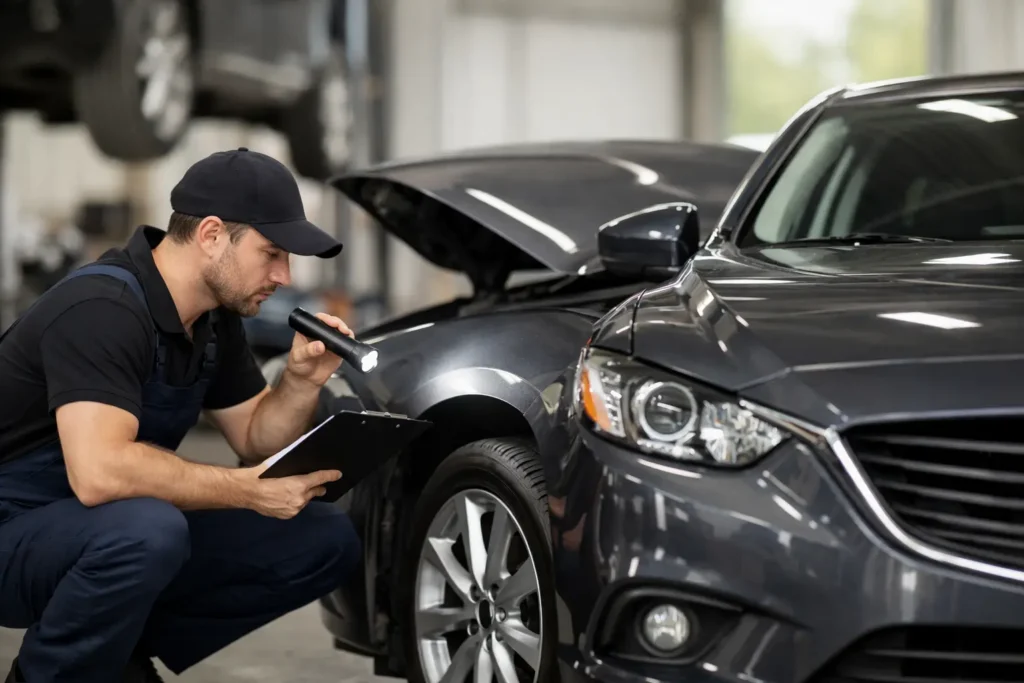
Once the appointment is set, an inspector shows up and evaluates the vehicle on-site. The inspection usually covers the car’s visible and accessible condition, including the exterior, interior, engine bay, tires, lights, glass, body panels, and other key components. The inspector is looking for signs of damage, neglect, poor repairs, leaks, excessive wear, warning indicators, and anything else that affects value, safety, or reliability.
After the inspection, the buyer receives a report with findings, notes, and photos. That report gives you something much better than a seller’s description. It gives you independent documentation you can use to decide whether to buy, negotiate, or walk away.
What a pre-purchase inspector actually checks
A proper inspection is about more than asking whether the car starts. Plenty of bad vehicles start. The point is to identify condition issues that are easy to miss when emotions are high and the seller wants to close the deal.
The exterior check usually looks at paint condition, dents, scratches, rust, panel alignment, bumper damage, windshield chips, tire condition, and signs of previous body work. Misaligned panels or inconsistent paint can point to prior accident damage or repairs that deserve a closer look.
Inside the vehicle, the inspector checks the seats, dash, controls, gauges, electronics, HVAC operation, windows, locks, mirrors, and general interior wear. A worn interior on a supposedly low-mileage vehicle does not automatically prove fraud, but it can raise questions. The same goes for warning lights, inoperative features, or evidence of water intrusion.
Under the hood, the inspector looks for visible leaks, damaged components, fluid condition where accessible, belt wear, battery issues, and general engine bay condition. They are not tearing the vehicle apart. This is a non-invasive inspection. But trained inspectors know what signs suggest neglect, overheating, poor repairs, or mechanical trouble.
The undercarriage and suspension condition may also be reviewed as access allows. Brake condition, tire wear patterns, and suspension concerns can reveal how the vehicle has been driven and maintained. Uneven tire wear, for example, can point to alignment problems, worn components, or accident-related issues.
If a road test is possible and permitted, that adds another layer. The inspector can check acceleration, braking, steering feel, transmission behavior, suspension noise, and overall drivability. But this is one area where it depends. Not every seller allows a road test, and not every location makes it practical. A good inspection company will tell you what was and was not possible so you understand the limits of the report.
What the report tells you
The report is where the inspection becomes useful. A buyer needs clear, usable information, not vague language. You should expect a breakdown of the vehicle’s condition, photo documentation, and notes on visible defects, operational issues, and areas of concern.
That report helps answer the questions that matter most. Is the vehicle represented accurately? Are there obvious red flags? Does the condition match the asking price? Are you buying something that needs immediate work? If you are shopping long-distance, the report also helps replace the guesswork that comes with buying a vehicle you have never seen in person.
Sometimes the findings are minor. Maybe the car needs tires soon, has cosmetic scratches, and shows normal wear for its age. That does not necessarily kill the deal. Other times, the report points to expensive problems, prior damage, multiple warning signs, or a condition level that does not match the seller’s story. That is when an inspection can save you from making a very costly mistake.
How buyers use inspection results
A pre-purchase inspection is not just about saying yes or no. Often, it gives you leverage.
If the vehicle is solid but has a few issues, you may use the report to negotiate the price. If the inspector documents worn tires, body damage, leaking components, or non-working features, those findings can support a lower offer. Sellers may not like it, but facts are facts.
In other cases, the inspection confirms the vehicle is worth pursuing. That matters too. A lot of buyers assume inspections only find bad news. Sometimes they provide peace of mind and help you move forward faster.
Then there is the third outcome, which is often the most valuable: the inspection tells you to walk away. That can feel frustrating if you were excited about the vehicle, but it is much cheaper to lose a deal than to inherit someone else’s problems.
What a pre-purchase inspection does not do
This is where buyers need to be realistic. A pre-purchase inspection is a strong filter, but it is not a crystal ball.
Inspectors are evaluating the vehicle’s present, observable condition. They are not disassembling the engine, guaranteeing future reliability, or predicting every problem that could develop later. Some issues are intermittent. Some only show up under certain conditions. Some are hidden behind panels or inside systems that cannot be fully examined during a mobile, non-invasive inspection.
That does not make the inspection less valuable. It just means you should use it correctly. Think of it as risk reduction, not a lifetime warranty. The goal is to uncover the obvious, the significant, and the suspicious before you hand over your money.
Why independent matters
The most important part of the process is independence. If the person evaluating the vehicle answers to the seller, the dealership, or anyone with a stake in the sale, you are not getting a truly unbiased opinion.
That is why buyers look for licensed and insured inspectors who work for them, not for the other side. An independent inspection company has one job: report the vehicle’s condition honestly. No pressure to close the deal. No reason to soften the findings. No motivation to tell you what you want to hear.
That matters even more when you are buying from out of state, shopping online, or trying to move quickly on a hard-to-find vehicle. In those situations, trust is everything. A nationwide mobile service like Whyte Knyte Inspections gives buyers a way to verify a vehicle without depending on seller photos, polished listings, or promises over the phone.
When you should get one
If the vehicle is used, expensive, rare, far away, sold as-is, or being described as “excellent,” that is a strong case for an inspection. The same goes for private-party sales, auction purchases, older vehicles, commercial units, RVs, motorcycles, and collector vehicles where condition can vary wildly.
Even if you know cars fairly well, a third-party inspection still helps. Buyers miss things when they are rushed, emotionally invested, or trying to trust their own judgment under pressure. An independent inspector brings objectivity to a process that is often driven by urgency.
The smartest time to schedule an inspection is before money changes hands and before the seller has full control of the timeline. Once you have signed, paid, or shipped the vehicle, your leverage drops fast.
A good used vehicle deal is not the one that feels exciting. It is the one that holds up when somebody objective checks the facts. Before you buy, make sure the vehicle earns your confidence instead of borrowing it.