Last Updated: October 30, 2026
Quick Summary
A mobile inspector can verify a classic car’s visible condition and check identifying details such as the VIN and stampings against reference material. Full authentication is a separate, deeper process that may require marque-specific specialist expertise and factory records. For a high-value classic car, the two services complement each other.
- Ask the provider to put the inspection scope in writing before booking.
- Photograph every VIN and stamped location and compare them against the title and reference sheet.
- Request a build sheet, dealer invoice or registry certificate from the seller.
- A correct stamping alone is not proof; combine it with casting dates and ownership history.
- Book the inspection before sending any deposit on an out-of-state purchase.
Table of Contents
- What a Mobile Pre-Purchase Inspection Covers on a Classic Car
- Condition Inspection vs. Authentication: Why the Difference Matters
- How Inspectors Verify VIN and Matching Numbers
- Limits of an On-Site Inspection and What It Cannot Prove
- A Classic-Car Inspection Checklist You Can Use on Site
- Buying a Classic Car Sight Unseen: Protecting Yourself From Out-of-State Purchases
- Booking Your Inspection Before You Commit to a Classic Car
- Frequently Asked Questions
Buying a classic car from a seller you have never met, several states away, is one of the riskiest purchases a collector can make. Photos can hide rust, flood damage and bodgy repairs. The question many buyers ask is whether a mobile inspector can authenticate a classic car, or whether that job needs a specialist. The answer depends on what you mean by “authenticate.” This guide explains what a mobile pre-purchase inspection covers, where its limits lie, and how to get the most out of one.
What a Mobile Pre-Purchase Inspection Covers on a Classic Car
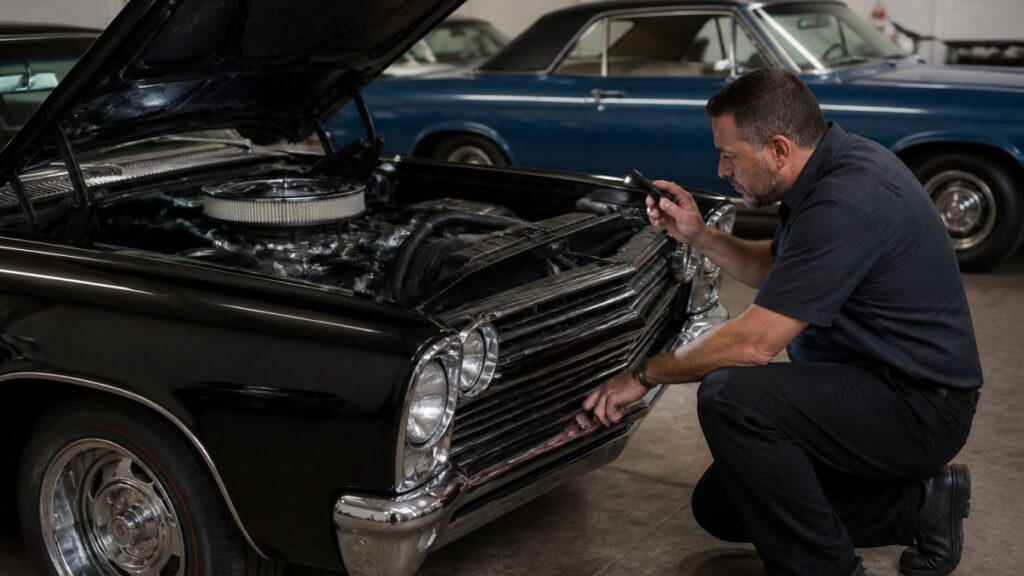
A mobile pre-purchase inspection is a hands-on look at a vehicle at the place it is kept, carried out by an inspector who comes to you. To see why professional classic car inspection matters before buying, read the overview of what the visit covers.
Ask for a photo-documented report so you can review findings after the visit.
Condition Inspection vs. Authentication: Why the Difference Matters
A condition inspection tells you how the car is today. Authentication tells you whether the car is what the seller says it is: the right model, the right body style, original or correctly restored components, and a documented history. These are different tasks performed by different people, and confusing them is one of the most expensive mistakes a classic-car buyer can make.
A mobile inspector can assess visible condition and compare identifying details against reference material. Formal authentication is a separate, deeper process. It may require marque-specific expertise, factory records, production-date research, and in some cases a hands-on examination by a specialist who works only on that model or era. For a high-value car, the two services are complementary, not interchangeable.
What a Mobile Inspector Can Confirm On Site
- That the VIN plate and stamped locations match the title and registration
- That engine, transmission, and rear-axle stampings appear consistent with the car’s build period
- That trim, paint, and interior details match the claimed model year and package
- That panel gaps, welds, and undercoating suggest or rule out major prior repair
- That the car starts, runs, drives, and stops as expected for its age
What Formal Authentication Adds
- Verification of stampings against factory build records, dealer invoices, or registry databases
- Marque-specific knowledge of casting dates, part numbers, and mid-year production changes
- Judgment on whether a restoration used period-correct materials and methods
- A written opinion that can support insurance agreed value or a future sale
Ask the provider to put the scope in writing before you book. A report that says “VIN verified” means something different from one that says “authentication performed.” The first is a condition inspection with an identity check; the second is a specialist opinion.
Keep the two apart when you hire someone. Ask exactly what will be verified and what will not.
How Inspectors Verify VIN and Matching Numbers
The vehicle identification number is the first thing to check. Compare the VIN on the title and registration against the vehicle’s VIN locations before any money changes hands.
A Practical Originality Checklist
Use this to organize what the inspector records and what you review afterward:
- VIN plate and stampings: photograph each location; note font, depth, and whether rivets look factory
- Engine stamping: record the pad location and number; compare against the reference sheet for that model year
- Transmission and rear-axle stampings: same treatment; these are often overlooked
- Casting and date codes: check that block, head, intake, and transmission casting dates precede the car’s build date by a plausible margin
- Trim and body tags: confirm the tag matches the claimed paint and interior codes
- Factory records: ask the seller for a build sheet, dealer invoice, or registry certificate
A stamping that matches the reference sheet is not proof on its own. Restampers can reproduce fonts and locations. The strongest evidence combines a correct stamping with casting dates, factory paperwork, and a continuous ownership history.
What Cannot Be Confirmed On Site
Some originality questions require records the inspector will not have at the curb. A mobile inspection generally cannot confirm that a stamping is factory-original rather than a high-quality restamp, that a replacement block was installed by a dealer under warranty, or that a car’s ownership chain is complete. Those answers come from marque registries, factory documentation services, and specialist authentication.
A car can be genuine and still have non-original parts. The common mistake is treating any replaced component as fraud. Instead, ask what was replaced, when, and why, and price the car accordingly.
Limits of an On-Site Inspection and What It Cannot Prove
For high-value purchases, combine the inspection with a title search, a history review and, where needed, a specialist authentication. Remember that an inspection report is a snapshot. It records what the inspector saw at one point in time.
A Classic-Car Inspection Checklist You Can Use on Site
Use this list during or before the visit. Print it or keep it on your phone. For a fuller classic car pre-purchase inspection guide covering what the inspection should include, read the complete article.
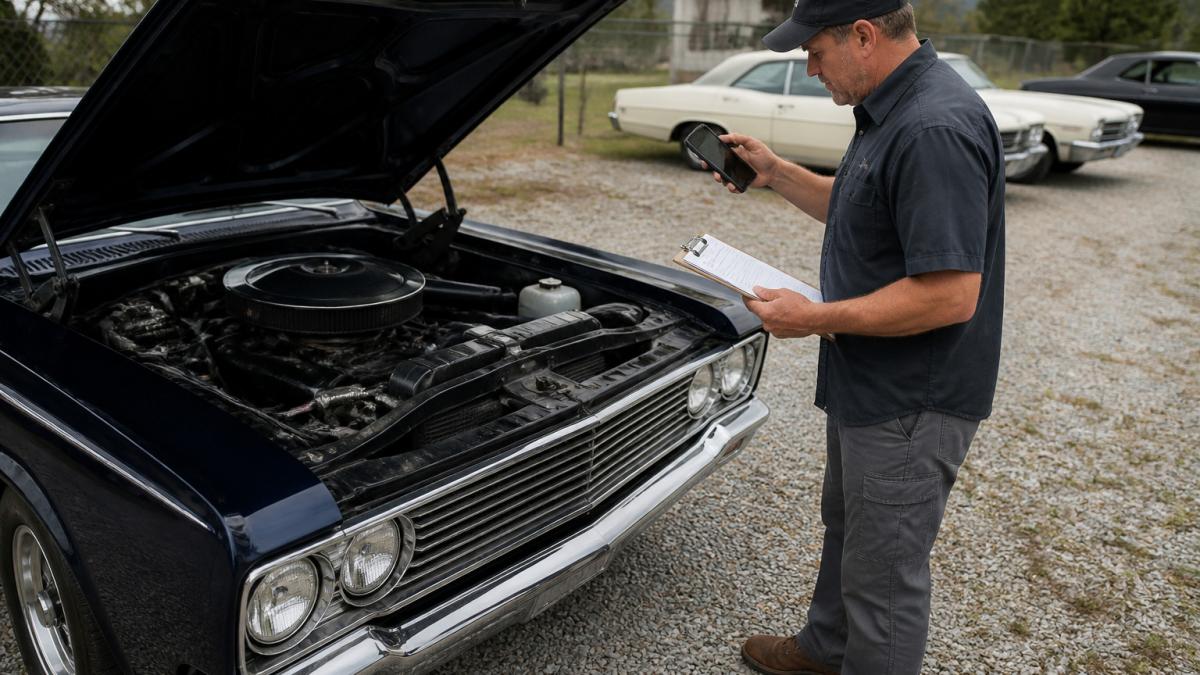
- VIN matches title, registration and every stamped location
- Engine and transmission numbers recorded and photographed
- Frame and underbody checked for rust, welds and repairs
- Oil, coolant and transmission fluid inspected for contamination
- Brakes, steering and suspension tested for play and wear
- Electrical system and gauges tested, including lights
- Body panel gaps and paint measured or checked for filler
- Water leaks and interior damp spots noted
- Documentation reviewed: build sheets, invoices, service history
- Test drive completed, if the seller allows it
Ask the seller to start the car cold if you can. Warm engines can hide starting problems.
Use this checklist during or before the visit to keep the inspection organised.
| Check | What to confirm | Note |
|---|---|---|
| VIN | Matches title, registration and stamped locations | Compare every location |
| Engine and transmission numbers | Recorded and photographed | Match against build period |
| Frame and underbody | Checked for rust, welds and repairs | Look for prior repair |
| Fluids | Oil, coolant and transmission fluid inspected | Look for contamination |
| Brakes, steering and suspension | Tested for play and wear | Test drive if allowed |
| Electrical and gauges | Tested, including lights | Check all functions |
| Body panels and paint | Gaps measured or checked for filler | Note inconsistent gaps |
| Documentation | Build sheets, invoices, service history reviewed | Ask seller before visit |
Buying a Classic Car Sight Unseen: Protecting Yourself From Out-of-State Purchases
Buying out of state adds risk, because you cannot inspect the car yourself. A remote car inspection guide for buyers explains how to handle an out-of-state purchase step by step.
Get everything in writing. Make the sale contingent on a satisfactory inspection, and confirm how the car will be transported and insured. Know your state’s title and registration rules before you pay, since paperwork problems can delay ownership.
Booking Your Inspection Before You Commit to a Classic Car
Book the inspection before you send a deposit. Whyte Knyte Inspection provides mobile inspections for cars and trucks, with photo-documented reports delivered within 24-48 hours. You can book a mobile pre purchase inspection online once you have the car’s location. Give the inspector the car’s location.
Once you have the report, weigh the findings against the price and decide whether to proceed, negotiate or walk away. A thorough inspection is cheap insurance against a classic car that costs far more to fix than it is worth.
Frequently Asked Questions
Can a mobile inspector authenticate a classic car?
Full authentication, meaning confirming that the car is original and matches its factory specification, usually requires documentation review, factory build records and sometimes a specialist marque expert. Ask the provider exactly what they will verify and what they will not, and get that in writing before you schedule the visit.
What can a mobile pre-purchase inspection reveal about a classic car?
An on-site inspection records the car’s condition on the day of the visit. It cannot guarantee the car has never been damaged or that it will run reliably after a road test on one day.
How can you verify a classic car’s VIN and matching numbers?
Matching numbers can add value to a collector car, but they are only meaningful when supported by original build documentation.
Is a classic car inspection enough to confirm its authenticity?
No. Authentication goes further by tracing provenance, originality and build records. Buyers purchasing high-value cars sight unseen should combine an on-site inspection with title history, ownership records and, where the value justifies it, an independent specialist review.
