Quick Summary
A used car inspection checks a vehicle’s body, mechanical condition, fluids, title and test-drive behavior before you pay. Use a written checklist so you check the same things every time, including the spots sellers and buyers tend to miss. Sorting findings into cosmetic, mechanical and walk-away tiers helps you decide what to negotiate.
- Inspect the car cold, since a warmed-up engine can hide starting problems.
- Use a magnet on body panels to detect hidden body filler.
- Walk away from frame damage, flood damage or an undisclosed branded title.
- Run a structured test drive of 20 to 30 minutes covering city, hills, highway and stops.
- Get an independent pre-purchase inspection before you negotiate on any mechanical red flag.
Table of Contents
- Why a Used Car Inspection Checklist Protects Your Purchase
- Tools and Safety Precautions for Your Inspection
- Step-by-Step Exterior and Body Inspection
- Engine Bay, Fluids, and Leak Checks
- Used Car Red Flags That Mean Walk Away
- Used Car Test Drive Checklist and Route
- Booking a Professional Pre-Purchase Car Inspection Before You Sign
- Frequently Asked Questions
Why a Used Car Inspection Checklist Protects Your Purchase
Last Updated: November 3, 2026
A used car inspection checklist keeps you from missing the problems that cost buyers the most.
A checklist matters because a used car can look fine on the surface and still hide serious damage.
Here is what a good checklist helps you do:
- Spot body damage, rust, and signs of past repairs
- Confirm the title, VIN, and odometer match the paperwork
- Look for fluid leaks and warning lights
- Test brakes, steering, and transmission on the road
- Decide whether to walk away or ask for a professional inspection
Watch out: Do not let a seller rush you through the walk-around. A seller who blocks a cold start or refuses a test drive is giving you a red flag.
Tools and Safety Precautions for Your Inspection
You do not need expensive tools to inspect a used car well. A flashlight, a small magnet, a tire tread gauge, and a clean rag cover most of the basics.
Safety comes first. Inspect the car in daylight on a flat, dry surface.
Useful tools to bring:
| Tool | What It Checks |
|---|---|
| Flashlight | Underbody, engine bay, dark corners |
| Small magnet | Hidden body filler on panels |
| Tread depth gauge | Tire wear |
| OBD-II scanner | Stored trouble codes |
| Paper towel or clean rag | Oil and coolant color |
Watch out: A scanner can show codes that were cleared right before you arrived. A clean code reader does not prove the car is sound.
Step-by-Step Exterior and Body Inspection
Start with a slow walk around the car. Stand back first and look at the car from each corner.
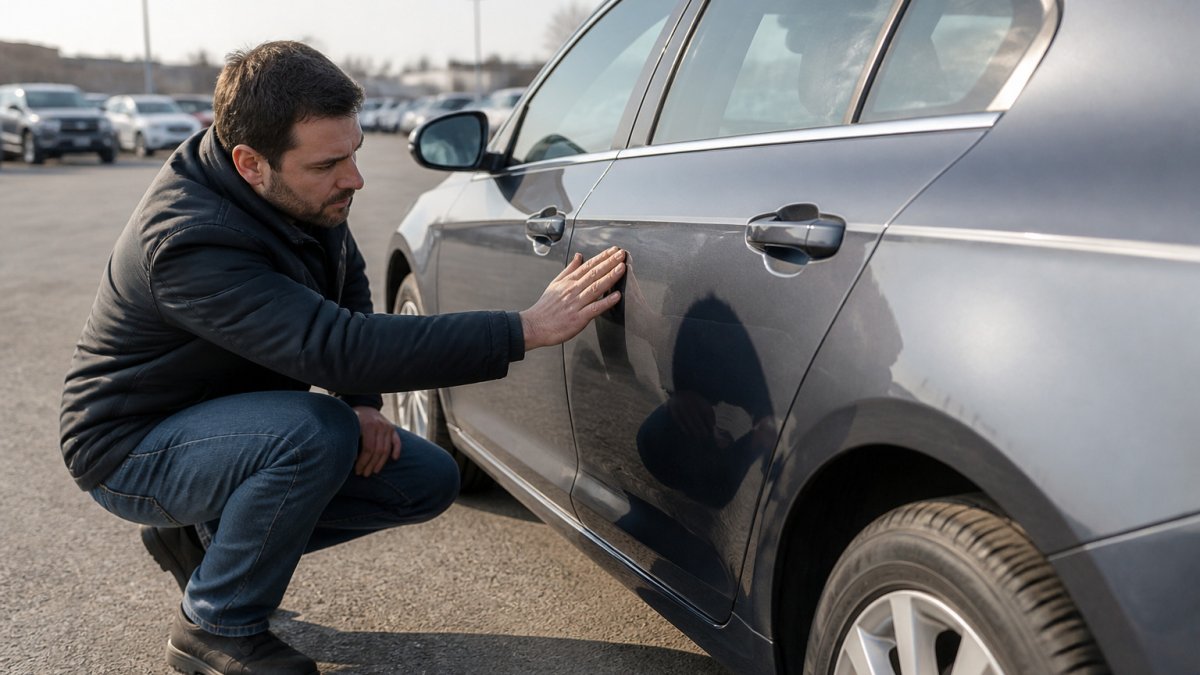
Next, check each panel closely. Run your hand along the doors and fenders. Look for ripples, dents, and rust bubbles, especially near wheel wells and rocker panels.
- Check panel gaps are even around doors and the hood
- Look for overspray on rubber trim or window edges
- Use a magnet on body panels to detect filler
- Inspect glass for cracks, chips, and mismatched etching
- Confirm all lights and signals work
Look at the tires too. Check tread depth and look for uneven wear, which can signal alignment problems.
Engine Bay, Fluids, and Leak Checks
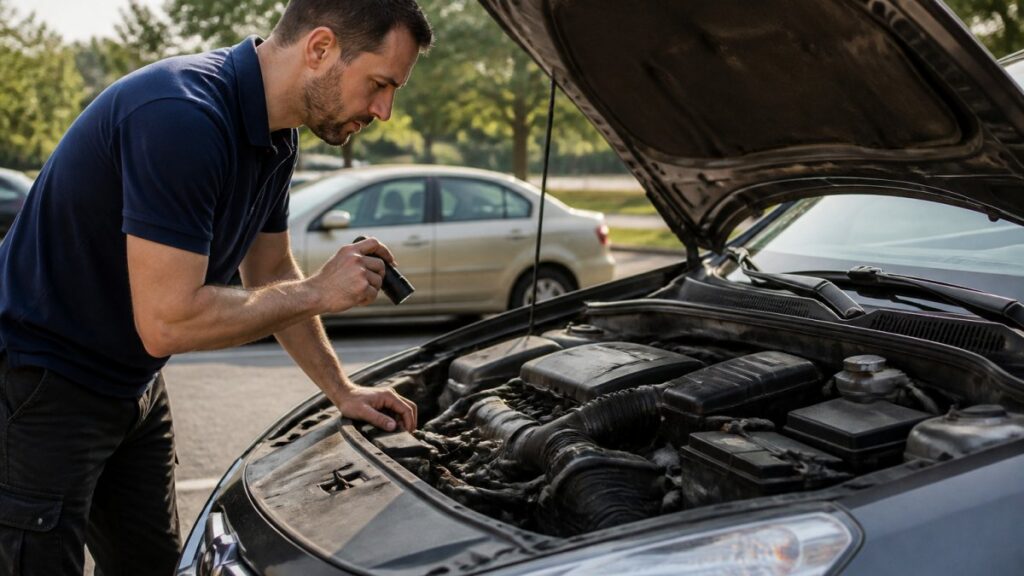
Open the hood with the engine cold. A cold start tells you more than a warmed-up engine.
Check the engine oil and transmission fluid. Oil should look amber to dark brown, not black and sludgy.
Look at the coolant reservoir and belts.
Check the ground under the car for fresh drips.
Watch out: Fresh oil on the engine can hide leaks.
Used Car Red Flags That Mean Walk Away
Not every flaw is a deal-breaker. The useful skill is sorting what you find into three buckets: cosmetic, negotiable, and walk-away. Many checklists dump every problem into one list, which can leave buyers unable to tell a minor fix from a serious risk. Use the tiers below to prioritize what you see.
Tier 1: Cosmetic or Minor (negotiate, do not walk)
These items are common on any used car and are best used as bargaining chips rather than reasons to leave:
- Small dents, door dings, and scratched bumpers
- Cracked or chipped glass that is not in the driver’s line of sight
- Worn tires with even wear above the wear bars
- Faded paint, peeling clear coat, or mismatched trim
- Worn brake pads with plenty of rotor life left
- A missing spare tire, jack, or floor mat
It helps to price these fixes before you make an offer.
Tier 2: Mechanical or Electrical (get a quote before you commit)
These problems are fixable but can hide bigger issues. Get an independent mechanic’s estimate before you sign:
- A check-engine light that is on, flashing, or was recently cleared
- Transmission shudder, delayed engagement, or slipping under load
- Coolant or oil leaks that leave fresh drips
- A weak air conditioner or heater that does not change temperature
- Multiple electrical faults (windows, locks, radio, cameras) at once
- Uneven tire wear that suggests alignment or suspension damage
- Rust on rocker panels, wheel arches, or the frame surface
Watch out: A seller who clears codes right before your visit is hiding something. Ask for a scan-tool report showing monitor readiness, not just a clean dash.
Tier 3: Walk-Away (safety, title, or structural risk)
These findings are not worth negotiating. Walk away if you see any of the following:
- Frame damage, bent welds, or mismatched frame bolts
- Flood damage: water lines, silt in the trunk or under seats, or a musty smell
- A salvage, rebuilt, or branded title that was not disclosed
- Odometer discrepancies or a VIN that does not match the title and door jamb
- Milky engine oil, heavy blue or white smoke, or a sweet coolant smell
- Warning lights that stay on or have been covered with tape
- A seller who refuses an independent pre-purchase inspection
- A lien on the title that the seller cannot clear before the sale
How to use the tiers to negotiate
Bring your findings to the seller in writing. List each item, its tier, and a repair estimate from a trusted shop. Tier 1 items are often worth negotiating on. Tier 2 items should be priced by a mechanic before you agree to a number.
For title and history red flags, run the VIN through the National Highway Traffic Safety Administration’s recall lookup and a reputable vehicle-history service before you make an offer.
Used Car Test Drive Checklist and Route
A test drive reveals problems you cannot see while parked, but only if you plan it. Most buyers drive around the block and call it done. A structured route of 20 to 30 minutes, run in a set order, surfaces transmission, brake, steering, and suspension issues that a short loop will miss.
Before you start: cold-start protocol
Arrive early and ask the seller not to warm up the car. A cold start is the single most informative moment of the visit.
- Listen for knocking, ticking, or a rough idle in the first 30 seconds
- Watch the exhaust for blue smoke (oil burning) or white smoke (coolant)
- Check that all warning lights illuminate briefly, then go out
- Confirm the idle settles within a minute or two
- Note any unusual smells inside the cabin
Watch out: A pre-warmed engine can mask a cold-start knock, a weak battery, or a failing starter. If the seller insists the car is already warm, note it and plan to return another day.
The route: five stages in order
Design the route before you leave the lot. A good route includes each of these stages:
- City streets (5 to 10 minutes). Low-speed turns, stop-and-go traffic, and parking-lot maneuvers. Listen for clicks or grinding in the steering, feel for transmission shudder at low speed, and test the brakes at light pressure.
- Residential hills or an incline. Find a slope and test a standing start. A slipping clutch or delayed transmission engagement shows up here. Also test the parking brake on the slope.
- Highway on-ramp. Accelerate firmly to highway speed. Feel for hesitation, slipping gears, or a vibration that grows with speed. Note the shift points.
- Highway cruise (5 to 10 minutes). Hold a steady speed. Watch for wobble, pull, or wind noise. Test cruise control if equipped. Check that the temperature gauge stays in the normal range.
- Empty lot or quiet street. Test a firm stop from about 30 mph, then a second stop. Feel for pulling, pulsing, or a soft pedal. Make a full-lock turn in each direction and listen for CV joint clicks.
What to check while driving
- Brakes: firm pedal, no pulling, no pulsing, no grinding
- Steering: no play, no vibration, returns to center
- Transmission: smooth shifts, no slipping, no delayed engagement
- Suspension: no clunks over bumps, no float or bounce
- Electrical: windows, locks, mirrors, radio, cameras, and climate controls all work
- Gauges: temperature, oil pressure, and battery stay in normal range
- Noises: note any whine, hum, or rattle and where it occurs
After the drive: post-drive checks
Park on a clean, dry surface and repeat the leak check. A car that did not drip when cold may drip when hot.
- Look under the engine and transmission for fresh fluid
- Check the coolant and oil levels again
- Smell for burning oil or coolant
- Restart the engine warm and confirm the idle is still smooth
- Recheck that no warning lights came on during the drive
Test in different conditions when you can
A car that drives well on a dry day may behave differently in rain or after a long warm-up. If you can, arrange a second drive in wet weather to check wipers, defrost, and traction. If a second drive is not possible, ask the seller to let the car idle for 10 minutes before you arrive so you can check hot-idle behavior.
When to stop and call a professional
If the test drive reveals any Tier 2 or Tier 3 finding from the red-flags section, stop and get an independent pre-purchase inspection before you negotiate. A mechanic with a lift can confirm what a test drive only hints at.
Booking a Professional Pre-Purchase Car Inspection Before You Sign
A checklist catches many problems, but a trained mechanic can see what a buyer misses. Whyte Knyte Inspection provides independent pre-purchase inspections, and our inspectors travel to the vehicle, whether it sits at a dealership, a private seller’s driveway, or an auction lot.
To get started, request an inspection through our booking form. For current pricing, request a quote, and review a sample inspection report to see what you will receive. You can also use our pre-purchase inspection checklist to prepare before the inspector arrives. If the seller shows any of the red flags above, learn how to detect hidden frame damage before you commit.
Whyte Knyte Inspection serves buyers in 48 states, including those buying out of state. If you are ready to protect your purchase, place your order today and get a clear report before you sign.
Frequently Asked Questions
What are the key things to inspect when buying a used car?
Focus on five areas: the vehicle history report and VIN match, body and paint condition, tire tread and sidewalls, the engine bay and fluid levels, and the interior with all warning lights. Check for signs of flood damage such as musty odors, silt under carpets, and rust on seat bolts. Confirm the odometer reading lines up with the service records. Run the engine cold, then test drive the car on varied roads, listening for noises and checking that the brakes, steering, and transmission shift smoothly. Any issue you cannot resolve yourself is a reason to bring in a professional.
Do I need a professional inspection before buying a used car?
A professional pre-purchase car inspection is worth the cost for most used car purchases, especially from private sellers or out-of-state listings where you cannot inspect the vehicle in person. An independent inspector works for you, not the seller, and can spot frame damage, hidden rust, or flood damage that a casual walkaround misses. Ask for a photo-documented report so you can review findings before you commit. Pricing depends on the vehicle and location, so request a quote from Whyte Knyte Inspection for current rates.
How can I tell if a used car has been in an accident?
Look for uneven panel gaps, paint that does not match across panels, overspray on rubber trim, and bolts with damaged or mismatched paint. Check whether the doors, hood, and trunk open and close evenly. A vehicle history report can show reported accidents, but not every collision gets reported, so a physical inspection is still necessary. A professional inspector can use diagnostic tools and measurements to identify structural repairs.
What should I check during a used car test drive?
Start with a cold engine if possible, and listen for knocks or rough idling at startup. During the drive, test the brakes for pulling or pulsing, check steering for play or vibration, and shift through every gear to feel for hesitation or slipping. Drive on a highway, in stop-and-go traffic, and over a bumpy road to reveal suspension problems. Keep dashboard warning lights in mind as you drive, and note any that stay on.
