Last Updated: November 1, 2026
Quick Summary
A used car is bad when its real condition, history or price is hidden from the buyer. To avoid bad used cars, verify the title, liens, recalls and odometer, ask written questions, and get an independent pre-purchase inspection before making an offer.
- Confirm the title is in the seller’s name, matches the VIN, and is not branded salvage or rebuilt.
- Check the VIN against manufacturer recall records and confirm open recalls are addressed.
- Ask questions in writing so you have a record, and treat evasiveness as a warning sign.
- Walk away if the seller refuses an independent inspection or asks for money before you see the car.
- Arrange an independent pre-purchase inspection at a location you choose before making a final offer.
Table of Contents
- Common Used-Car Scams and Seller Red Flags
- Reviewing Listings and Photos Before You Travel
- Used Car Buying Checklist: Verifying Title, Liens, Recalls and Odometer
- Questions to Ask When Buying a Used Car
- Reading a Used Car Vehicle History Report Line by Line
- How to Arrange and Interpret a Pre-Purchase Inspection
- Booking Your Independent Inspection Before You Make an Offer
- Frequently Asked Questions
Most people who end up with a bad used cars deal didn’t skip their homework. They were sold a story. Learning about additional fees only after a base price is known is the kind of framing that makes a bad deal feel acceptable. The risk is rarely visible on the windshield. It sits in the paperwork, under the carpet, and in the gap between a listing and the car actually parked in front of you.
A used car is a bad buy when its real condition, history or price is hidden from the buyer. Knowing where that concealment usually happens is the fastest way to protect yourself.
Common Used-Car Scams and Seller Red Flags
Scams in the used-car market tend to follow a few repeatable scripts. Watch for sellers who push you to commit before you’ve seen the vehicle, who refuse to let an independent mechanic look at it, or who insist on payment through unusual channels. Pressure to “decide today” is a warning sign on its own (How To Avoid a Scam).
Remote listings carry extra risk when you are shopping for bad used cars online. A seller who won’t provide a vehicle identification number (VIN) or who offers only stock photos should be treated with suspicion until proven otherwise.
Private-Party Sales Versus Dealership Purchases
Private sellers often price lower, but they offer fewer protections and less paperwork trail. Dealerships may provide more documentation, though fees can raise the final cost. Neither route removes the need to verify condition yourself. Whichever you choose, the buyer carries the burden of checking title status, history and mechanical health before money changes hands.
Reviewing Listings and Photos Before You Travel
Before you commit travel time, scrutinize the listing. Vague descriptions, missing mileage, and photos taken only at angles that hide the rear, undercarriage or door jambs are common red flags. Ask for additional photos of the tires, dashboard warning lights, and any visible rust or leaks.
A practical rule: if the seller cannot answer basic questions about maintenance records or ownership history in writing, do not spend money on a trip.
Used Car Buying Checklist: Verifying Title, Liens, Recalls and Odometer
Use this checklist before you agree to any purchase:
- Title: Confirm the title is in the seller’s name, matches the VIN, and is not branded salvage or rebuilt.
- Liens: Verify there is no outstanding loan against the vehicle.
- Recalls: Check the VIN against manufacturer recall records and confirm open recalls are addressed.
- Odometer: Compare the reading against service records and inspect wear on the steering wheel, pedals and seat for consistency.
- Keys and paperwork: Confirm the seller can produce all keys and the signed title at closing.
Before agreeing to any purchase, check these five items in order.
| Step | What to check | Why it matters |
|---|---|---|
| Title | In seller’s name, matches VIN, not salvage or rebuilt | Confirms legal ownership and history |
| Liens | No outstanding loan against the vehicle | Prevents inheriting someone else’s debt |
| Recalls | Check VIN against manufacturer records | Confirms open recalls are addressed |
| Odometer | Compare reading to service records and wear | Spots mileage inconsistencies |
| Keys and paperwork | All keys and signed title at closing | Ensures a complete, valid transfer |
Questions to Ask When Buying a Used Car
Questions are cheap; documents are not. The goal of this stage is to move a seller from vague assurances to specific, checkable facts, and to notice which questions they avoid. Ask these in writing (email or text) so you have a record, and treat evasiveness as data.
Ownership and history
- How long have you owned the car, and is the title in your name right now?
- Why are you selling, and what are you replacing it with?
- Has the car been in any accident, flood, or fire, even a minor one?
- Has it ever been used commercially, rideshare, delivery, rental, or as a fleet vehicle?
Maintenance and condition
- Can you send photos of the maintenance records or receipts for the last two years?
- When were the tires, brakes, and battery last replaced?
- Are there any warning lights on right now, and has any dash light come on in the last month?
- Does the air conditioning, heat, and every power feature work?
- Are there any leaks you have noticed under the car?
Paperwork and logistics
- Can you send a photo of the title and the VIN plate on the dashboard?
- Are there any open recalls, and have they been repaired?
- Is there a lien on the car, and if so, how will it be released at closing?
- Can I have an independent mechanic inspect the car at a location of my choosing before I make an offer?
- Will you provide a written bill of sale and sign the title in front of me?
Reading the answers
Listen for specifics and dates. “It’s been fine” is not an answer; “I had the timing belt done at 90,000 miles and here is the receipt” is. A seller who cannot produce a title photo, who refuses an independent inspection, or who pressures you to pay a deposit before you have seen the car is giving you a reason to walk away.
Walk away if any of these appear: the seller will not provide a VIN, the name on the title does not match the seller, the seller refuses an independent inspection, or you are asked to send money before seeing the car and the paperwork in person.
A good question set does two jobs: it surfaces problems before you spend money on a trip, and it creates a written record you can compare against the vehicle history report and the inspector’s findings. If the answers, the report, and the inspection disagree, believe the inspection.
Reading a Used Car Vehicle History Report Line by Line
A used car vehicle history report summarizes title events, reported accidents, odometer readings, and ownership changes. For a deeper walkthrough of checking these records, see how to verify used truck history. Read it line by line rather than skimming the summary.
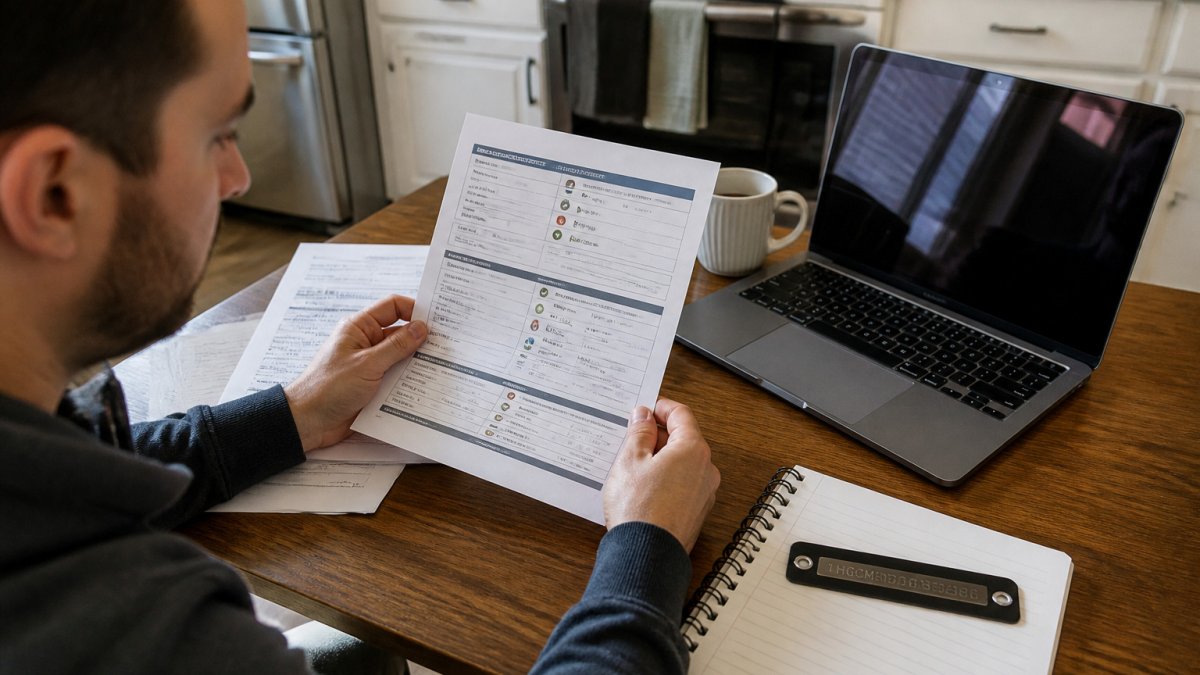
A clean report is not proof of a clean car. Reports depend on what was reported, so treat them as a starting point, not a verdict. Pair the report with a physical inspection.
!Buyer reviewing a printed vehicle history report at a kitchen table beside a laptop
How to Arrange and Interpret a Pre-Purchase Inspection
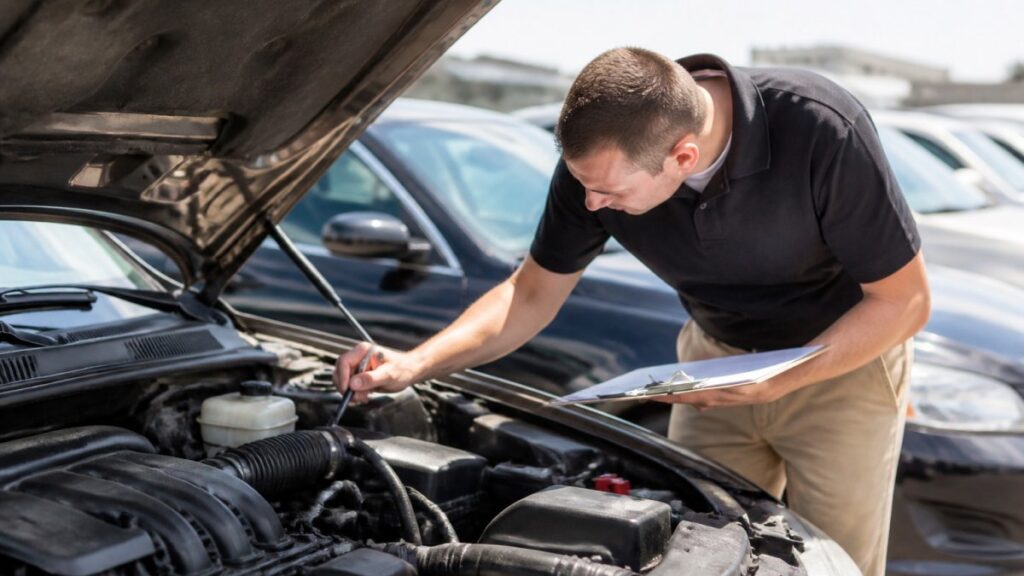
A pre-purchase inspection by a qualified, independent mechanic can help uncover hidden mechanical problems. To see how these inspections are carried out and what to expect from the report, read how pre-purchase car inspections work. Arrange it before you make a final offer, at a location you choose, not one the seller prefers.
When you receive the report, focus on the items that affect safety and cost: frame or structural damage, signs of flood exposure, brake and tire condition, fluid leaks, and any dashboard warning lights. Ask the inspector to explain anything you don’t understand. A good inspection report gives you grounds to negotiate or walk away.
Booking Your Independent Inspection Before You Make an Offer
Whyte Knyte Inspection sends mobile inspectors directly to the vehicle, whether it sits at a dealership, a private seller’s driveway or an auction lot. Before booking, you can read an independent car inspection guide before buying to see what an inspection covers. If you are still deciding which service suits your location and timing, see how to choose the best mobile car inspection.
If you are buying out of state, an independent inspection matters even more, since you cannot easily return to look at the car yourself. Pricing depends on vehicle type, location and scope, so request a current quote from Whyte Knyte Inspection’s website before booking.
Frequently Asked Questions
How can I buy a used car without getting scammed?
Verify the seller’s identity and the vehicle’s title before any money changes hands. Ask for the VIN, run a vehicle history report, and confirm the title matches the name on the seller’s ID. Avoid sellers who push for a deposit before you have seen the car, who refuse an in-person inspection, or who ask for payment by wire transfer or gift card. Meet in a public place or at a bank branch when completing the sale, and never sign a blank title or accept a title that appears altered. If anything in the paperwork does not line up, walk away.
What are the biggest red flags when buying a used car?
Common warning signs include a title that is branded salvage, rebuilt or flood-damaged, a seller who cannot produce the title in their own name, and a price well below comparable vehicles. Other red flags are uneven paint or panel gaps suggesting prior collision repair, fresh undercoating or air fresheners hiding odors, dashboard warning lights that stay on or are disabled, and reluctance to let you take a test drive or get an inspection. Any one of these justifies a closer look; several together are a reason to walk away.
What should I check before buying a used car?
Start with the title, lien status and the odometer reading, then confirm the VIN matches on the dashboard, door jamb and paperwork. Check for open safety recalls using the VIN on NHTSA’s website. Inspect the tires, brakes, fluids and body panels, look for signs of water in the carpet or trunk, and test the transmission, steering and brakes on a test drive. Review maintenance records if available. Finally, get an independent pre-purchase inspection before committing.
Should I get a pre-purchase inspection before buying a used car?
Yes. A pre-purchase inspection by a qualified independent mechanic can reveal frame damage, engine or transmission problems, leaks and worn components that a seller may not disclose and that a buyer may miss on a test drive. Choose an inspector who has no stake in the sale, ask for a written report with photos, and have it performed at the vehicle’s location. A vehicle history report is useful but does not replace a physical inspection, because many accidents and repairs never appear on a report.
How can I check a used car’s title and vehicle history?
Compare the title document with the seller’s identification and confirm the VIN on the title matches the vehicle. Check the title brand, which may read salvage, rebuilt, flood or lemon. Run a vehicle history report using the VIN to review ownership history, reported accidents, odometer readings and title events. Confirm any lien with the state motor vehicle agency or the lienholder before purchase, so you do not inherit a debt against the car.
What questions should I ask a used-car seller?
Ask how long they have owned the vehicle and why they are selling it, whether they are the title holder, and whether there are any liens. Request maintenance and service records, and ask whether the car has been in an accident, flood or fire, or had major repairs. Ask whether there are any open recalls and whether the vehicle has ever been a rental or fleet car. Listen for vague or inconsistent answers, and compare them against the vehicle history report and the inspection.
When should I walk away from a used car?
Walk away if the seller refuses a pre-purchase inspection, the title is missing, unsigned or does not match, or the VIN on the car differs from the paperwork. Also walk away if the history report shows a salvage or flood brand you were not told about, if the odometer reading appears inconsistent with wear, or if you feel pressured to decide quickly. A good deal does not require you to skip these checks, and the cost of a bad purchase usually exceeds the cost of a thorough inspection.
Buying a used car is a decision you can make with confidence when the facts are on your side. Whyte Knyte Inspection exists to put those facts in front of you before you commit. Order an inspection before you make an offer, and let the report guide your next move.
