Table of Contents
- Why an Out-of-State Car Needs a Pre-Purchase Inspection
- What a Pre-Purchase Inspection Covers (and What It Misses)
- The Remote Car Buying Inspection Process: Step by Step
- Used Car Inspection Checklist for Buyers: What to Verify
- Questions to Ask a Private Car Seller Before You Commit
- How to Read an Inspection Report and Spot Deal-Breakers
- Protecting Your Payment: Escrow and Title Transfer Basics
- Conclusion
- Frequently Asked Questions
Last Updated: September 14, 2026
Why an Out-of-State Car Needs a Pre-Purchase Inspection
A pre-purchase inspection for an out of state car is the single most reliable way to verify a vehicle’s true condition before you wire money to a stranger hundreds of miles away. At Whyte Knyte Inspection, our mobile inspectors have walked driveways, dealership lots, and auction rows, and the pattern never changes: distance hides problems.
Photos lie by omission. A seller can frame a shot around rust, time a video call to avoid a cold-start knock, and describe a rebuilt title as “clean” without ever technically lying. A pre-purchase inspection closes that gap. An independent mechanic puts hands on the frame, pulls the diagnostic codes, and measures what a camera cannot.
The stakes are real. Buying remotely means you cannot walk the lot, cannot smell coolant, and cannot hear the transmission hesitate on a test drive. Below, we break down exactly how to coordinate a remote inspection, read the report, and protect your money.
What a Pre-Purchase Inspection Covers (and What It Misses)
A pre-purchase inspection is a hands-on evaluation of a vehicle’s mechanical, structural, and cosmetic condition performed by an independent mechanic before purchase. A thorough inspection covers the engine, transmission, suspension, brakes, frame, bodywork, and interior, plus a diagnostic scan and a road test.
Here is what a comprehensive inspection typically examines:
- Mechanical components: engine, transmission, differential, and drivetrain
- Structural integrity: frame rails, unibody panels, and prior collision repair
- Diagnostic scan: OBD-II codes, pending faults, and readiness monitors
- Wear items: tire tread depth, brake life, suspension bushings, and fluid leaks
- Cosmetic condition: paint depth, panel gaps, and rust in hidden areas
What it misses matters just as much. An inspection cannot predict a future failure, and it does not replace a vehicle history report or VIN check. For electric vehicles, ask specifically about EV battery health, since a standard scan may not capture degradation. A good inspector will tell you plainly where the limits are.
The Remote Car Buying Inspection Process: Step by Step
The remote car buying inspection process has four phases: vetting the seller, sourcing a local inspector, scheduling the visit around the seller’s constraints, and reviewing the report before you negotiate. Most guides stop at “find a mechanic.” The friction is in the middle two phases, so that is where this walkthrough spends its time.
Step 1: Vet the Seller and Lock the Paperwork
Start with the paperwork, not the car. Ask for the VIN and run it through a National Highway Traffic Safety Administration VIN decoder to confirm the vehicle matches its description, then pull a vehicle history report to check for salvage, flood, or rebuilt title brands. Request service records, and be wary of a seller who cannot produce them.
A common mistake is trusting a listing’s photos over documentation. If the seller resists a VIN check or a third-party inspection, that resistance is your answer. Walk away.
Step 2: Source a Local Inspector You Have Never Met
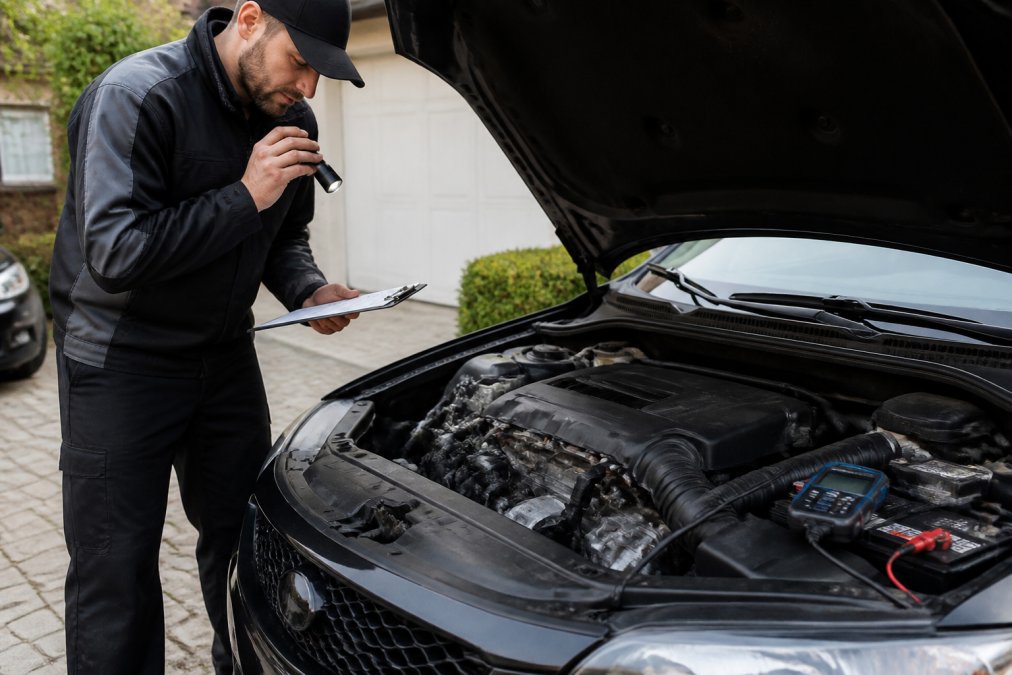
You cannot use your regular mechanic when the car is 800 miles away. You need an inspector who is physically near the vehicle. Three reliable paths:
- National mobile inspection networks. Companies that dispatch independent inspectors to the vehicle’s location. You book online, they assign a local tech, and you get a photo-documented report. This is the fastest path for most buyers.
- Marque-specific forums and owner clubs. Enthusiast communities usually keep a running list of trusted inspectors by metro area. Search “[model] pre-purchase inspection [city]” and read the thread history before you call.
- Independent shops near the seller. Call two or three general repair shops within 10 miles of the vehicle and ask if they do pre-purchase inspections. Many do, and a local shop often knows the regional rust and flood patterns specific to that market.
Ask each candidate three questions before booking: Do you road-test the vehicle? Do you pull OBD-II codes and readiness monitors? Do you provide photos of every finding? A “no” to any of these is a reason to keep calling.
Step 3: Schedule Around the Seller’s Constraints
The scheduling phase is where remote deals stall. Build the visit around these realities:
- Cold-start matters. Ask the seller to leave the car sitting for at least four hours before the inspector arrives (How To Inspect A Used Car Before Bidding Online). A warm engine can mask a cold-start knock, a rough idle, or a slow-building fuel pressure issue.
- Get access in writing. Confirm the date, time window, and address by text or email. A verbal “sure, come by” is not enough when the inspector is driving an hour to get there.
- Confirm who pays the shop. The buyer pays the inspector directly, never the seller. If the seller offers to “handle” the inspection, decline, you want an invoice in your name.
- Plan for a no-show. Sellers flake. Build a 24-hour buffer before any deposit changes hands, and do not send earnest money until the inspection is on the calendar.
Step 4: Review the Report and Negotiate
The report is your negotiation leverage. A comprehensive report flags defects with photos and a repair estimate, giving you a dollar figure to work from. Use it to renegotiate the price, request repairs, or walk away with your deposit intact.
Ask the inspector to call you the same day with a verbal summary before the written report lands. A five-minute phone call often surfaces the one finding that decides the deal, and it lets you pause negotiations before you have committed to anything.
A Note on Video-Based Inspections
Some inspectors now offer a live video walkthrough, a FaceTime or Zoom call where the mechanic points the camera at each finding while you watch and ask questions in real time. It is a useful supplement, not a replacement. Video cannot measure frame-rail thickness, pull codes, or feel a wheel bearing. Treat it as a way to see the car with your own eyes between the seller’s photos and the written report, and insist on a hands-on inspection for anything you plan to buy.
Used Car Inspection Checklist for Buyers: What to Verify
A used car inspection checklist for buyers should prioritize the items that cost the most to fix. Structural damage and drivetrain faults top the list, followed by wear items and cosmetics.
| Priority | What to Check | Why It Matters |
|---|---|---|
| Critical | Frame and unibody damage | Expensive to repair, safety risk |
| Critical | Odometer rollback signs | Fraud, hidden wear |
| High | Engine and transmission | Major repair cost |
| High | Fluid leaks and rust | Signals neglect |
| Medium | Tire tread and brakes | Predictable wear items |
Tire tread depth, brake life, and fluid leaks are the items a remote buyer can most easily overlook. Ask your inspector to photograph each one.
Questions to Ask a Private Car Seller Before You Commit
The right questions to ask a private car seller reveal whether the vehicle’s story holds together. Ask about accident history, title status, and why the car is being sold.
- Has the vehicle ever been in an accident or had frame repair?
- Is the title clean, rebuilt, or salvage?
- Can you provide service records and the original VIN?
- Why are you selling, and how long have you owned it?
- Will you allow an independent inspection at your location?
Vague answers to any of these are a deal-breaker. A seller with nothing to hide answers directly.
How to Read an Inspection Report and Spot Deal-Breakers
Reading an inspection report means separating cosmetic notes from structural and mechanical failures, then translating each finding into a dollar figure and a decision. Most reports use a severity scale, and the top tier is where you focus.
The most common mistake is fixating on cosmetic flaws while skimming past structural findings. A scratched bumper is a negotiating chip; a bent frame rail is a walk-away.
The Severity Scale, Decoded
Most inspectors grade findings on a three- or four-tier scale. The labels vary, but the meaning does not:
- Monitor / Minor. Normal wear for the vehicle’s age and mileage. A seeping valve cover gasket on a 12-year-old car is a monitor item. Budget for it, do not renegotiate over it.
- Attention / Moderate. A repair you will likely need within the next year. Worn front struts, a weeping water pump, or tires at 4/32″ tread depth. Price the repair and subtract it from your offer.
- Immediate / Severe. A safety or drivability issue that needs fixing now. Metal-on-metal brakes, a failing wheel bearing, or a check-engine light with an active misfire code. These are negotiating chips with real weight.
- Deal-breaker. A finding that makes the vehicle a poor purchase at any price. Frame or unibody damage, a branded title the seller did not disclose, odometer rollback, flood intrusion, or severe structural rust.
A Sample Finding, Walked Through
Here is how a single line on a report translates into a decision. Suppose the inspector writes: “Front lower control arm bushings, cracked and separating. Recommend replacement. Estimated repair: $400-$700 at an independent shop.”
- What it means. The bushings are worn past spec. The car will likely clunk over bumps and may wander at highway speed. It is not a safety emergency today, but it will not fix itself.
- What it costs. The estimate is a range because shop labor rates vary by market. Use the midpoint for negotiation.
- What you do. Subtract the midpoint from your offer, or ask the seller to complete the repair at a shop of your choosing before closing. Do not accept a verbal promise of “I’ll get that fixed.”
Now contrast that with a line that reads: “Left rear frame rail, deformation and prior section repair visible. Weld quality inconsistent with factory.” That is a deal-breaker. Frame repair on a unibody car is expensive, hard to verify, and a resale and safety problem. Walk away.
The Decision Rule
Run every finding through three questions:
- Is it safety-critical? Brakes, steering, suspension, frame, airbags. If yes, it is at minimum an immediate item and possibly a deal-breaker.
- Is it structural or fraud-related? Frame damage, flood, rollback, undisclosed branded title. Any yes is a walk-away.
- What does it cost to fix? If the total of all non-structural findings exceeds roughly 10-15% of the purchase price, the car is overpriced as listed. Renegotiate or move on.
What the Report Cannot Tell You
An inspection is a snapshot, not a warranty. It cannot predict a future failure, and it does not replace a vehicle history report or a VIN check. For electric vehicles, ask specifically about EV battery health and state-of-health data, since a standard OBD-II scan may not capture degradation. A good inspector will tell you plainly where the limits are, and a report that claims to have found nothing wrong on a 10-year-old car with 140,000 miles is a report you should read twice.
Protecting Your Payment: Escrow and Title Transfer Basics
Escrow and payment security protect you when the seller is in another state and you cannot hand over cash in person. An escrow service holds your funds until both parties meet the agreed conditions.
The title transfer process varies by state, so confirm the registration requirements and emissions testing rules where the vehicle will be registered, not where it currently sits. A state motor vehicle department guidance can clarify the steps for your situation. Never wire funds directly to a private seller before the title is verified and the vehicle is in your possession.
Use a licensed escrow service and confirm the title’s VIN matches the vehicle before releasing funds. This single step prevents most remote-buying fraud.
Conclusion
Buying a car you have never touched is a calculated risk, and the calculation only works when an independent professional verifies the vehicle first. Whyte Knyte Inspection sends mobile inspectors to the vehicle, delivers photo-documented reports within 24-48 hours, and carries zero financial interest in your purchase, so the findings serve you and no one else. Our inspectors cover everything from compact cars to heavy-duty semi trucks and are available in 48 states. Order an inspection with Whyte Knyte Inspection and make your out-of-state purchase with confidence.
Frequently Asked Questions
Can you get a car inspection done in another state?
Yes. Mobile inspection services send a qualified inspector directly to the vehicle, whether it sits at a dealership, a private seller’s driveway, or an auction lot. The inspector performs an on-site evaluation and delivers a comprehensive report remotely. Most services cover 48 states and can schedule within a few business days. You never need to travel to the car yourself.
How much does a pre-purchase inspection for an out-of-state car cost?
Pricing depends on the vehicle type, location, and turnaround time. Most providers charge a flat fee that covers travel to the vehicle and a full report. For heavy-duty trucks or classic cars, rates may be higher. Contact Whyte Knyte Inspection directly for a current quote based on your specific vehicle and timeline.
What should I look for in an out-of-state vehicle inspection report?
Look for photo documentation of every major system: engine, transmission, frame, suspension, brakes, tires, and bodywork. The report should include a diagnostic scan (OBD-II codes), tire tread depth, brake life readings, and notes on fluid leaks. A VIN check and vehicle history report should accompany the inspection. If any section lacks photos or specifics, ask the inspector to clarify before you negotiate.
How do I verify a seller’s claims when buying a car from another state?
Ask for the VIN and run a vehicle history report to check for accidents, flood damage, and odometer rollbacks. Then hire an independent inspector to verify the car’s actual condition against the seller’s description. A pre-purchase inspection gives you photo evidence and a repair estimate you can use as negotiation leverage. Never rely on the seller’s word alone.
What are the risks of buying a used car without an in-person inspection?
Without an inspection, you risk purchasing a vehicle with hidden frame damage, flood history, a rolled-back odometer, or failing mechanical components. These issues can cost thousands to repair and may make the car unsafe to drive. A remote vehicle assessment catches problems a video call or test drive cannot reveal, protecting your investment before money changes hands.
How fast can a mobile inspection service turn around a report?
Many services deliver reports within 24 to 48 hours of the inspection. If you are on a tight deadline, such as flying out to see the vehicle or making an offer by a specific date, ask about expedited scheduling when you book. Availability depends on the inspector’s location and the vehicle type. Confirm turnaround time in writing before you pay.